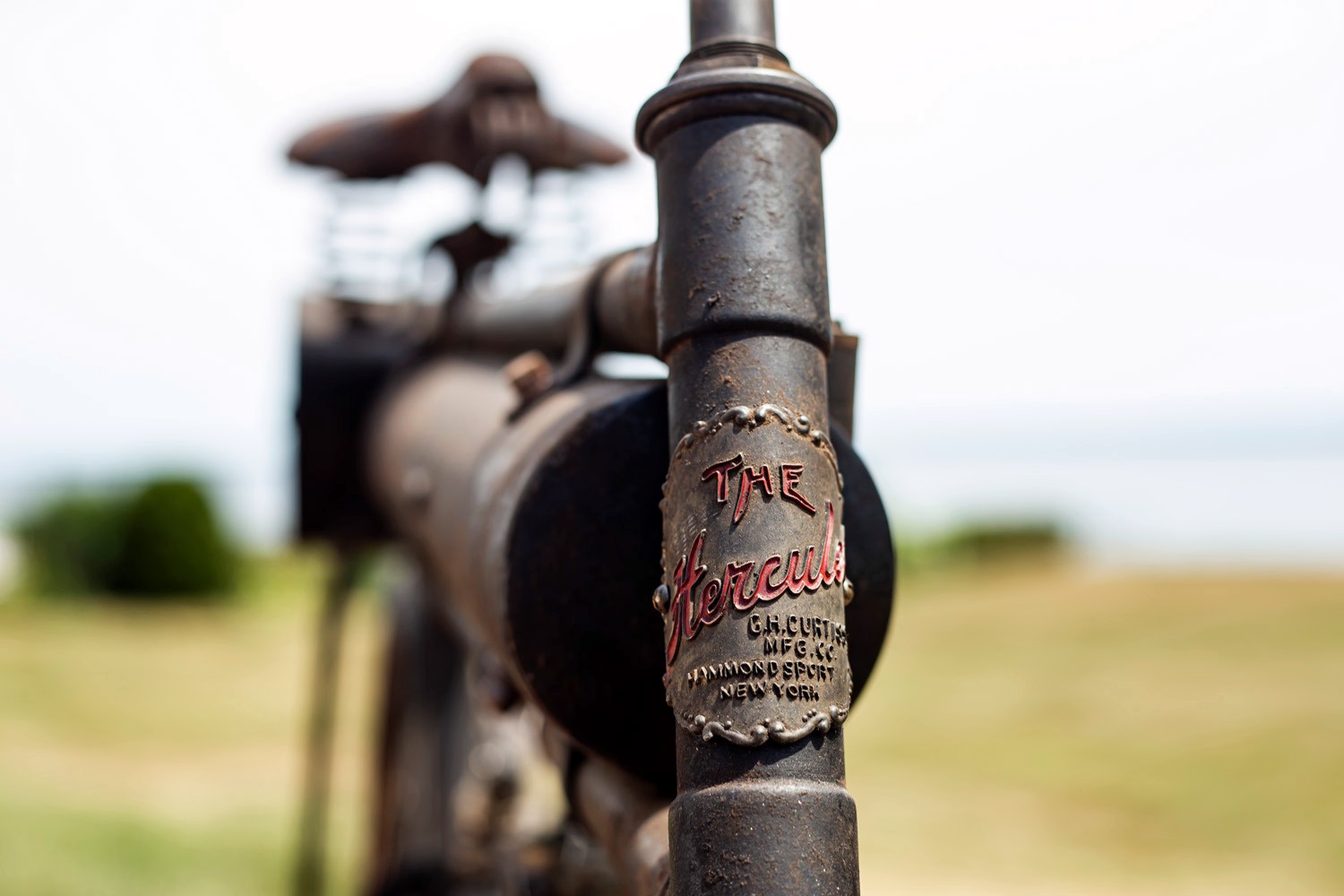
- MANUFACTURER: The G.H. Curtiss Manufacturing Company
- MANUFACTURED: Hammondsport, NY, USA
- YEAR: 1902
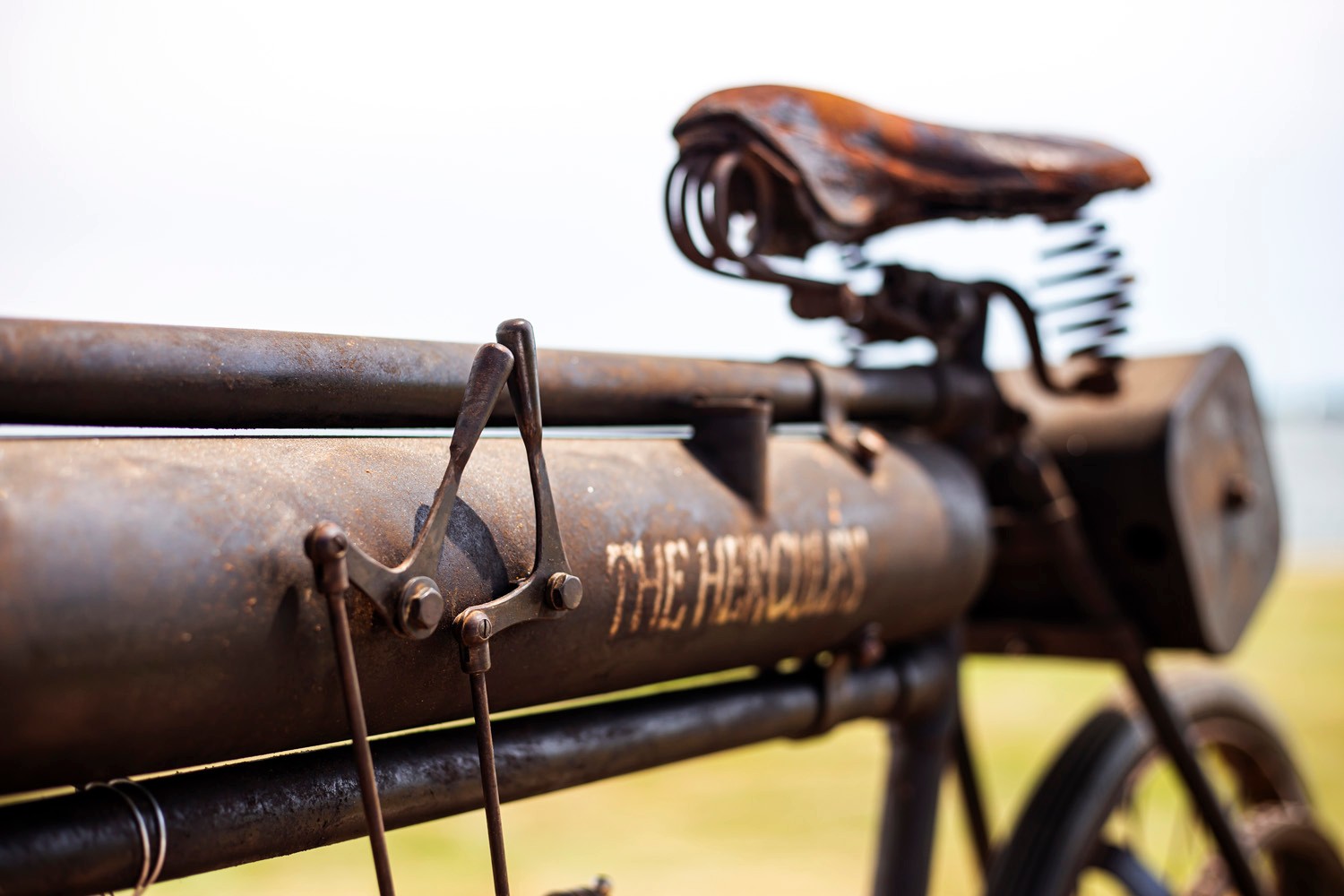
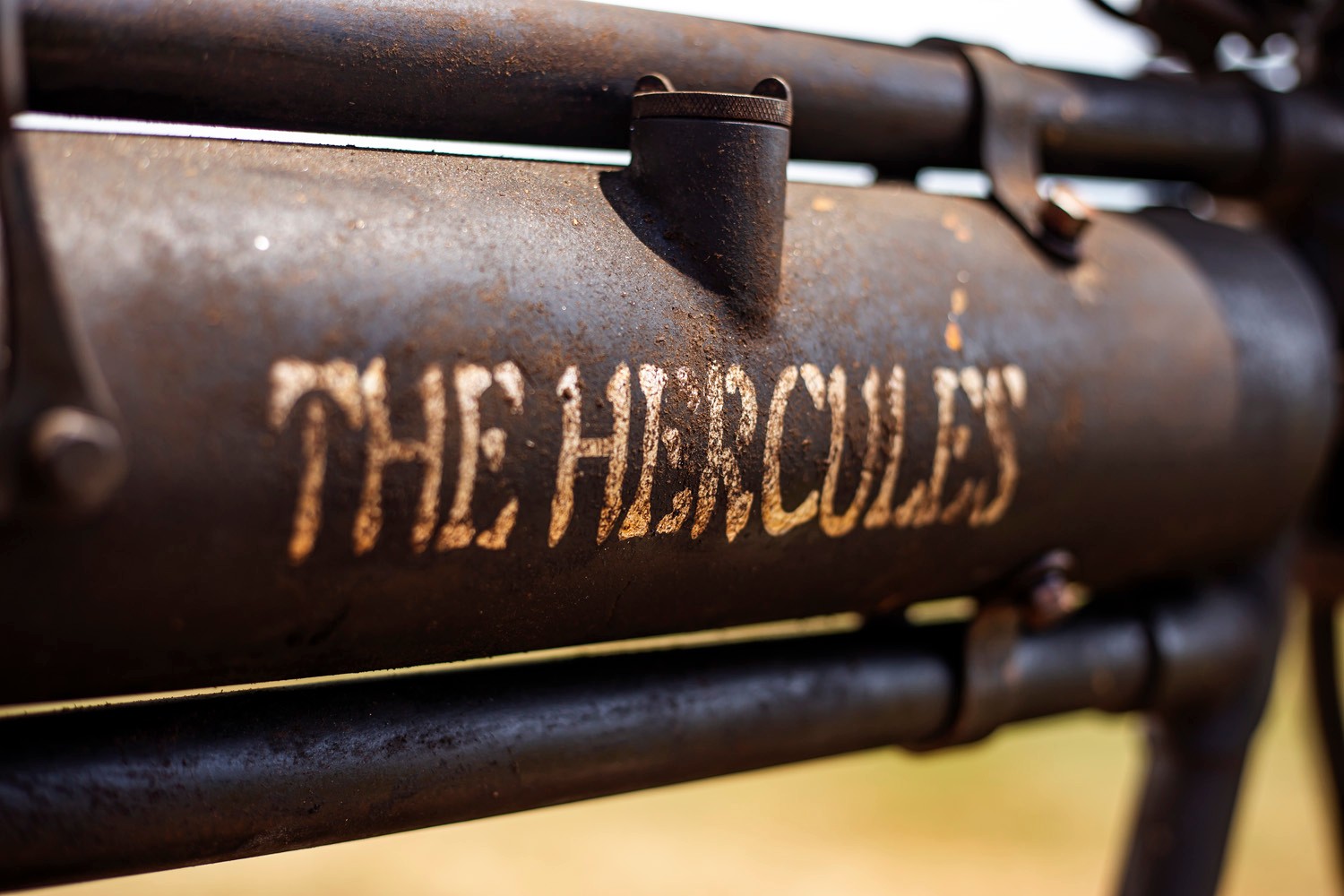
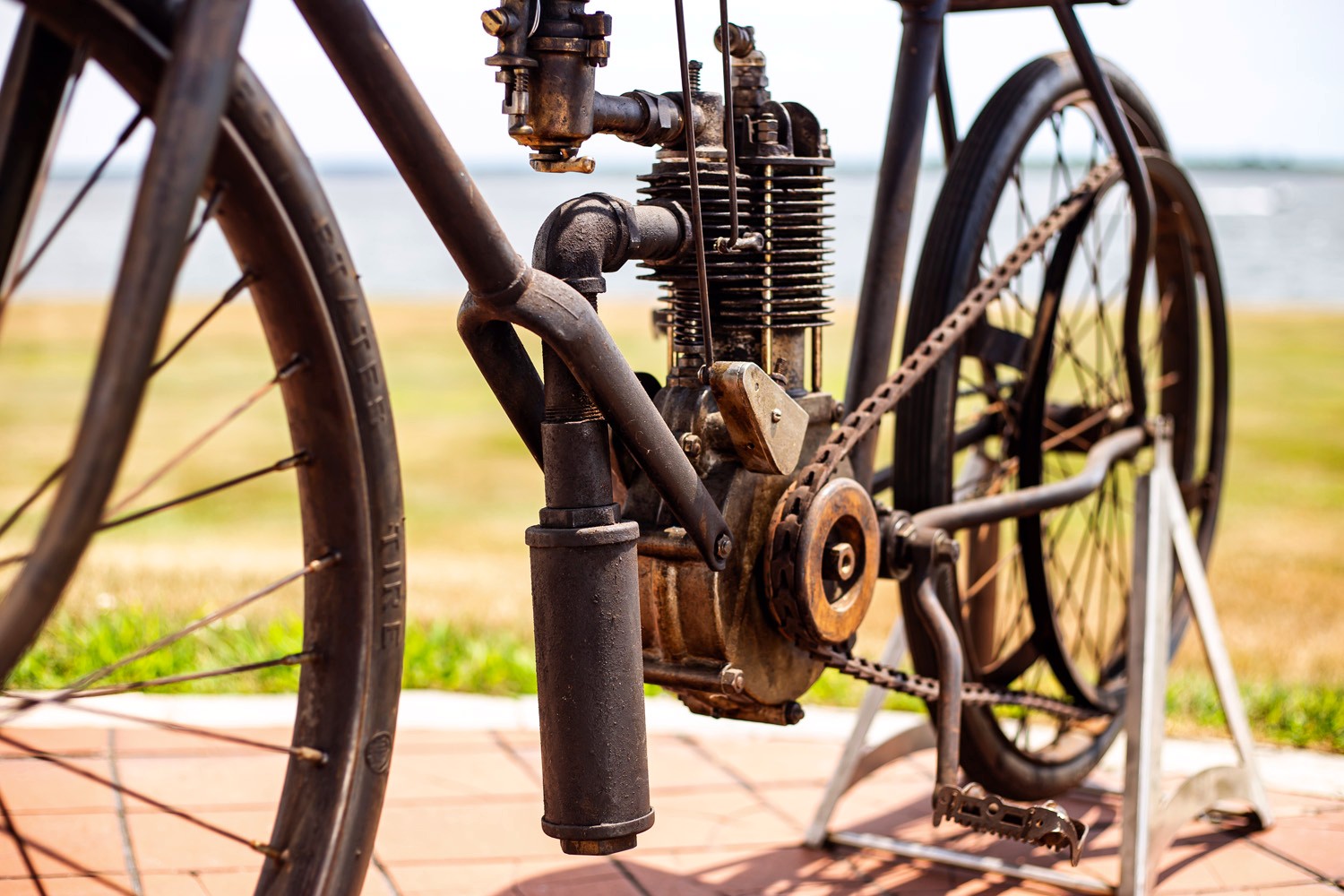
- MODEL: Hercules
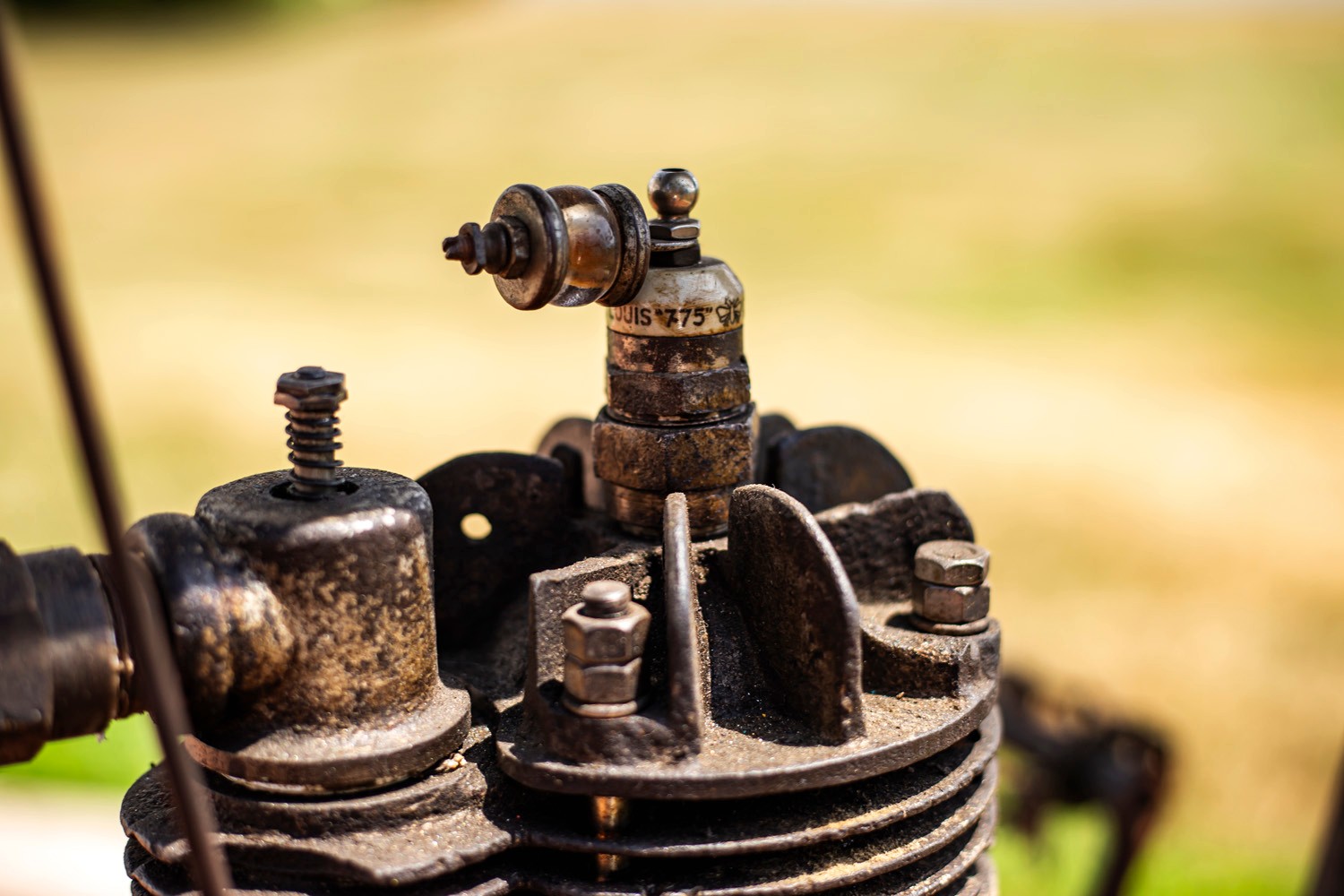
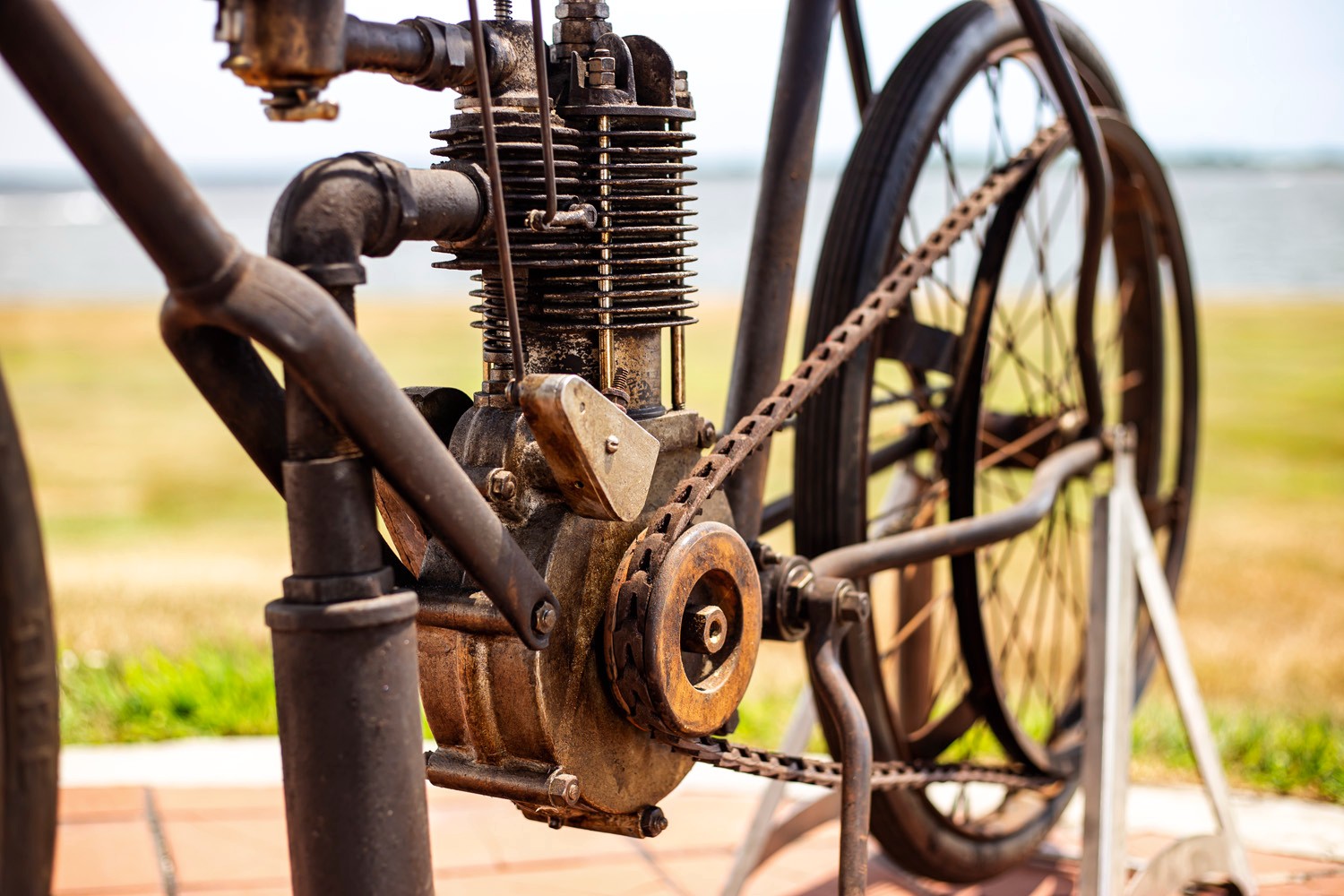
- ENGINE: Single-cylinder ball bearing
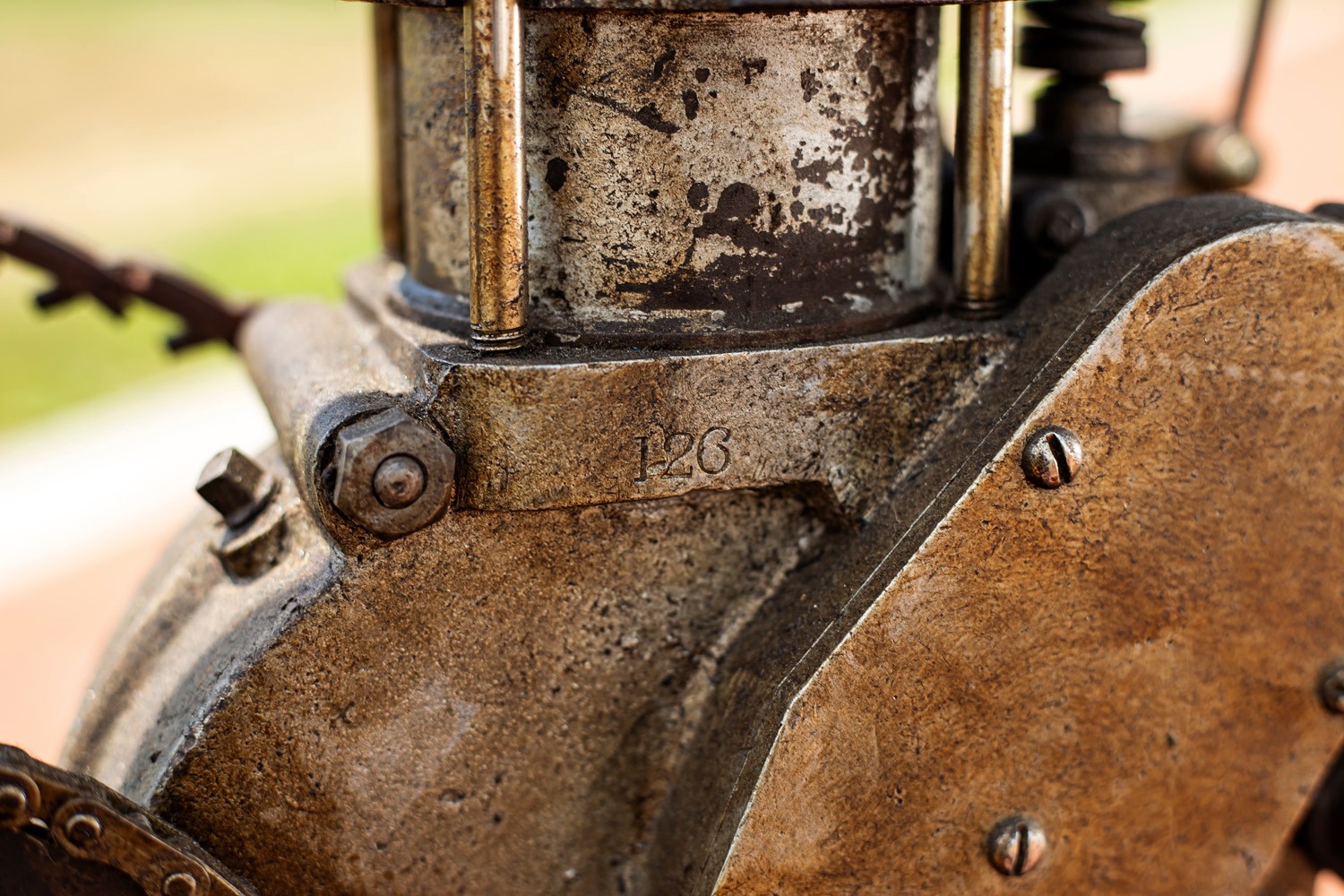
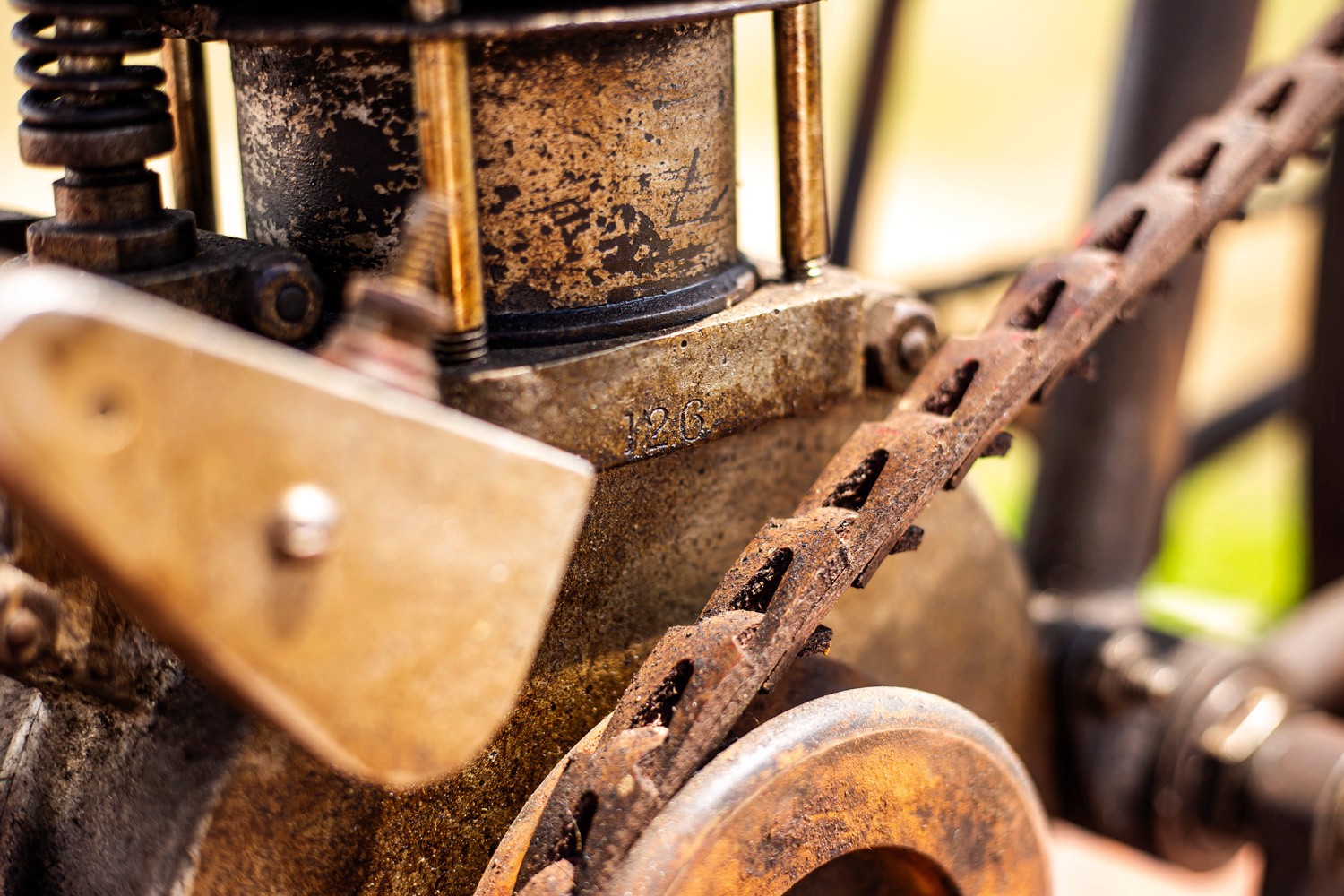
- ENGINE NO: 126
- BORE & STROKE: 3 in.
- WHEELBASE: 56“
- WEIGHT: 125 lbs.
- HP: 2.5
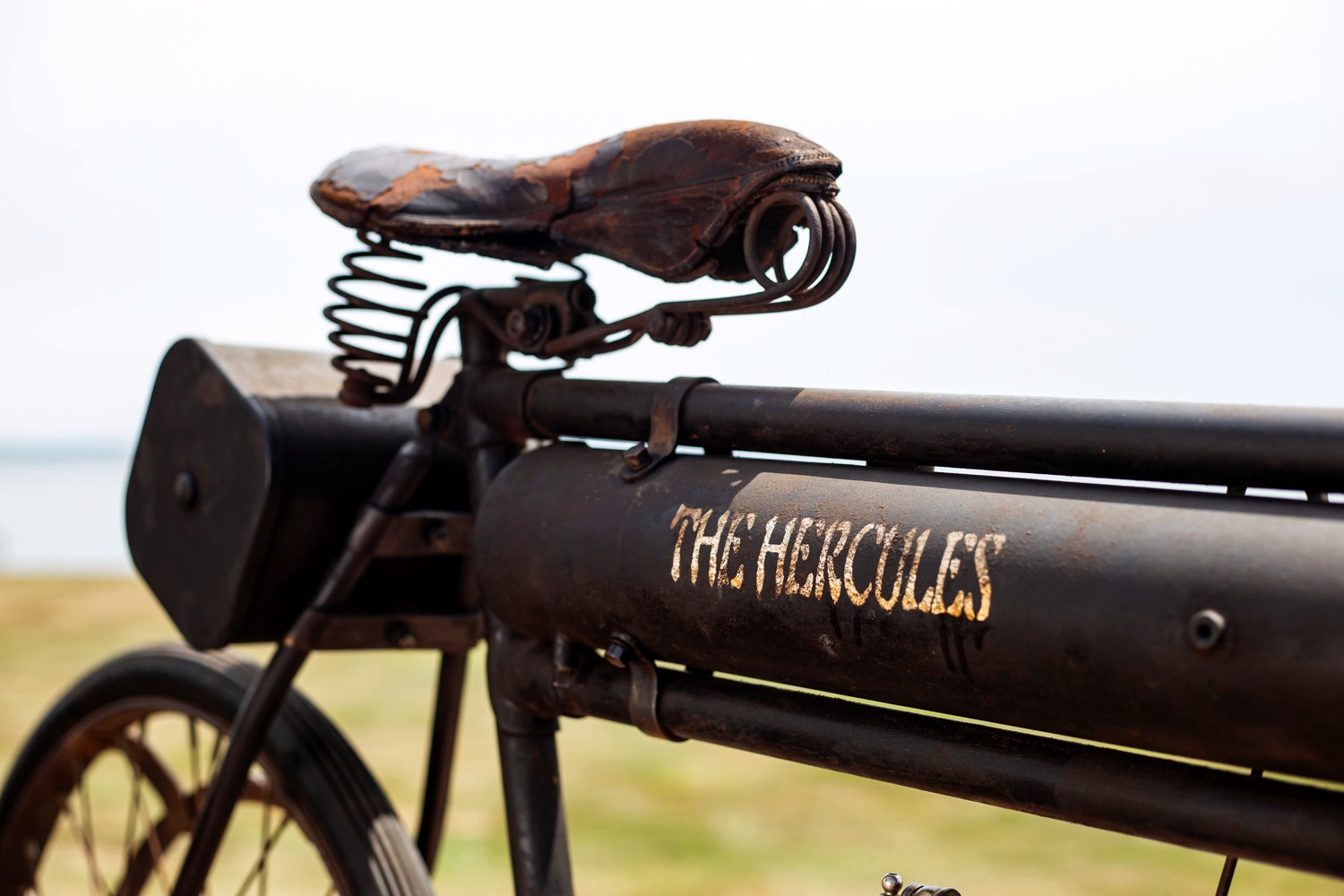
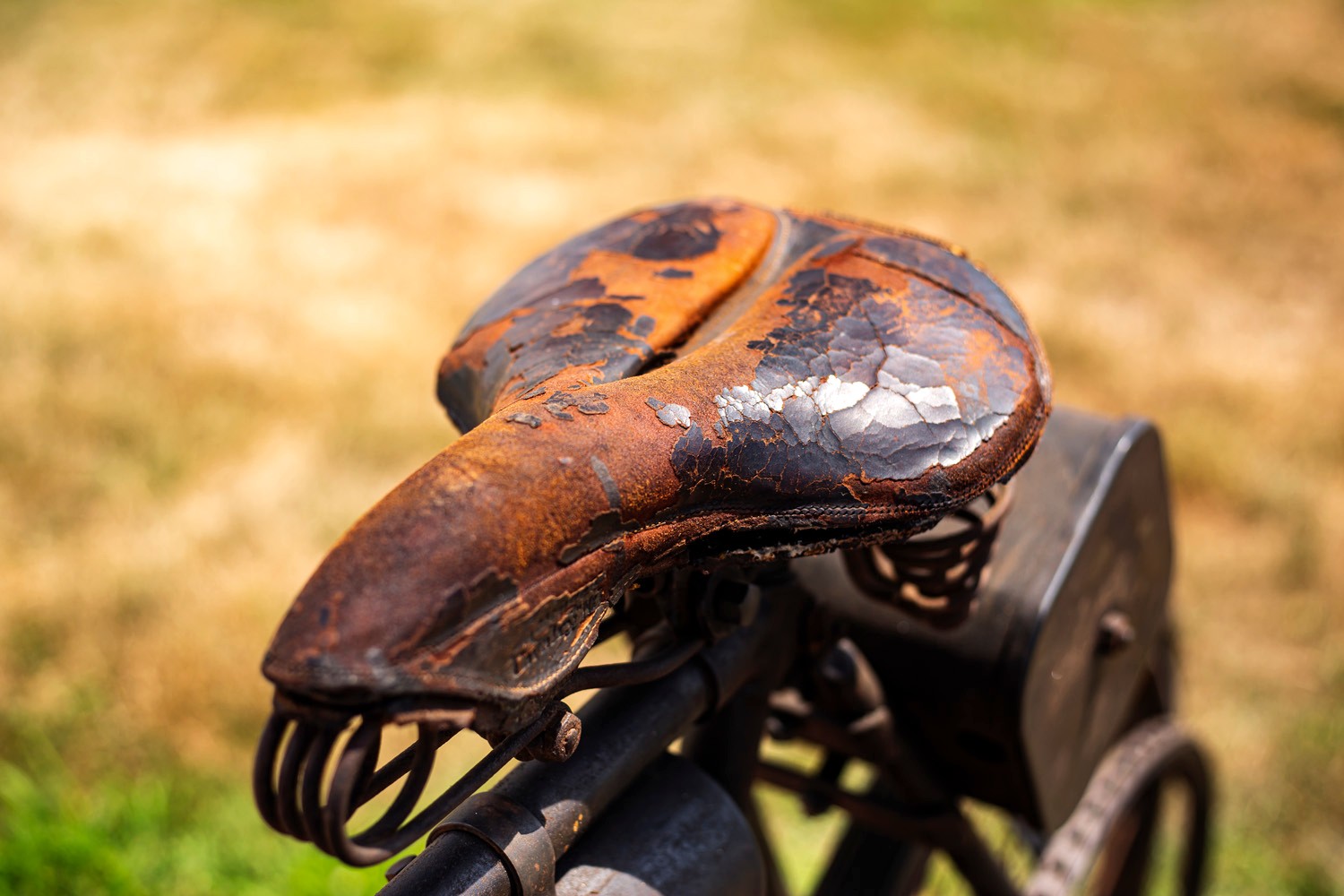
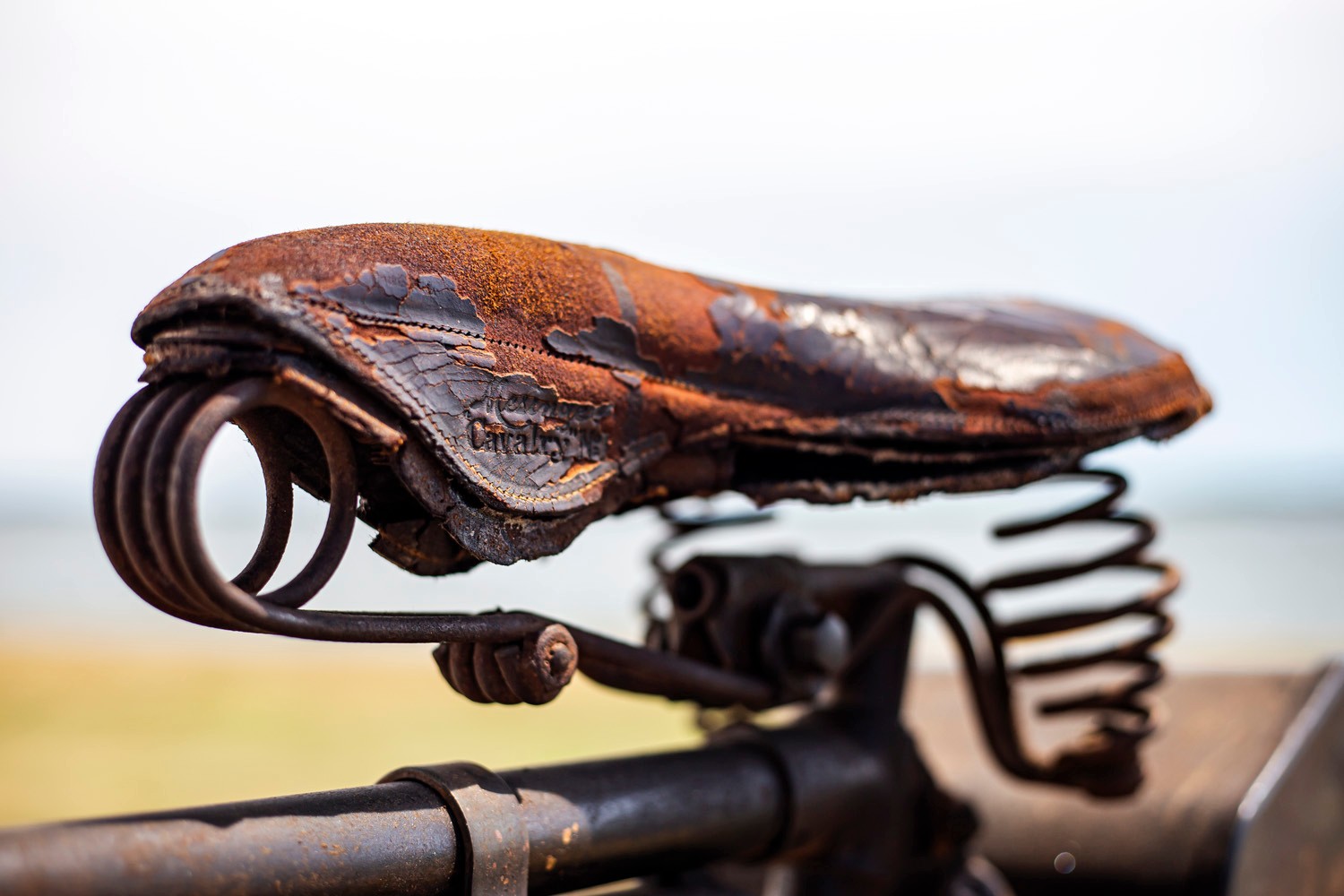
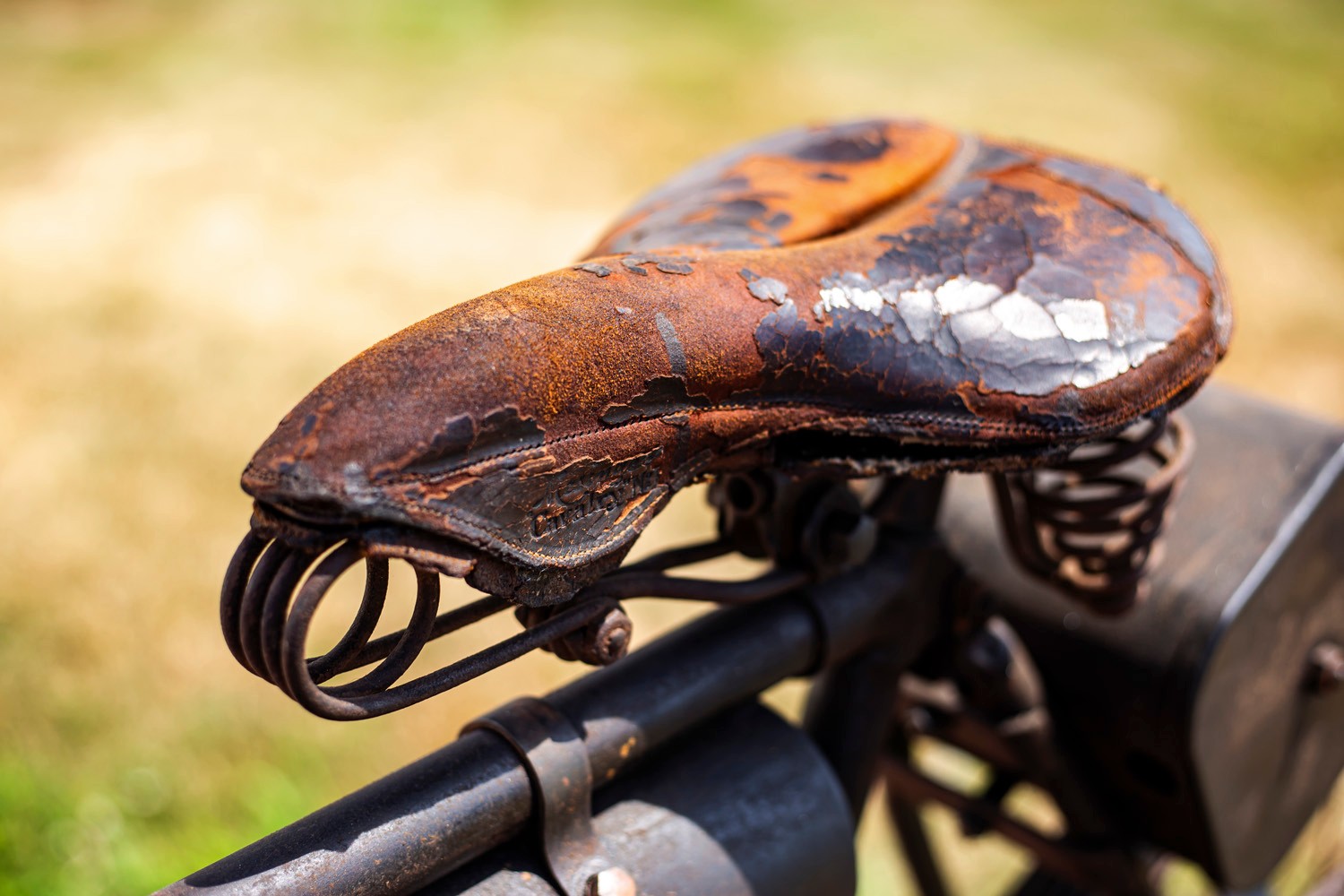
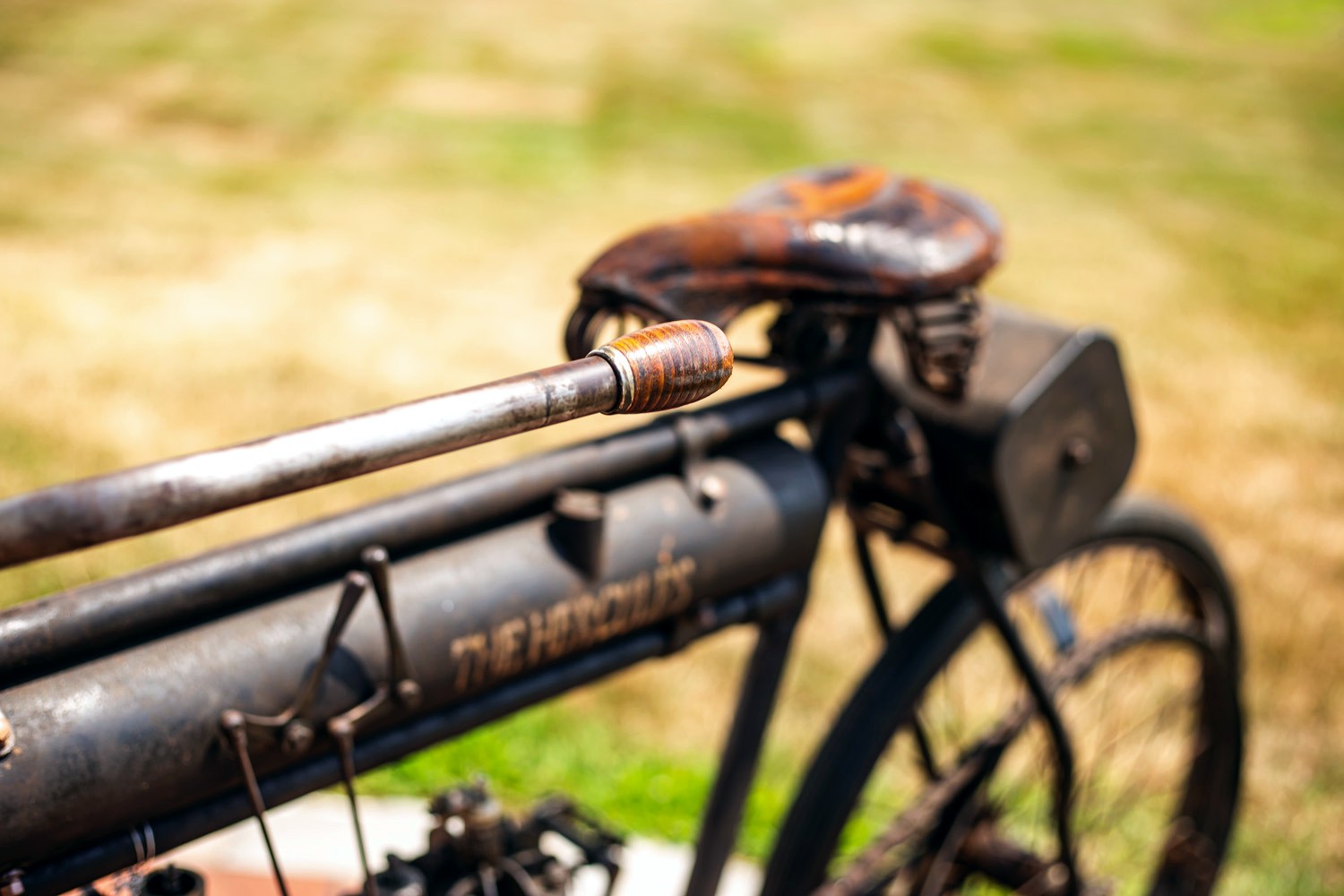
- SEAT: Mesinger Cavalry No. 2
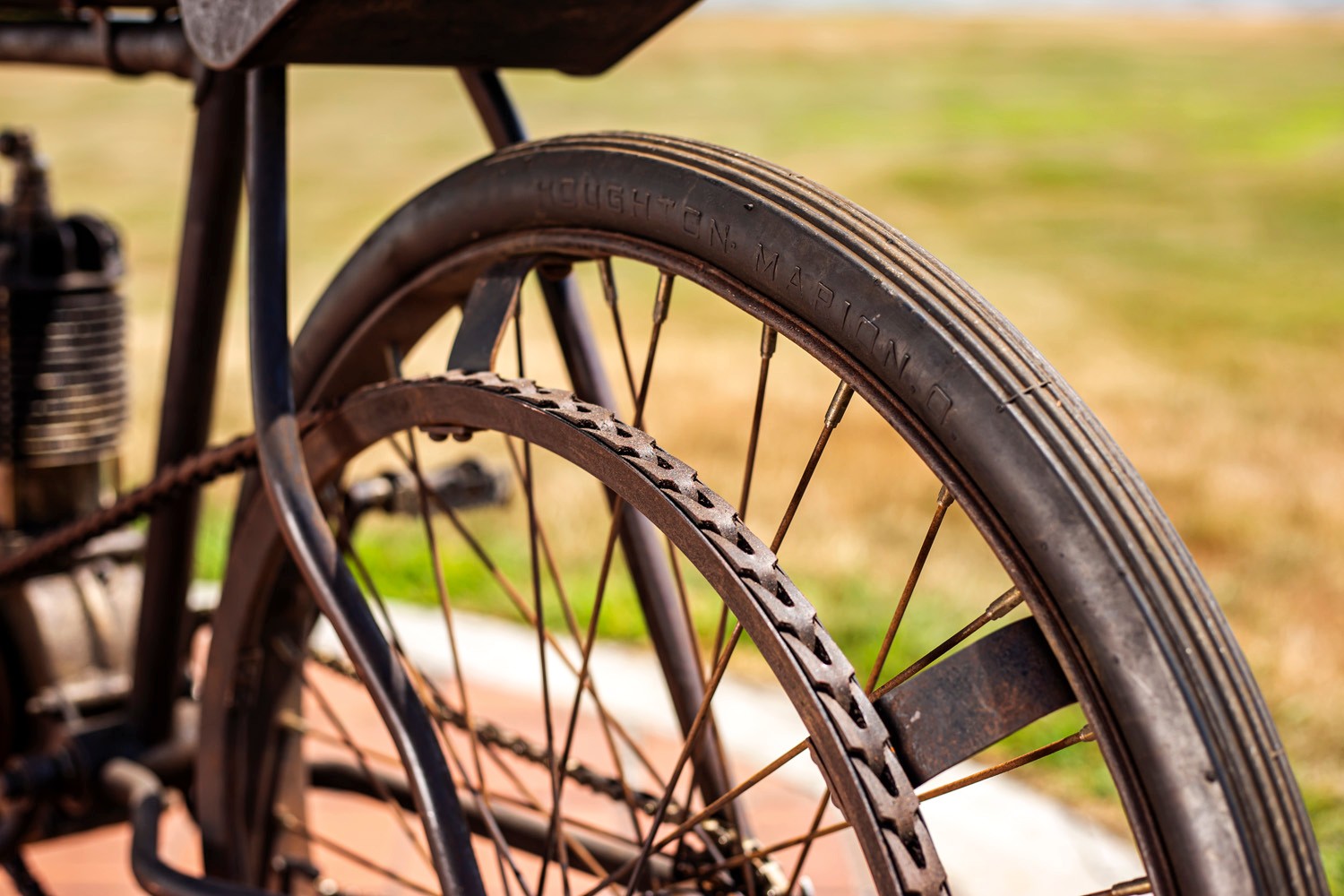
- HEADBADGE: Nickel-plated brass with hand-painted logo in red
- FRAME: Reliance Motor Cycle Company
Despite becoming known as the “fastest man on earth” in 1907 for setting a land speed record of 136 mph on an
experimental V-8 motorcycle he built himself, Glenn Hammond Curtiss was not known for his bikes but as an American
aviation pioneer. Born in 1878 in Hammondsport, New York, he started his engineering career racing bicycles in
his youth. By 1901, he built his first motorcycle with an engine of his own design, and his genius only expanded
from there.
According to Richard Leisenring, former curator of the Glenn H. Curtiss Museum in Hammondsport, NY, and
author of Curtiss Motorcycles 1902-1912, “During his early experimentation, Glenn learned two crucial points that
made his motorcycles successful. First was the weight-to-speed ratio. Second was lowering the center of gravity on
his machines, which substantially increased efficiency and speed.”
Curtiss’s first attempt at racing one of his own motorcycles (and far from the last) was on a 1902 Hercules
single-cylinder at an event sponsored by the fledgling New York Motor Cycle Club in which he took third place. Although,
as a newcomer, this brought his motorcycles a fair amount of attention, Glenn considered it a defeat, which spurred
a renewed focus.
In 1904, he found that “Hercules” was already patented and began the “Curtiss” line as he was taking home the gold
against even rival Indian motorcycles. It is estimated that he sold five machines under the Hercules name. He
developed the first American V-twin engine in 1903, setting a world speed record with it that year, and inspiring the
industry. Competitors Indian Motorcycles would go on to offer their first two-cylinder engine in 1906, followed by
Harley-Davidson in 1909. G.H. Curtiss even put his 9 HP V-twin engine into the first successful dirigible in the
United States, the California Arrow. By 1907, Glenn had quite a few world records under his belt, including an
unofficial land speed record of 136 mph on an experimental V-8 airplane engine-powered bike on Ormond Beach. In 1908,
G.H. was the first in America to make a preannounced, officially recognized, publicly observed flight.
Until 1912, he and his team would go on to build, sell, and race motorcycles out of their Hammondsport
garage, but this wasn’t his only successful endeavor. In the same period, Curtiss was the chief rival of the Wright
brothers, designing airplane engines, creating the most widely used U.S. aircraft in WWI, the first amphibious aircraft,
and joining the Aerial Experiment Association. Curtiss was one of the great engineers of the early 20th century,
producing innovative and high-performance motorcycles, including popularizing the handlebar throttle, and helping
to create the U.S. aviation industry. There is no doubt that if G.H. Curtiss had pursued the development of the
motorcycle with the same enthusiasm he put into aviation, the industry would look far different today.
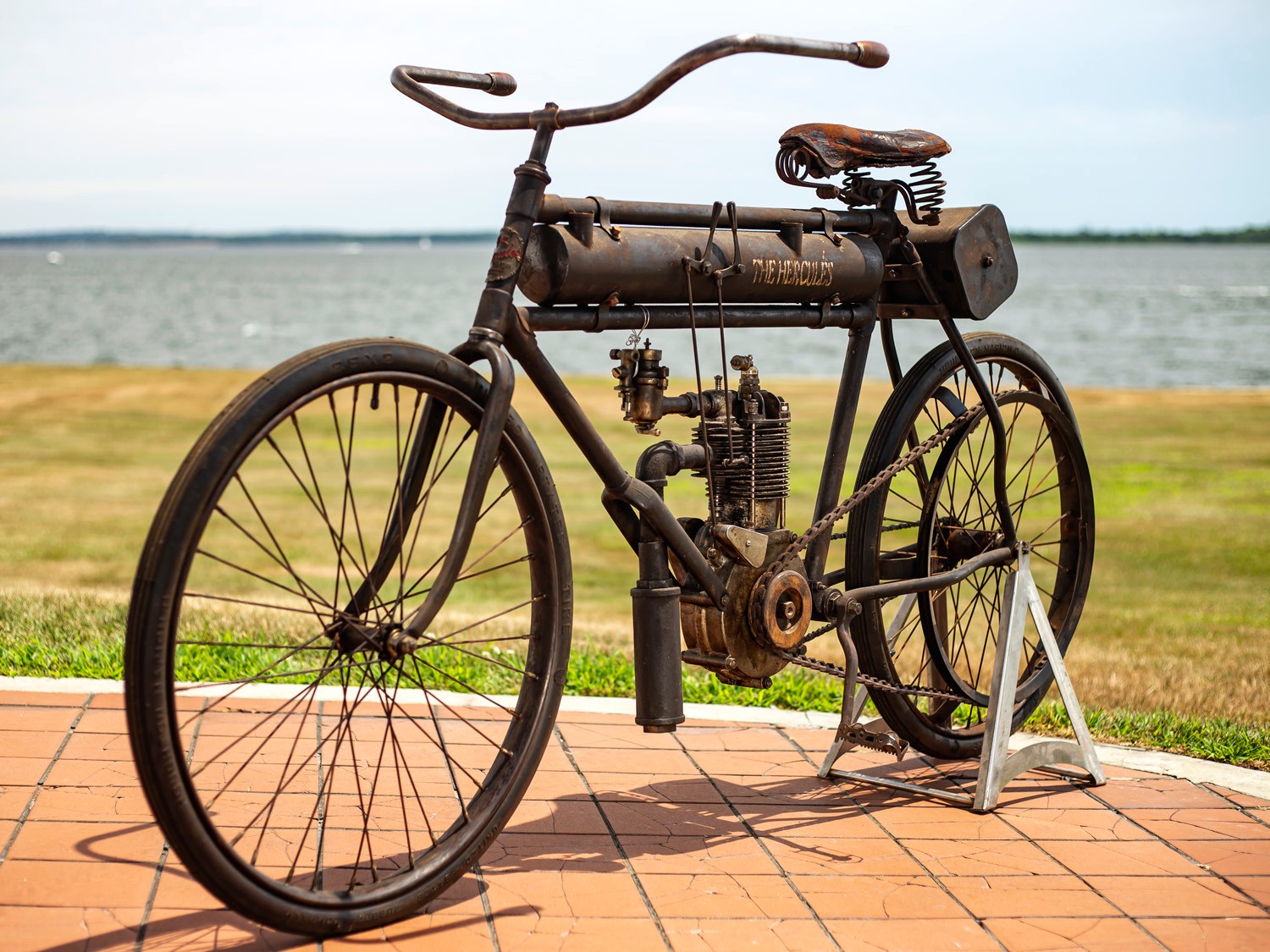
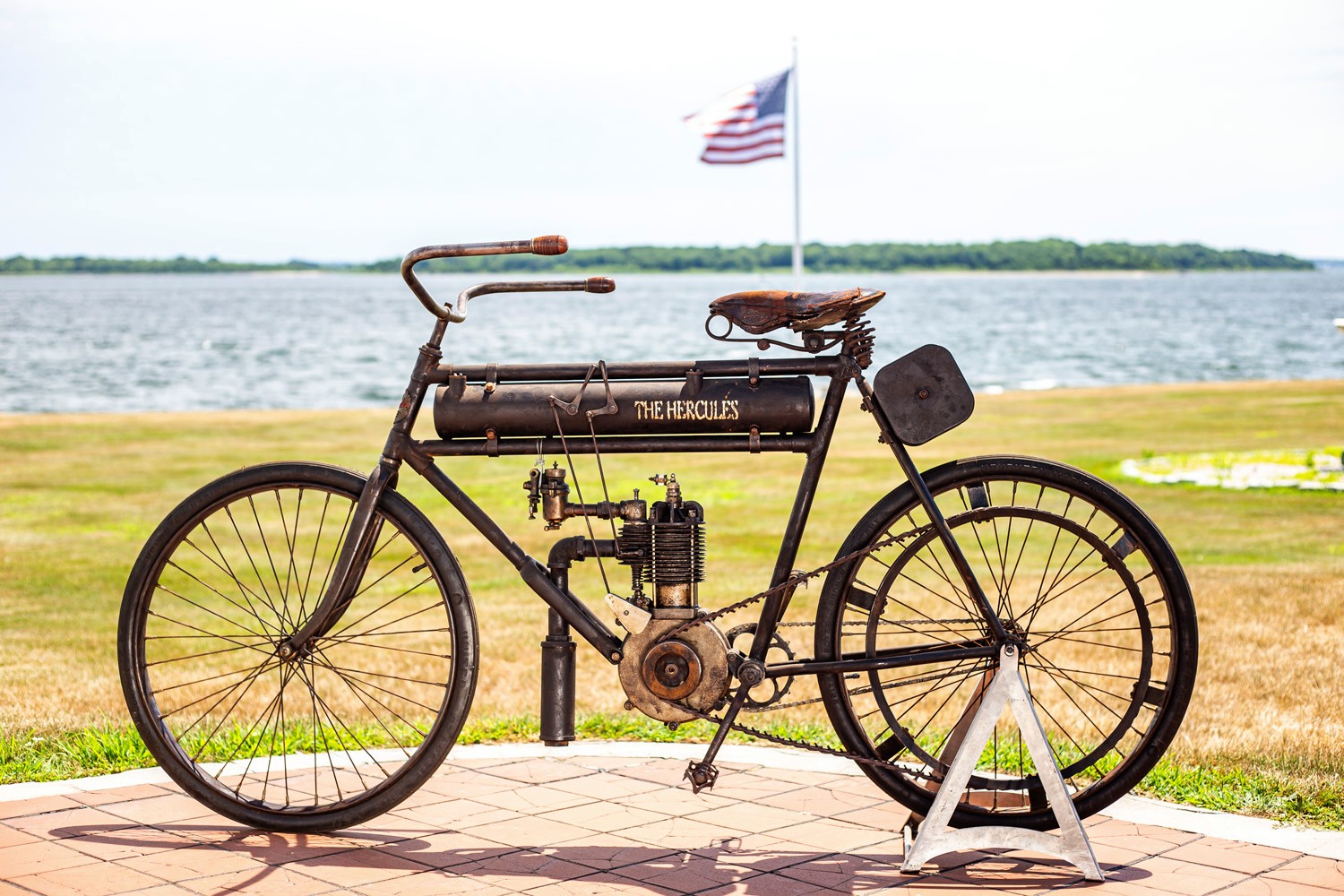
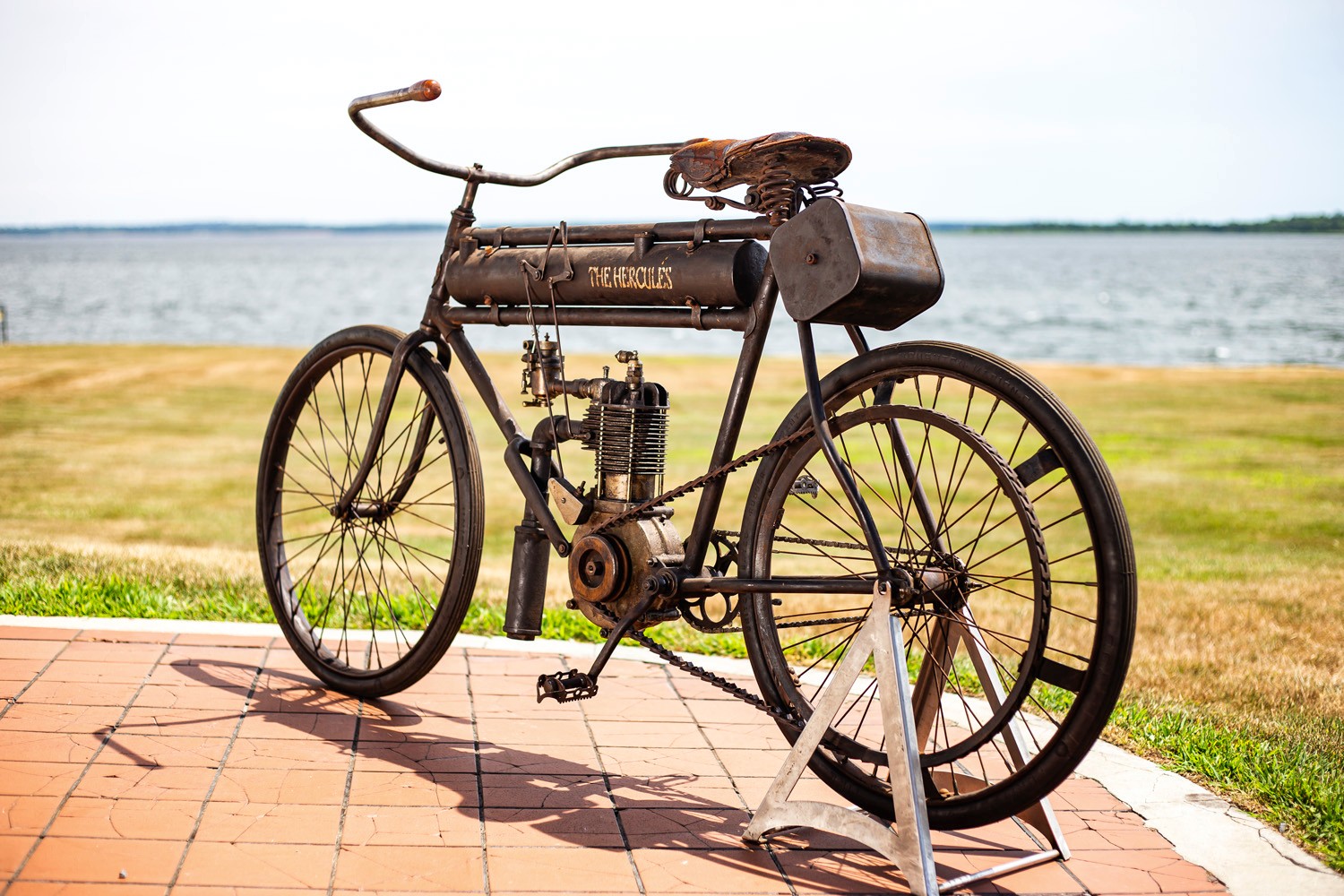
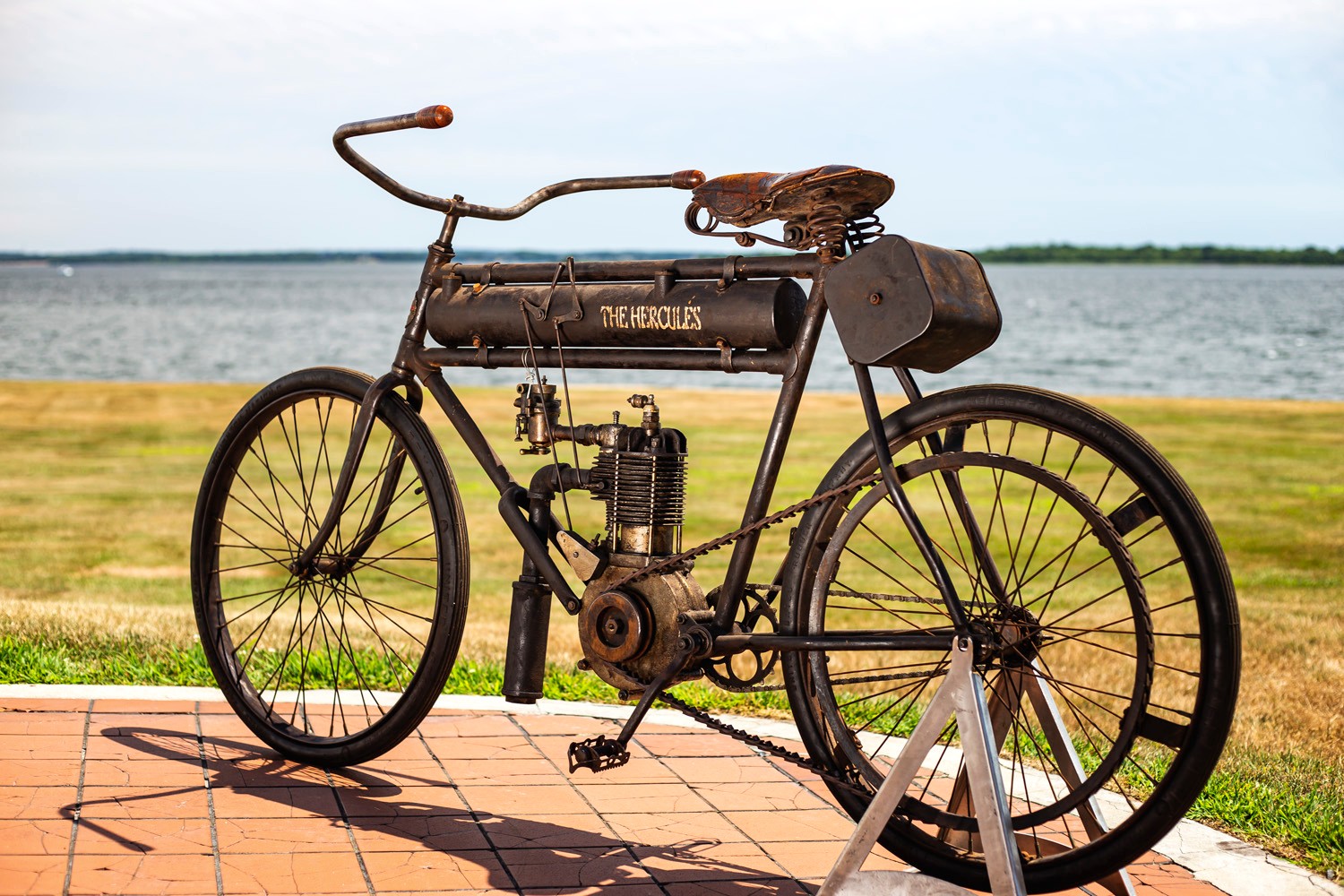
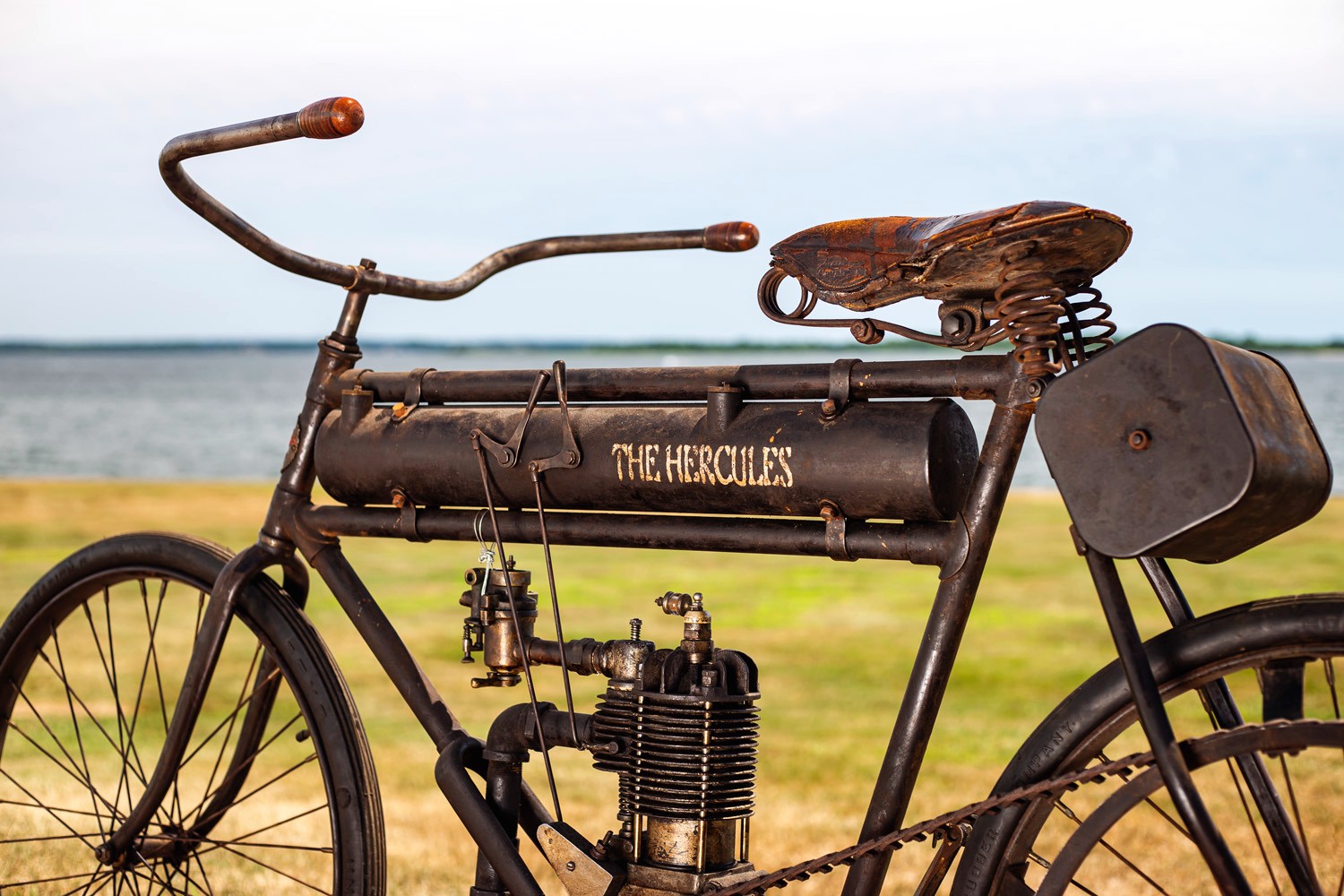
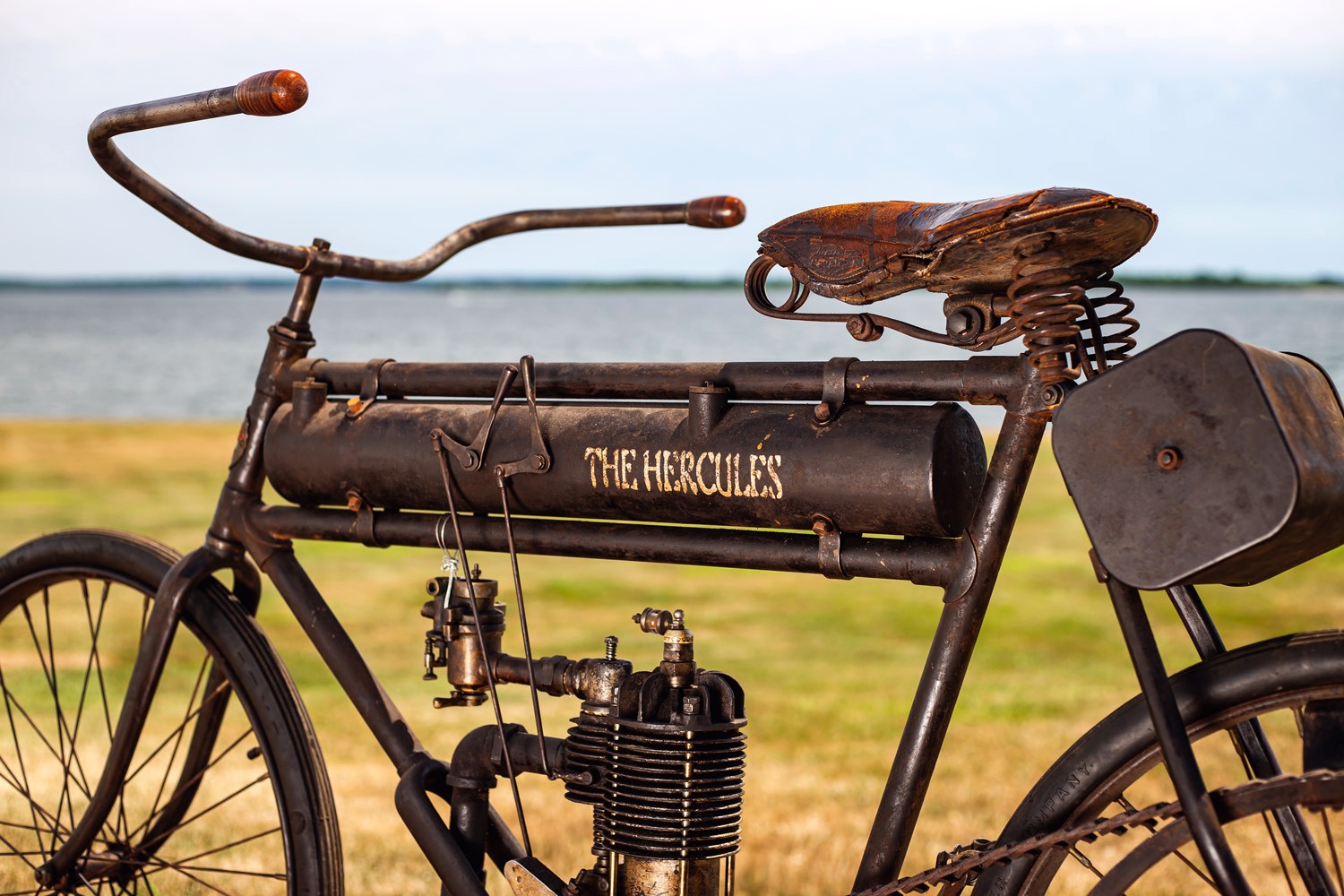
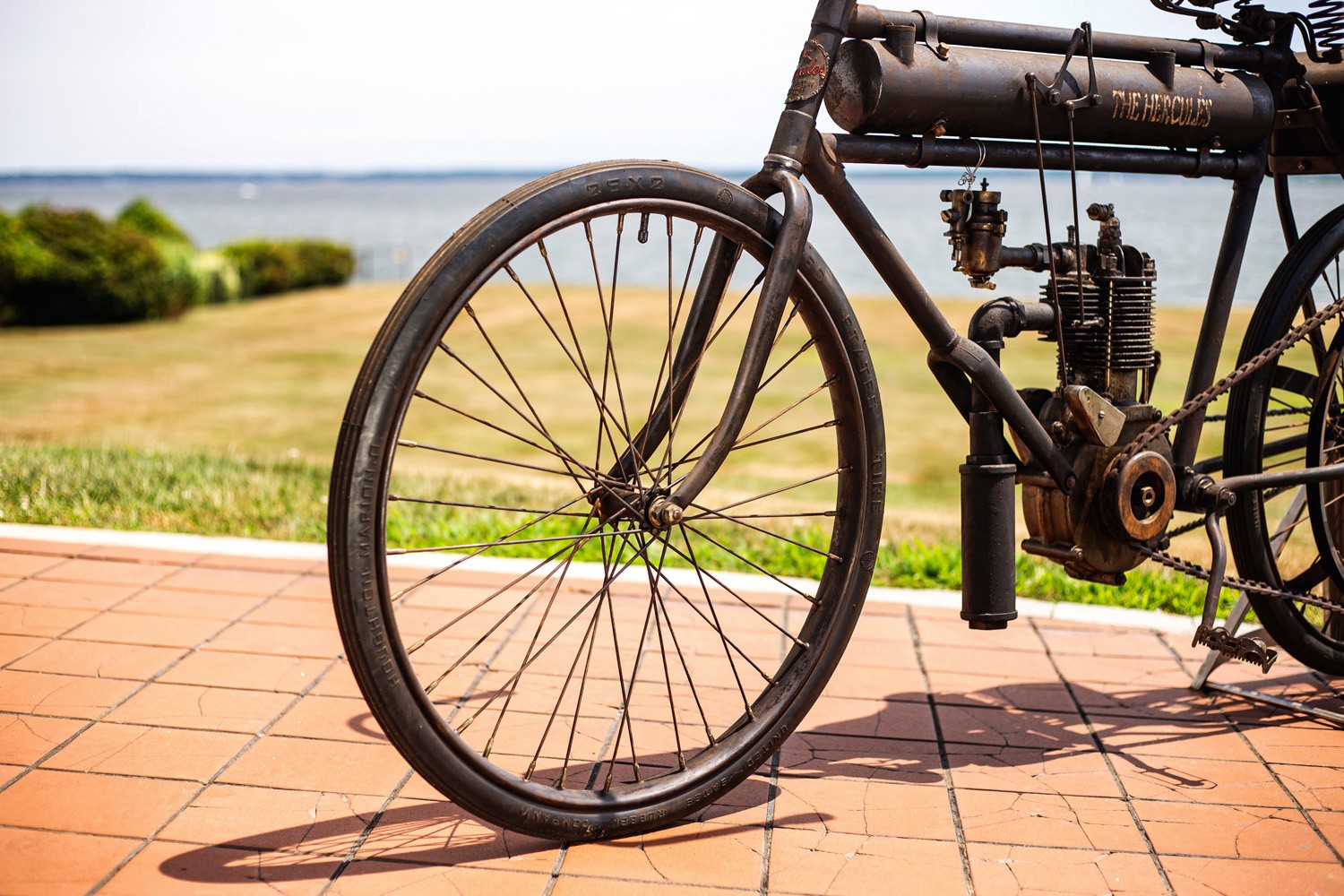
This 1902 Hercules is the earliest G.H. Curtiss-manufactured motorcycle known to exist. According to Richard
Leisenring in his book Curtiss Motorcycles: 1902-1912, “by the end of 1902, it is estimated five machines were sold
under the Hercules brand name.” Only seven were ever manufactured, making this motorcycle a rare piece of
history, the highlight of any collection.
Although Glenn had designed the machine himself, he was not yet producing almost every aspect himself, as he would
eventually do with the Curtiss line. The engine was completed with the help of his mechanically talented bicycle-racing
friend, Charles Kirkham, at the Kirkham machine shop and foundry in Taggerts Mills. The frame was made by the Empire
Motor Cycle Company, a.k.a. the Reliance Motor Cycle Company, an early American motorcycle
manufacturer operating in NY from 1903 to 1911. The machine was then assembled in Curtiss’s quickly growing
shop.
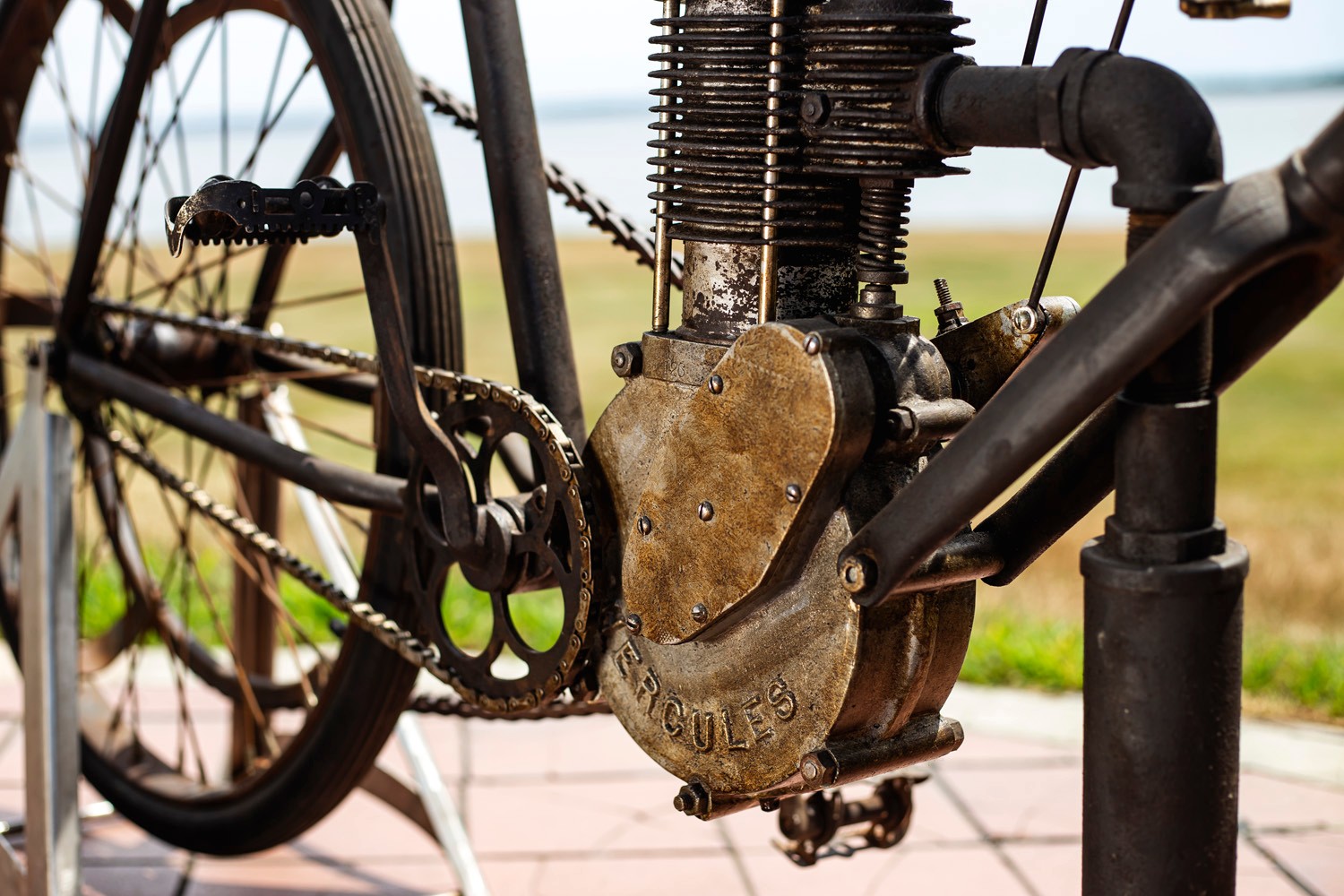
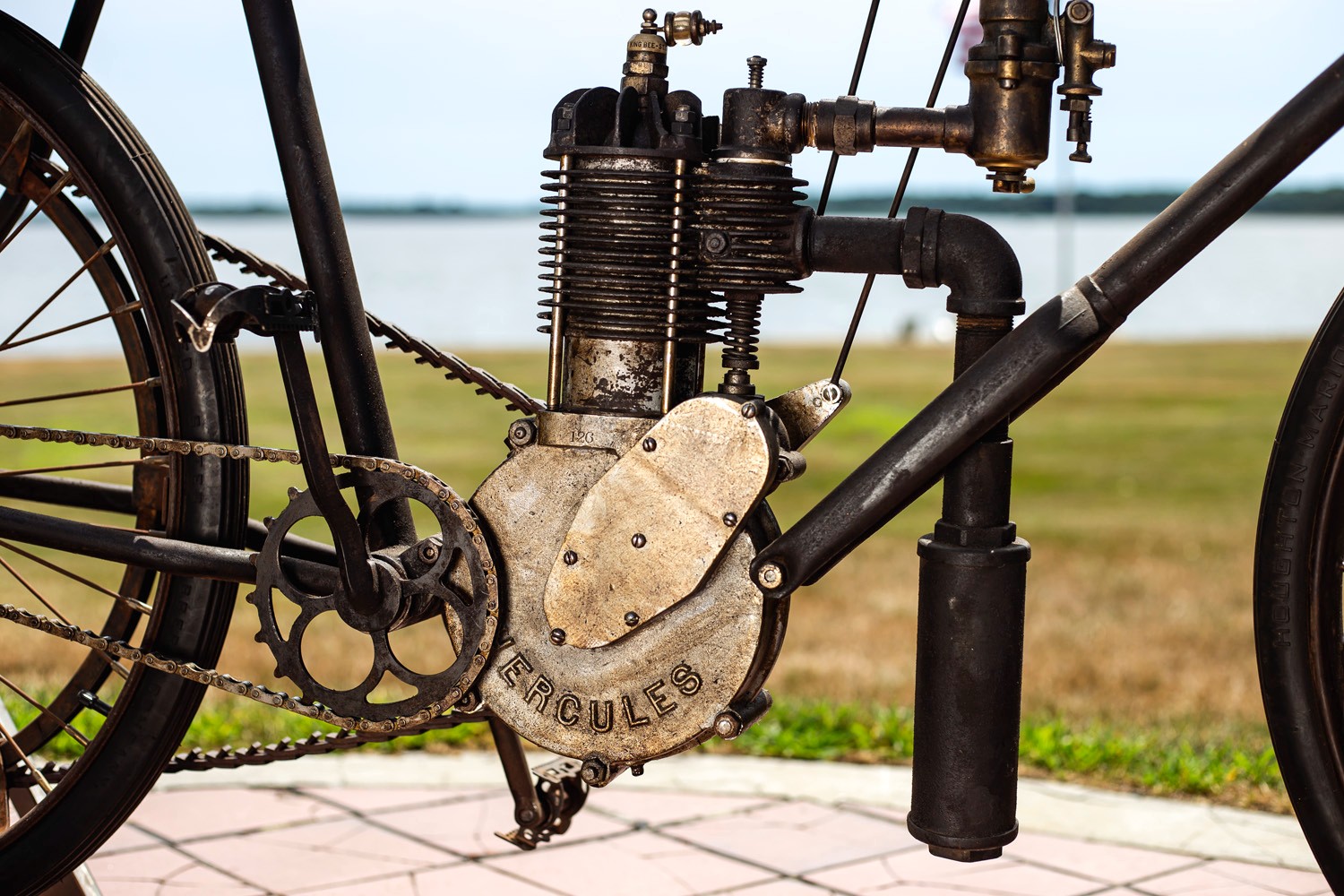
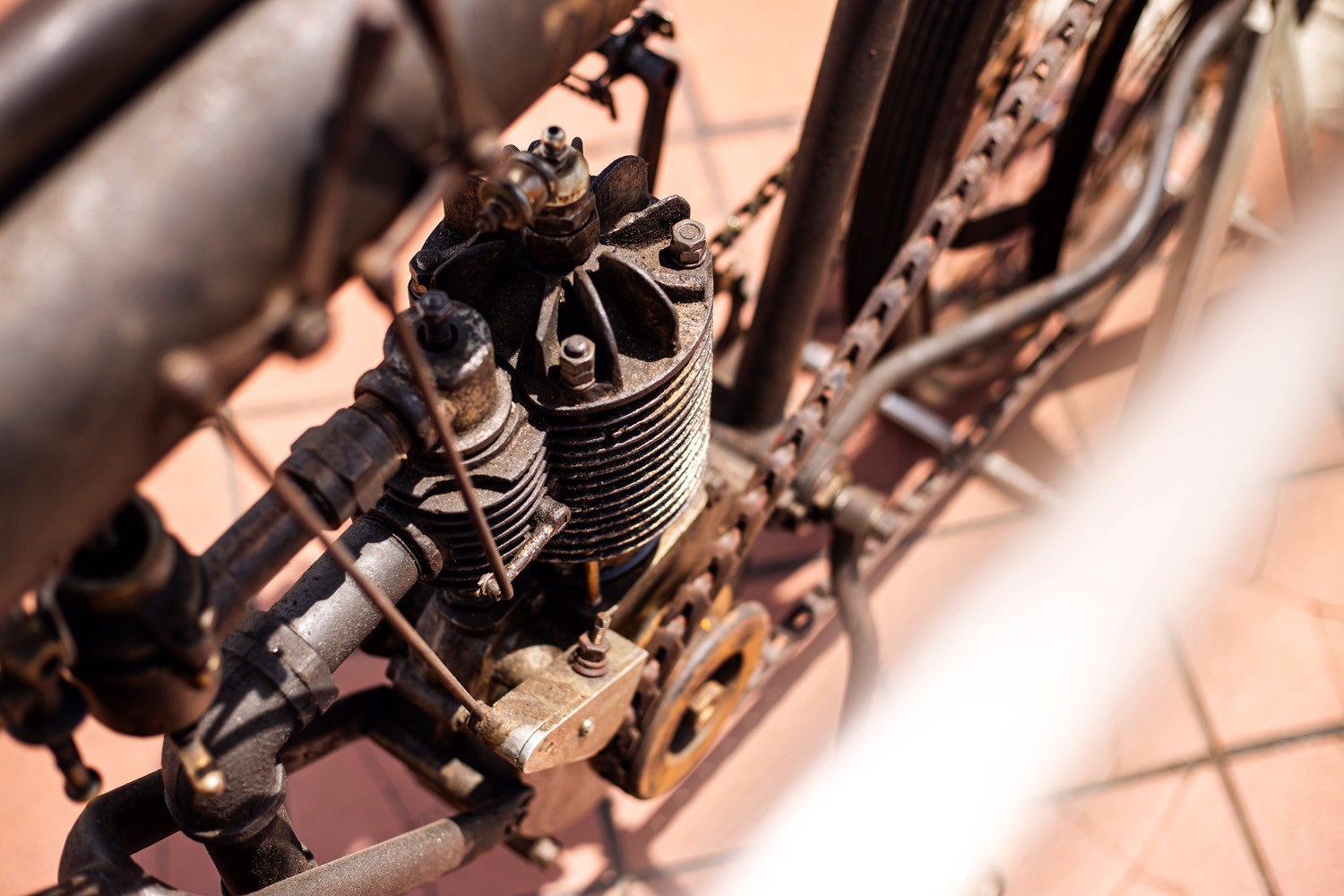
The sixth engine he ever produced, a single-cylinder 2.5 HP with a leather belt drive under the name “Hercules,”
can be found here, according to premier Curtiss historian Dale Stoner. The G. H. Curtiss Manufacturing
Company engraved “126;” the “1” is reported to represent the first and earliest run of the Hercules engines.
The “2” is for the date of manufacture: 1902. Stoner shares that the “6” makes this the sixth motorcycle engine
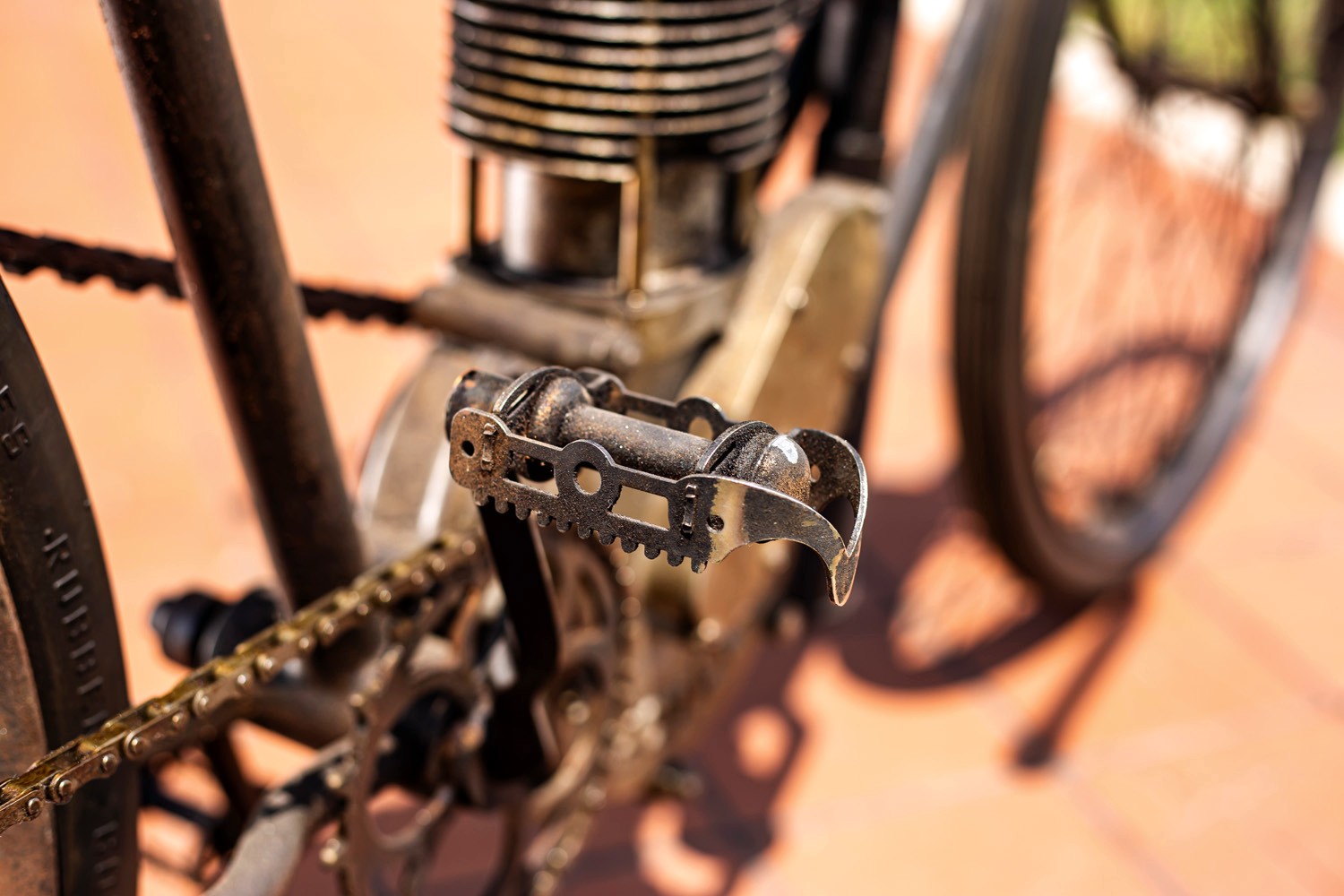
Curtiss produced. The Audrain Auto Museum notes that this is the earliest known example of this extremely rare,
unrestored motorcycle.
The first advertisement taken out by Curtiss for the Hercules engine and motorcycle, 1902, as seen
in
Curtiss Motorcycles 1902-1912:
“The Hercules 2 ½ H.P. ball bearing motor for bicycles, tandems, etc. Patents applied for. Just what you
have been looking for. Height, 16 ½ inches; width over all 4 ¾ inches; crank case, 8 inches; weight, 35
lbs.; speed 300 to 2400 revolutions per minute; cylinder, 3 x 3 inches. There are 72 quarter-inch balls in crank shaft
bearings; they can never heat or get to cutting, and have only 1-30 the friction of ordinary bearings. The Hercules
is the lightest and most powerful motor of its kind on the market. We sell motors, castings, drawings, accessories and
complete motor cycles fitted with these motors. Tandems a specialty. Get our prices; they are right.
G. H. Curtiss, SoleAgent
Hammondsport, N.Y.” (Pg. 31)
1903 G. H. Curtiss Mfg. Co. catalog, as seen in
Curtiss Motorcycles 1902-1912
“In presenting our line of Hercules Motorcycle Cycles and Motors we wish to impress the fact that our product
is of the highest possible grade throughout. We have spared no time or money to perfect the machines, which are
manufactured to the best obtainable materials and in a most accurate and workmanlike manner. All parts are built to
gauge and are interchangeable. Each motor develops the power at which it is rated, and is thoroughly tested before
leaving the factory.
We have substituted Roller Bearings in place of the ball bearings, the feature of our last year’s motors and to which we
attribute much of their success. Although ball bearings possess many good features and are very durable, roller bearings
possess the same good features and are still more durable and will practically never wear out.
The complete machine is marked with the same care in construction and finish, and each detail is worked out in
a nicety. The design and construction of the frame, the position of the motor, etc., is correct from every
point of view, and is being copied by other manufacturers. Our machines are thoroughly practical and reliable, easy
riding, easy to control, and at the same time powerful and speedy. They are free from objectionable features such as
vibration, noise, extreme width and bulkiness, and while the machine is what may be called heavily built there is no
unnecessary weight. The machines are built with large gasoline and lubricating oil capacity, which we have found by
experience, a very desirable feature.
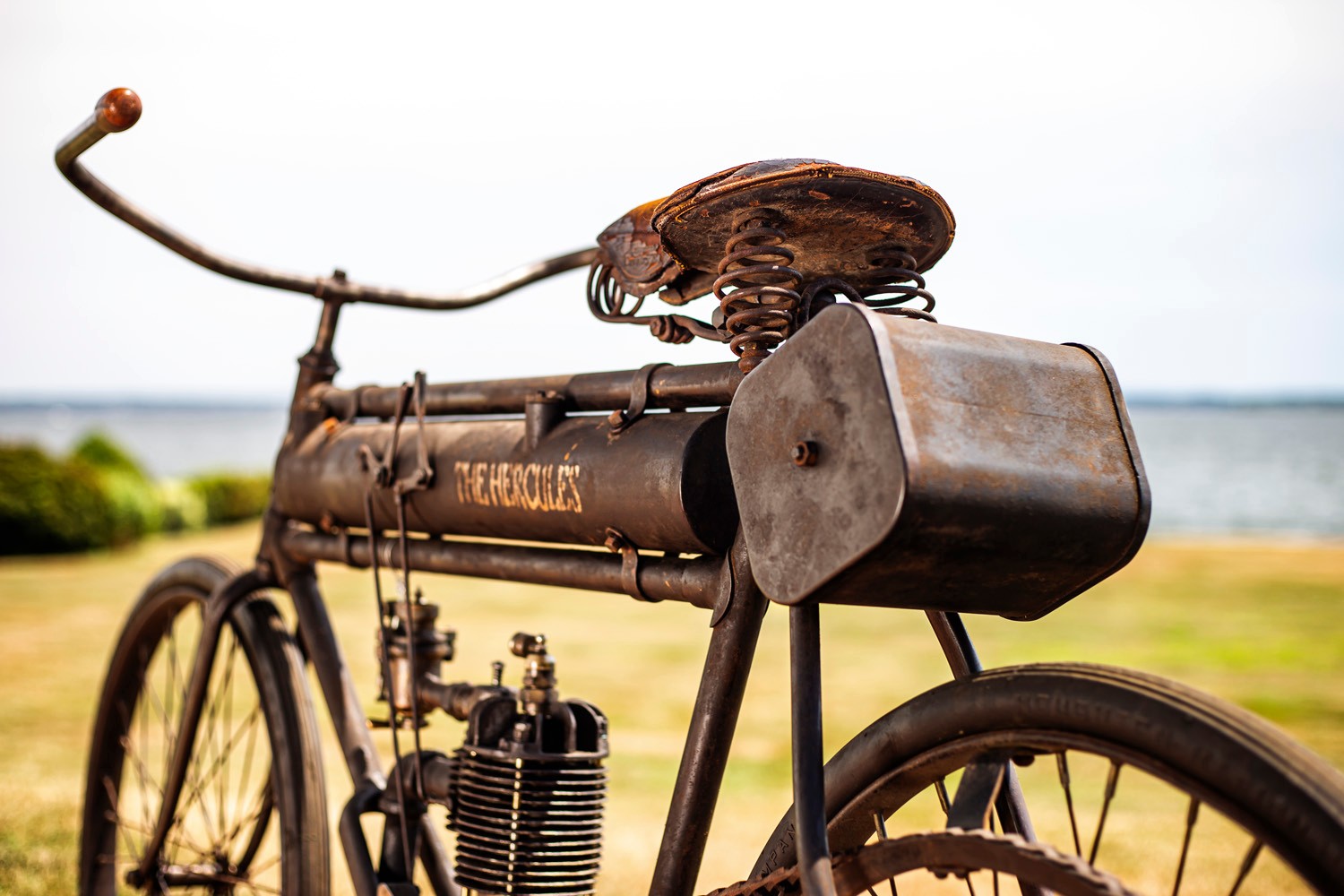
The batteries and coil are contained in a strong case attached to the rear fork stays and are easily accessible. The
batteries are of standard size and can be replaced at any time without delay of sending to the factory for a special
size. A set of our Columbia batteries are good for about a thousand miles. Our new throttle control allows of a much
greater range of speed than when the engine is controlled entirely by advancing or retarding the spark, and will run on
a slow speed with no perceptible exhaust.
Our tandems will meet the requirements of persons who do not care for great speed, and those who appreciate the pleasure
of tandem riding. This machine can be as readily ridden and controlled by one rider as our single machine - the only
noticeable difference is riding being a long wheel base, and machines equipped with our 5 H.P. motors have a speed that
will leave an express train in the background.
A good illustration of the speed and reliability of our machine was shown in the results of the New York Motor Cycle
Club’s Labor Day Road Race, in which one Hercules was entered against several each of most American makes and one
foreign machine. The machine made the fastest time of any regular stock or road machine in the race, earning second time
and third prizes, and being awarded a silver loving cup and gold medal.” (Pg. 37)
 1970 Harley-Davidson Belly Burner Dragster
 1907 Fabrique Nationale 4
 1912 Henderson 4
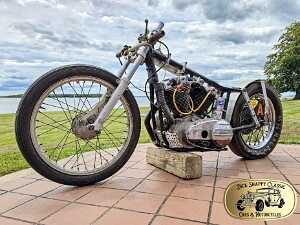 1962 Harley-Davidson Sportster XLCH Custom Engine Belly Burner Dragster
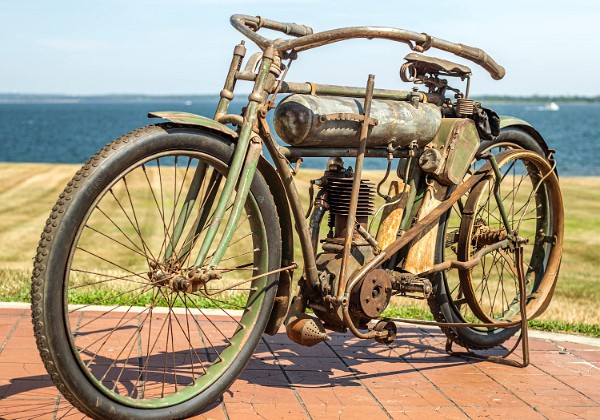 1911 Yale American Single
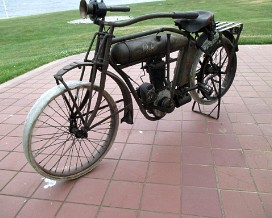 1912 Pope Model H 2 Single
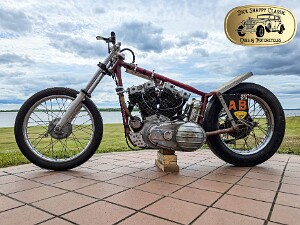 1965 Harley-Davidson Sportster XLCH KHK Frame Custom Engine McClanahan Dragster
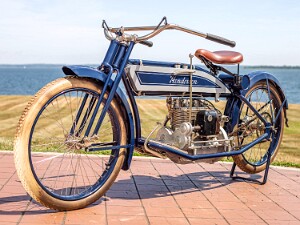 1913 Henderson 4
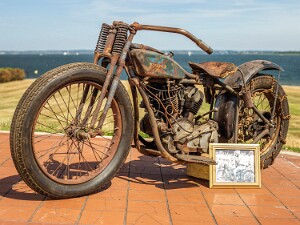 1928 Excelsior Super X Big Bertha Hill Climber
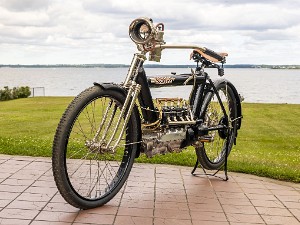 1911 Pierce Four (Engine No. 394)See similar motorcycles for sale