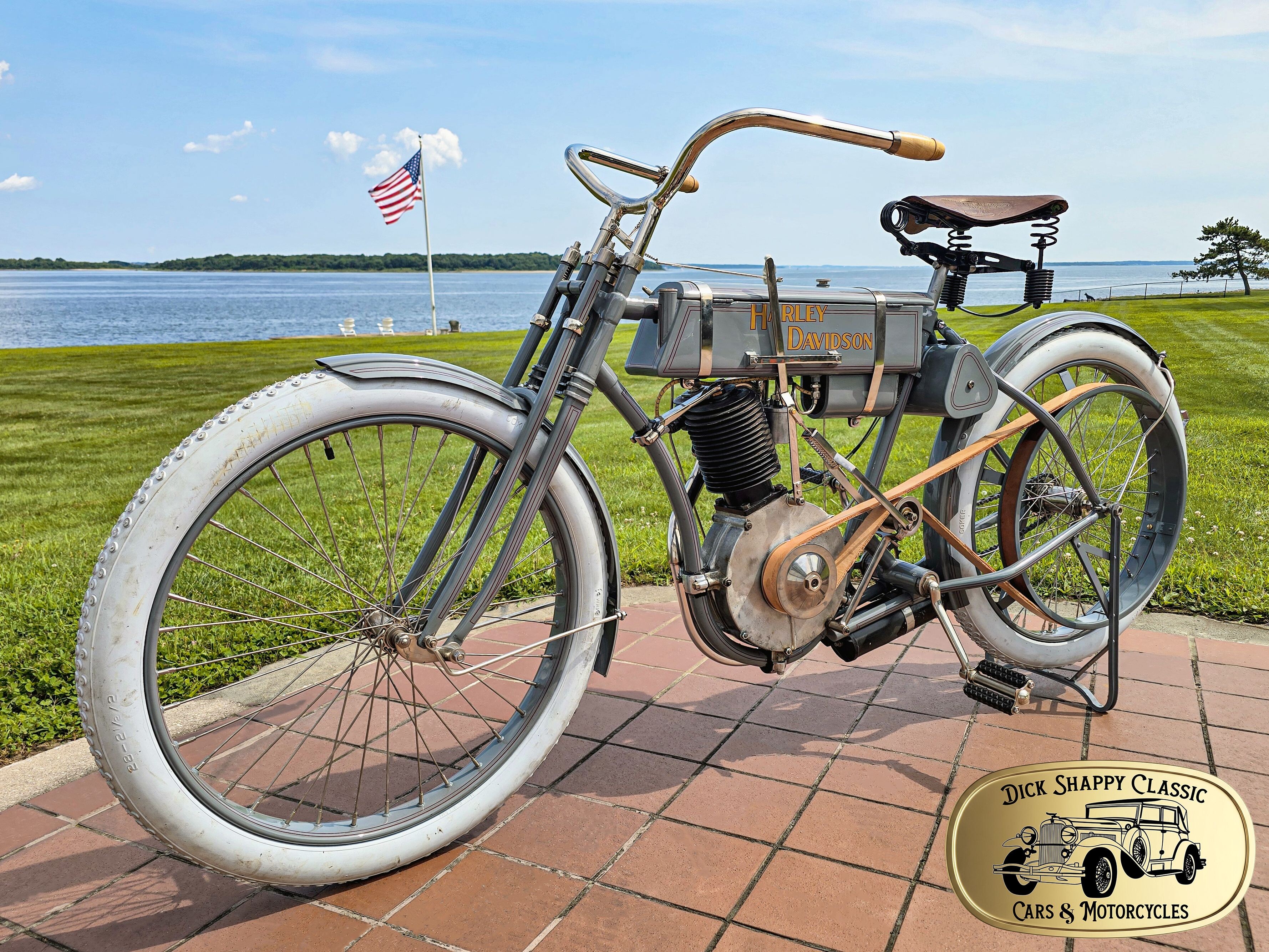
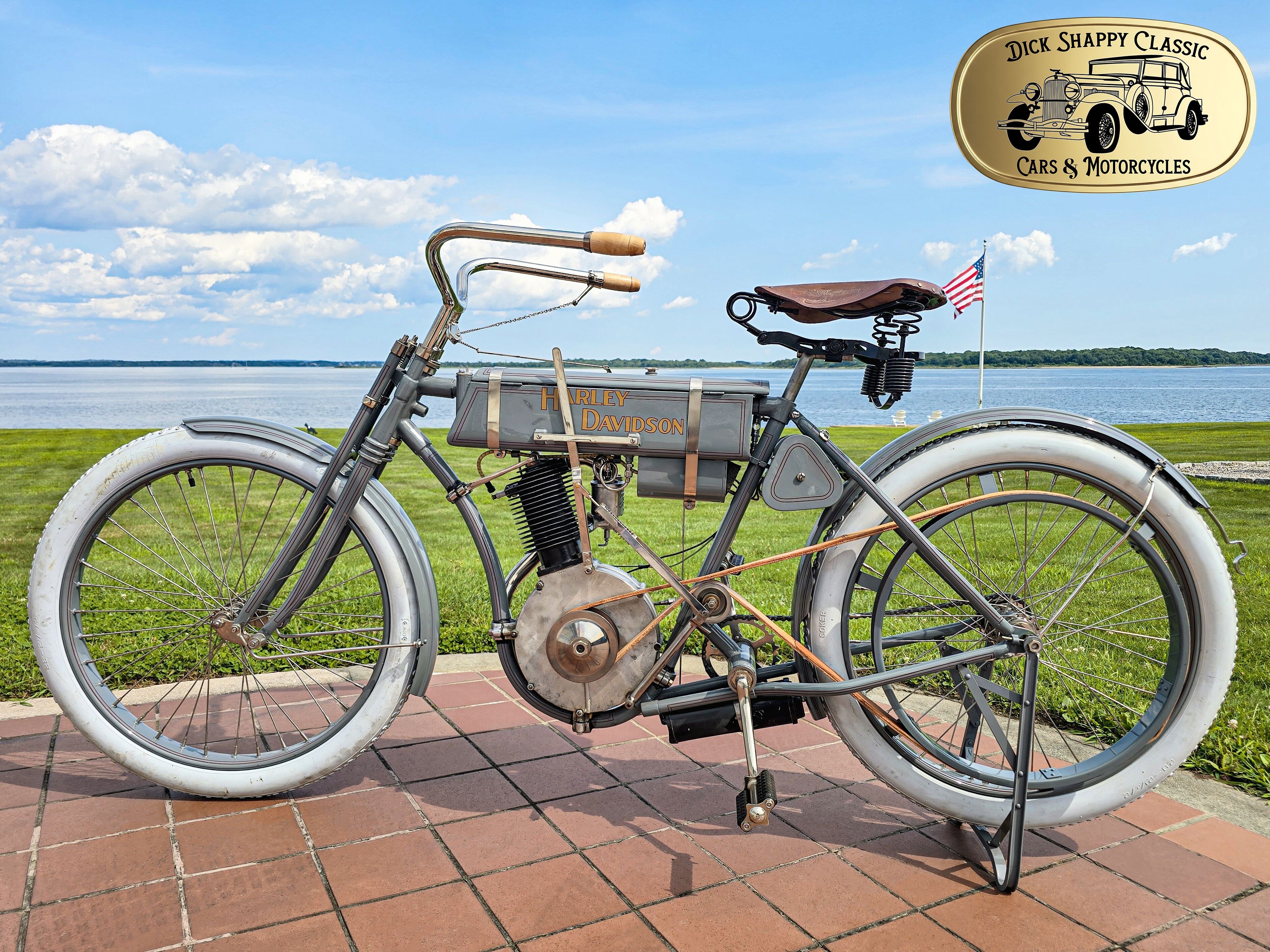
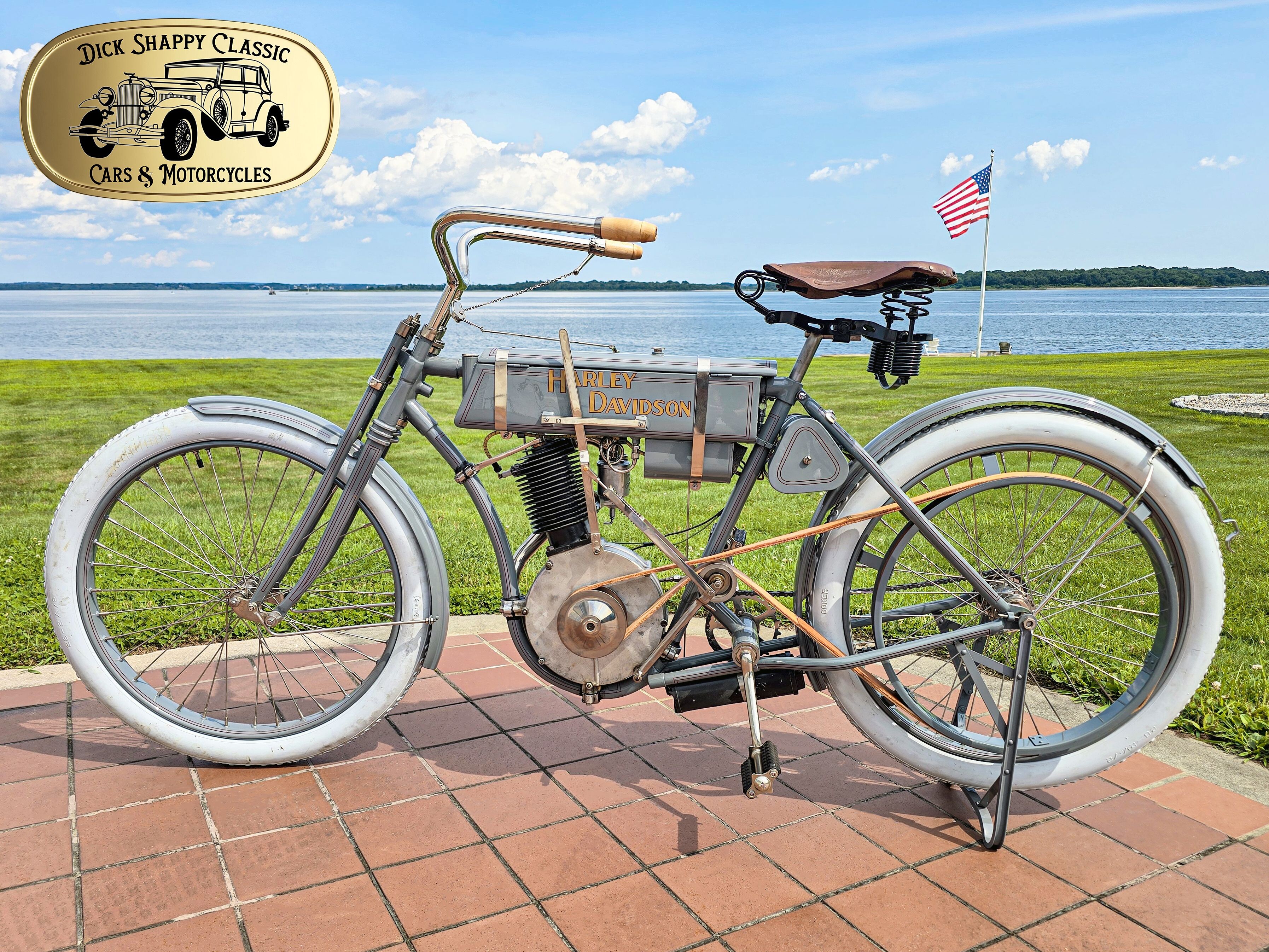
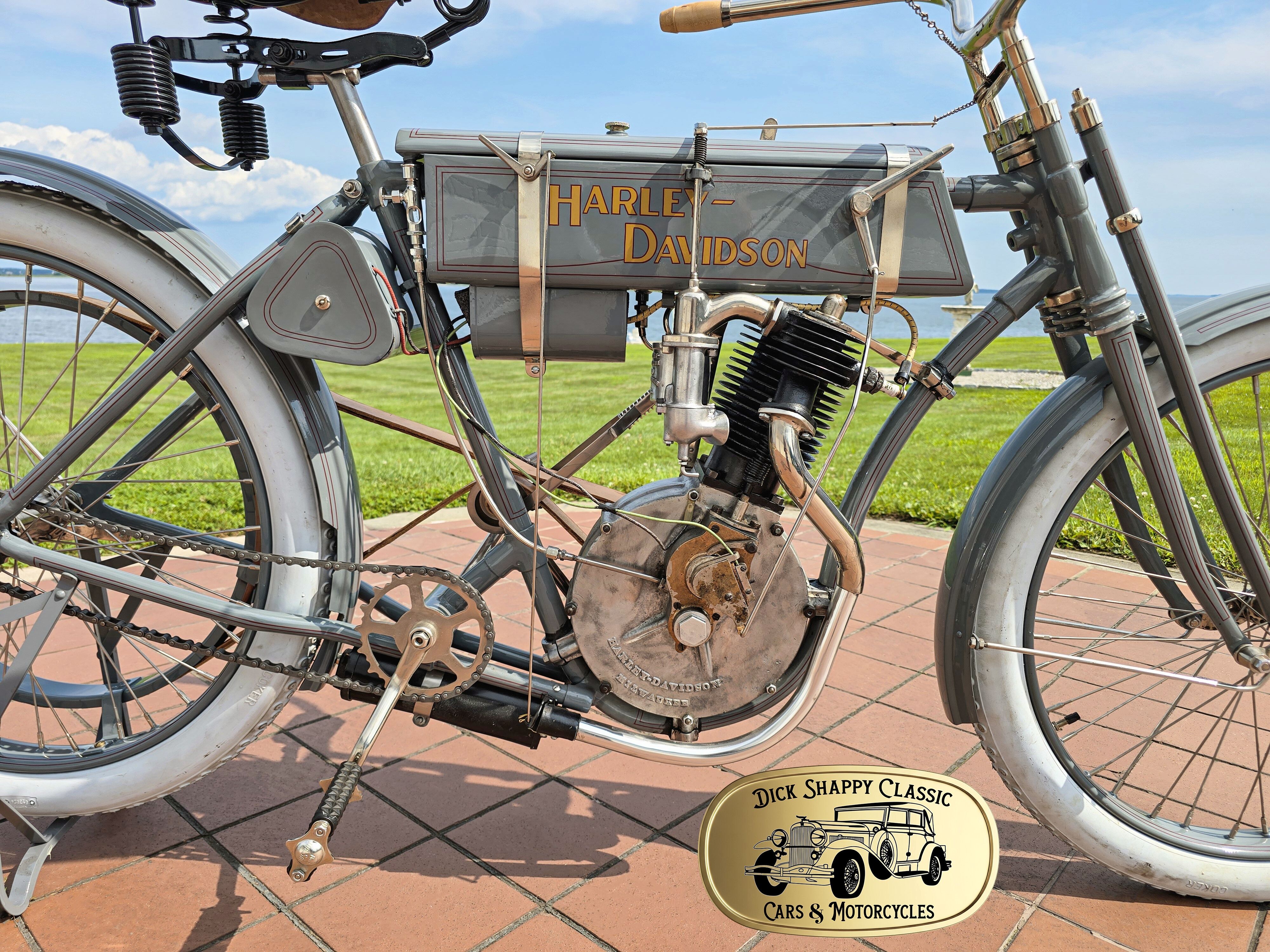
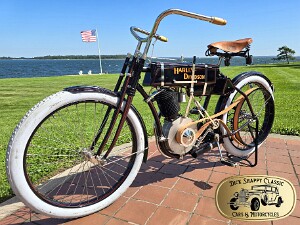
- YEAR: 1907
- MAKE: Harley-Davidson
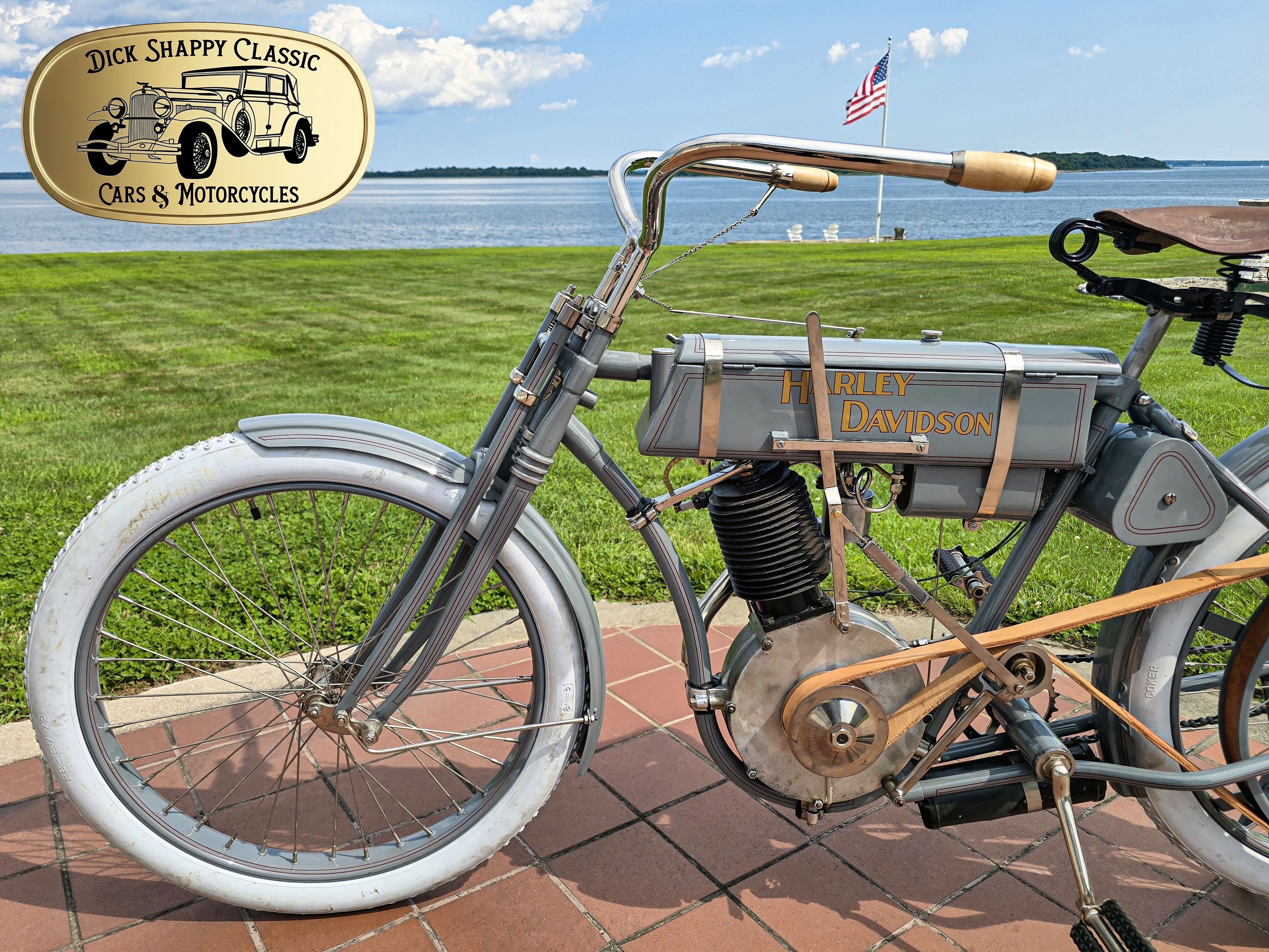
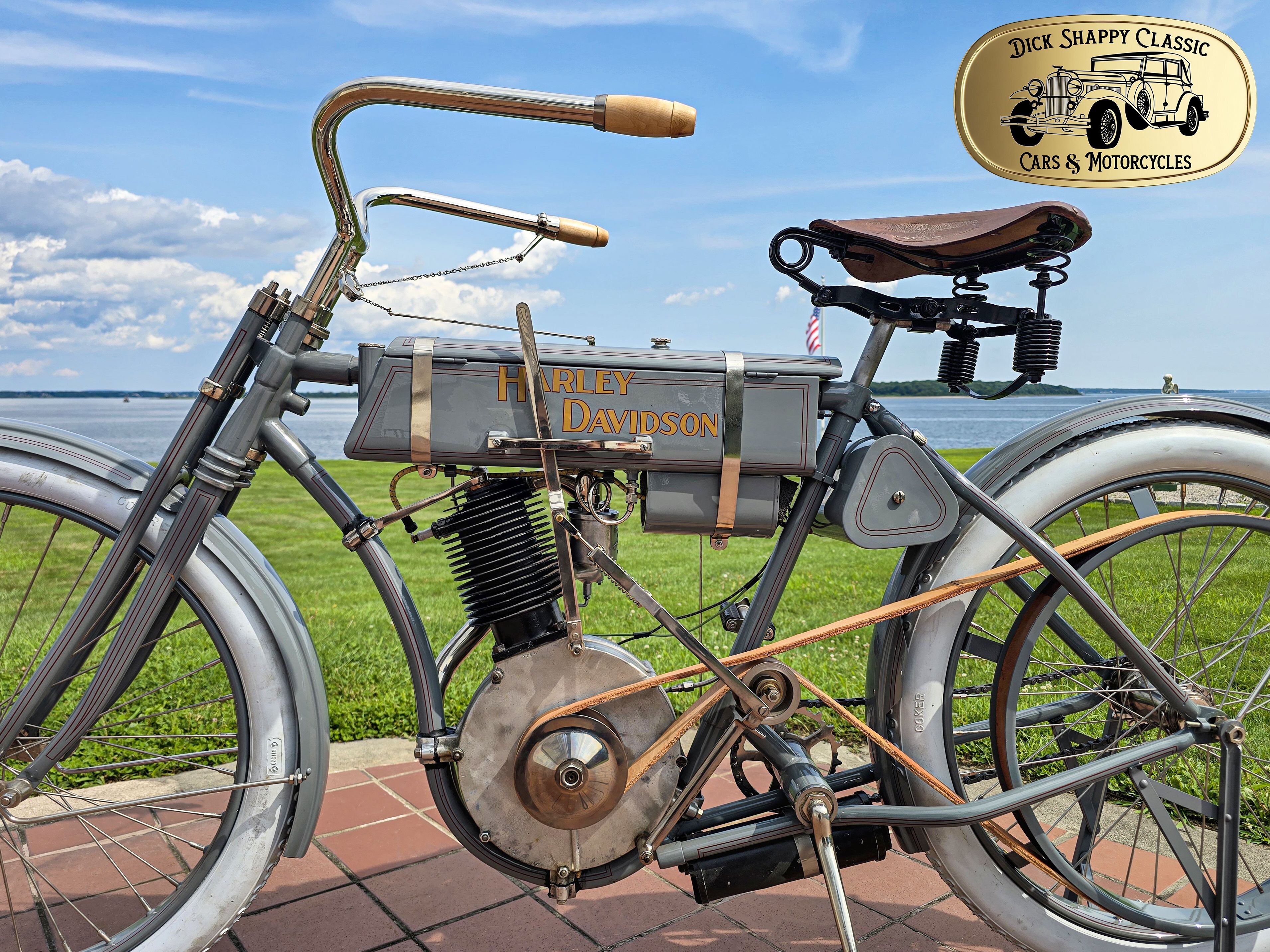
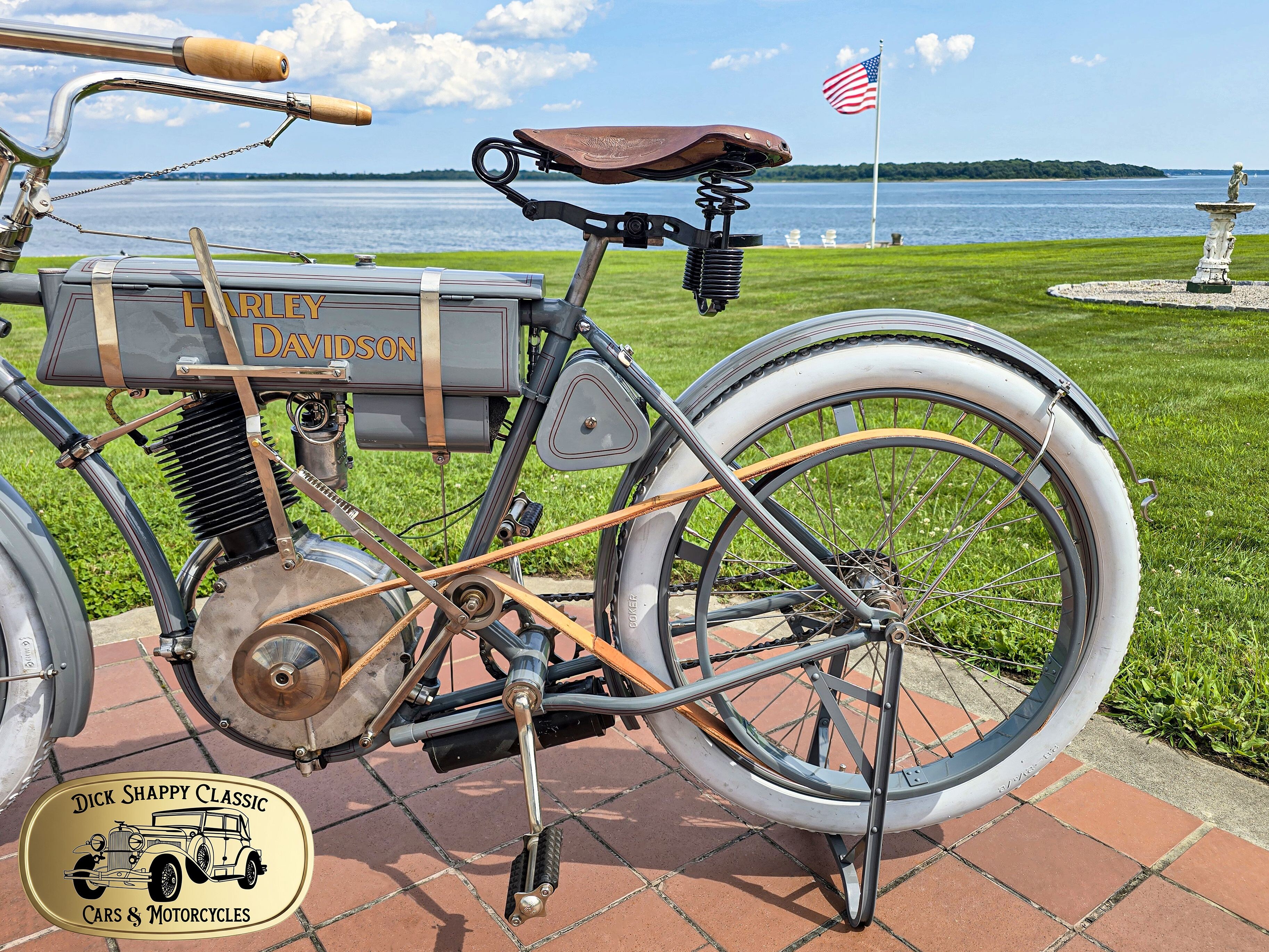
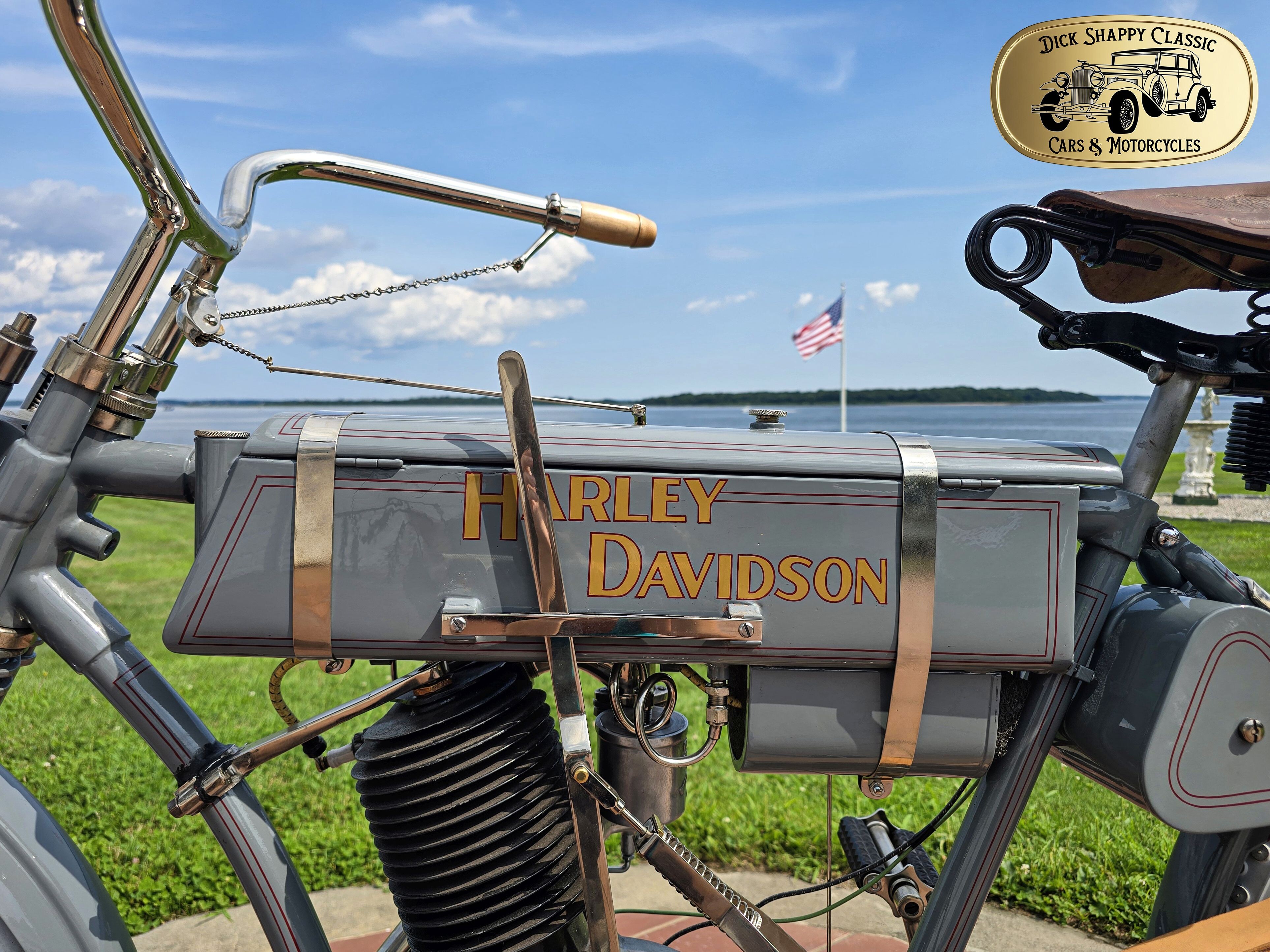
- MODEL: 3 Strap Tank
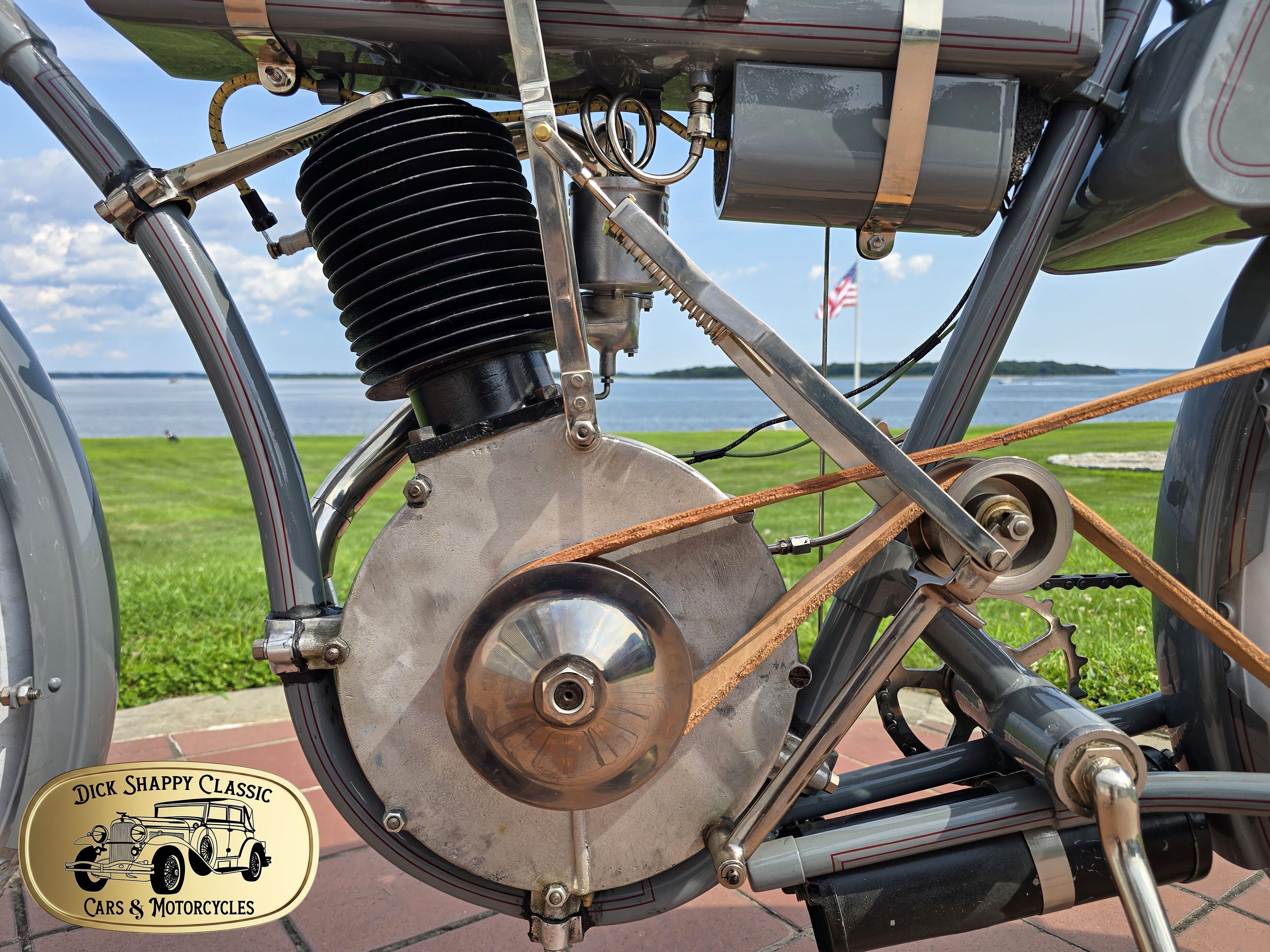
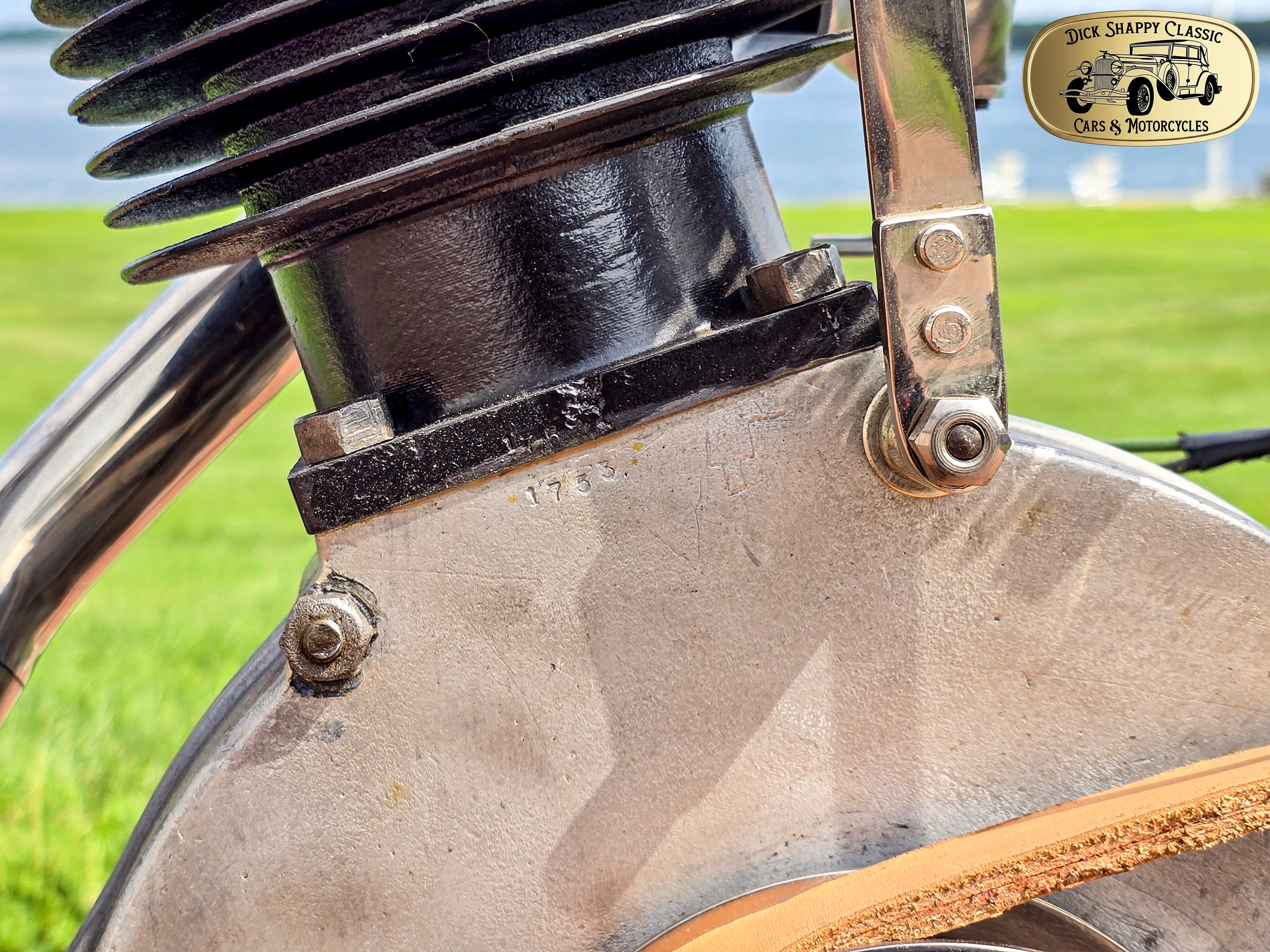
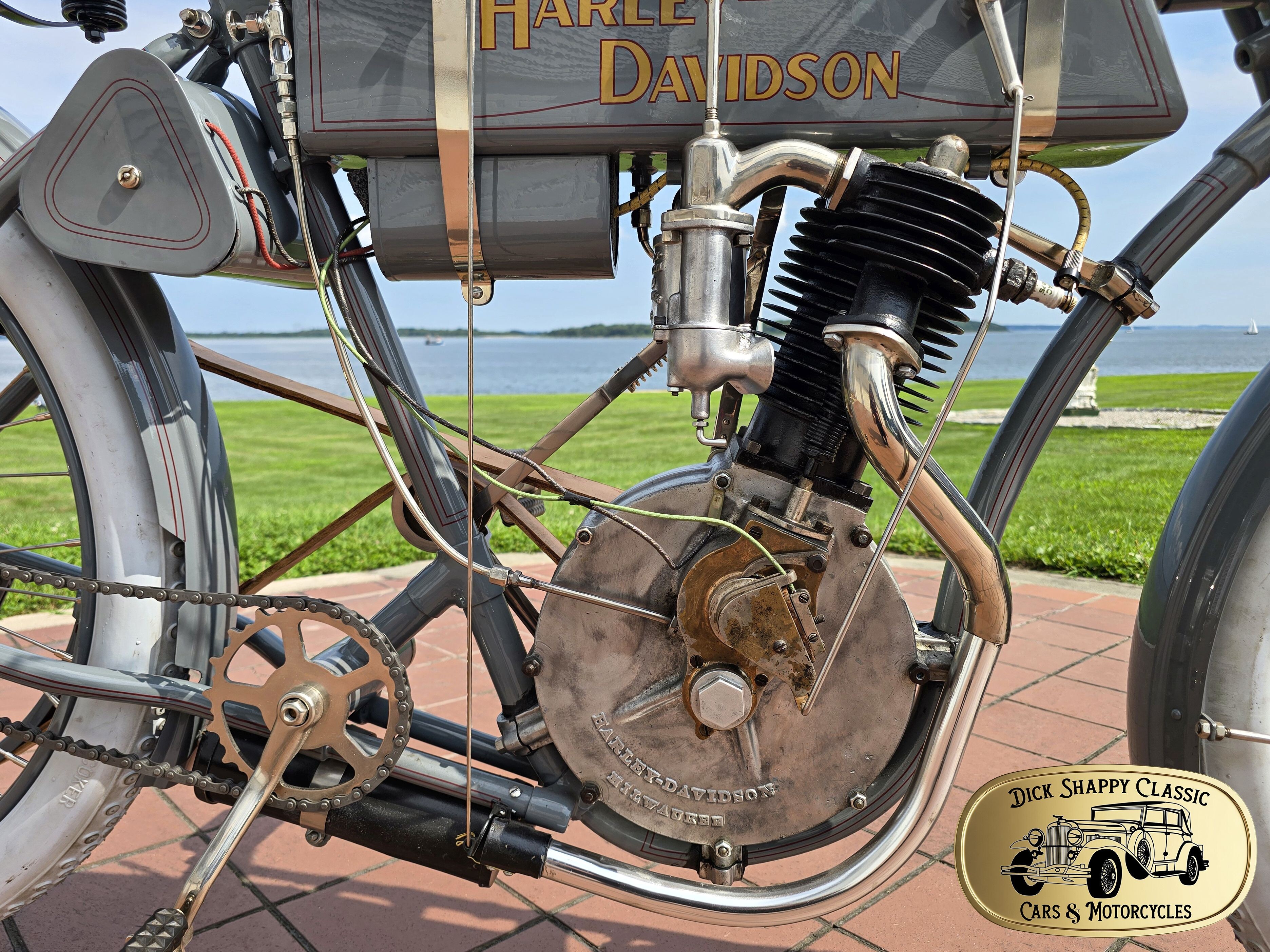
- ENGINE: Air-cooled single-cylinder 25.84 cubic-inch (440cc) F-head (IOE)
- ENGINE NO.: 1753
- HP: Approximately 4
Harley-Davidson, Inc. needs no introduction as an iconic American motorcycle manufacturer headquartered
in Milwaukee, Wisconsin. In 1901, William S. Harley, Arthur Davidson, and brother Walter Davidson began work
on their first motorcycle engine. Their first attempt may have been a failure, but they founded
Harley-Davidson in 1903 and became one of the largest motorcycle manufacturers by 1920. They produced
motorcycles for the United States used in both World War I & II and were one of only two major motorcycle
manufacturers to survive the Great Depression. In fact, they’ve survived numerous changes to ownership and
restructuring, intense global competition, charges of restrictive practices, claims of stock price manipulation, and a
constantly evolving view of the company and bikers. Still, they are widely known for their loyal following and now
manufacture in Pennsylvania, Wisconsin, Brazil, and Thailand. Their classic cruiser style, including high
handlebars, low seats, and chrome parts, is easily recognizable. They’re also noted for their customizability, giving
rise to the chopper style of motorcycle, and for the distinct sound of HD’s powerful engines.
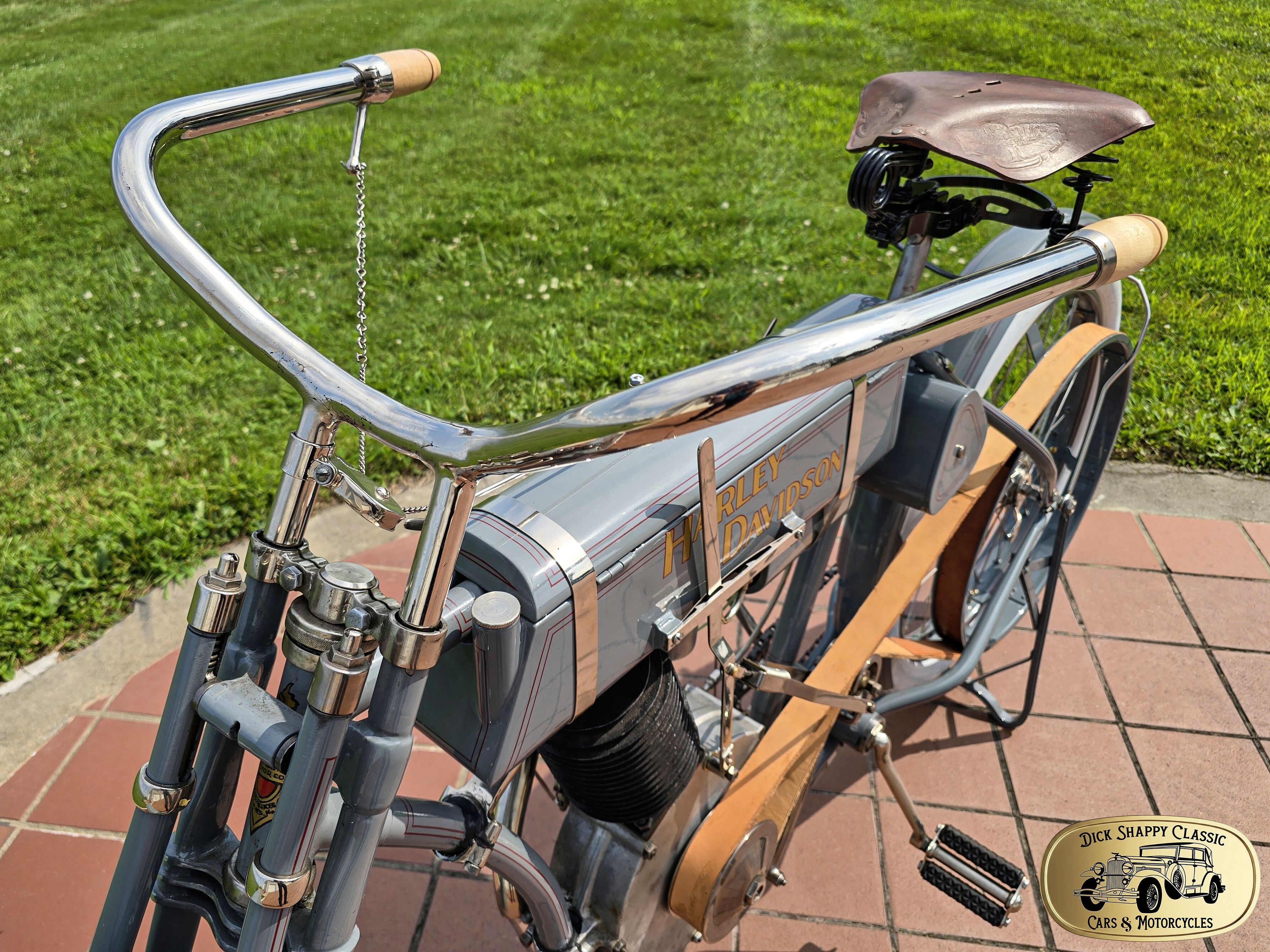
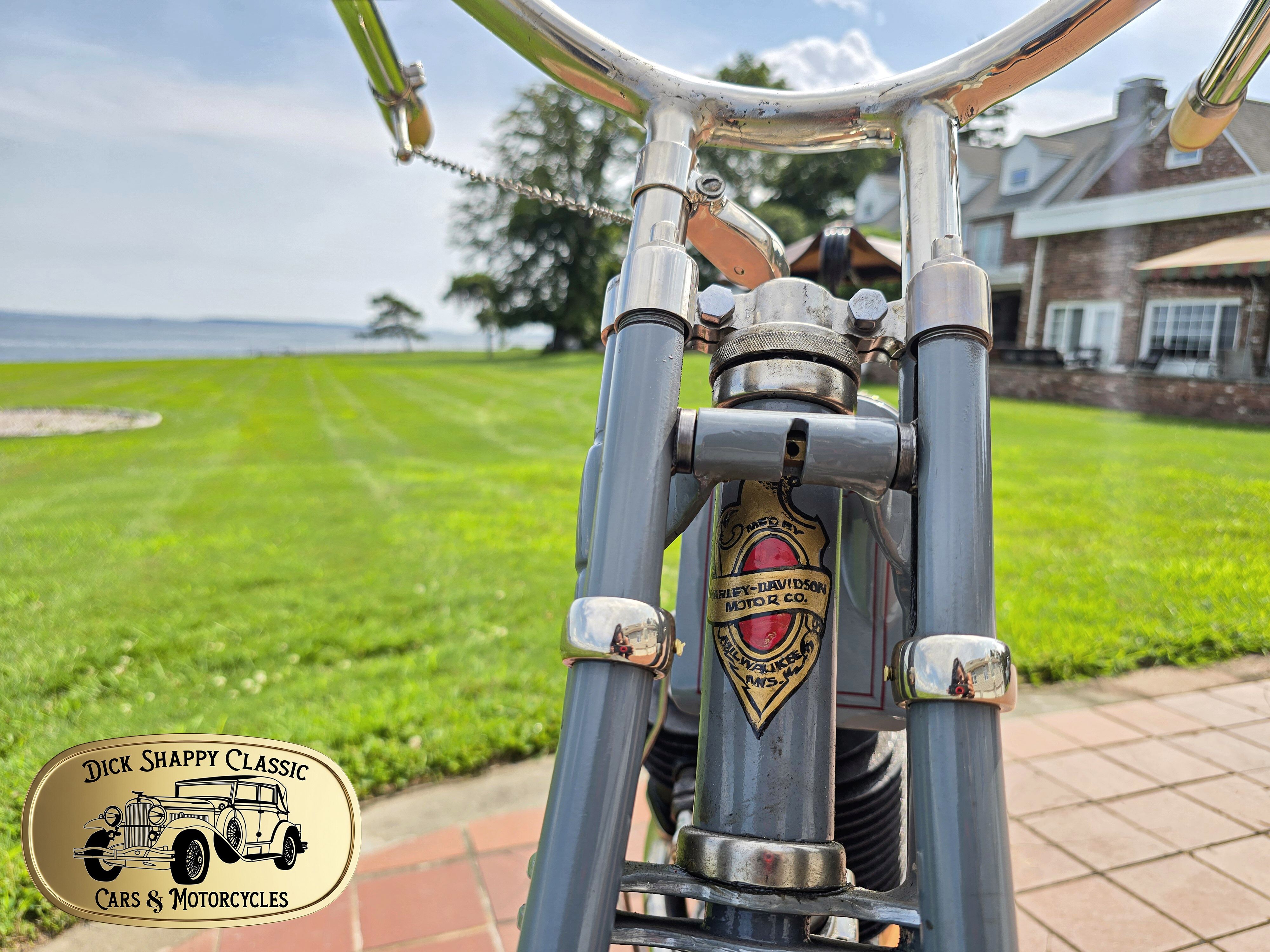
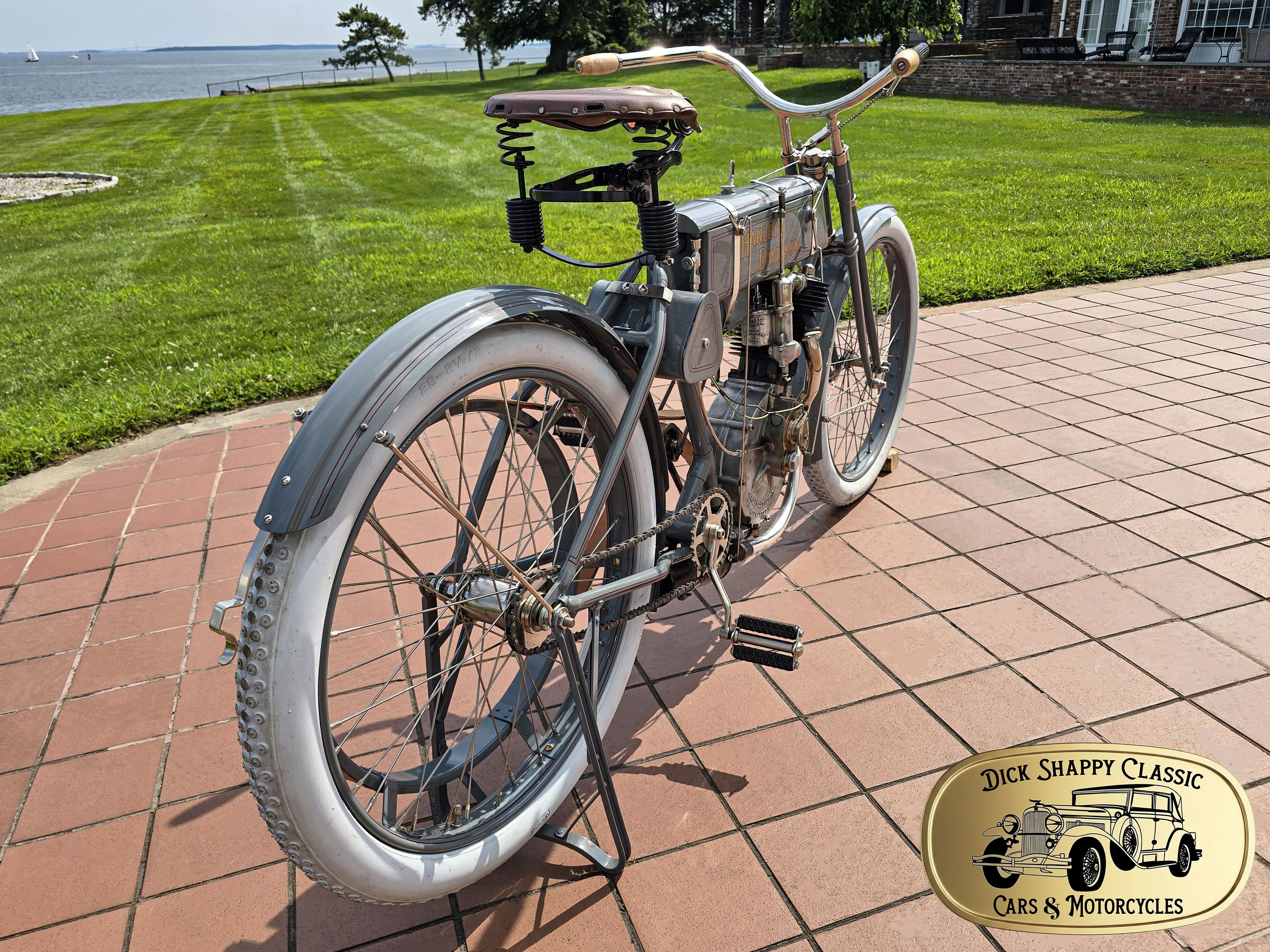
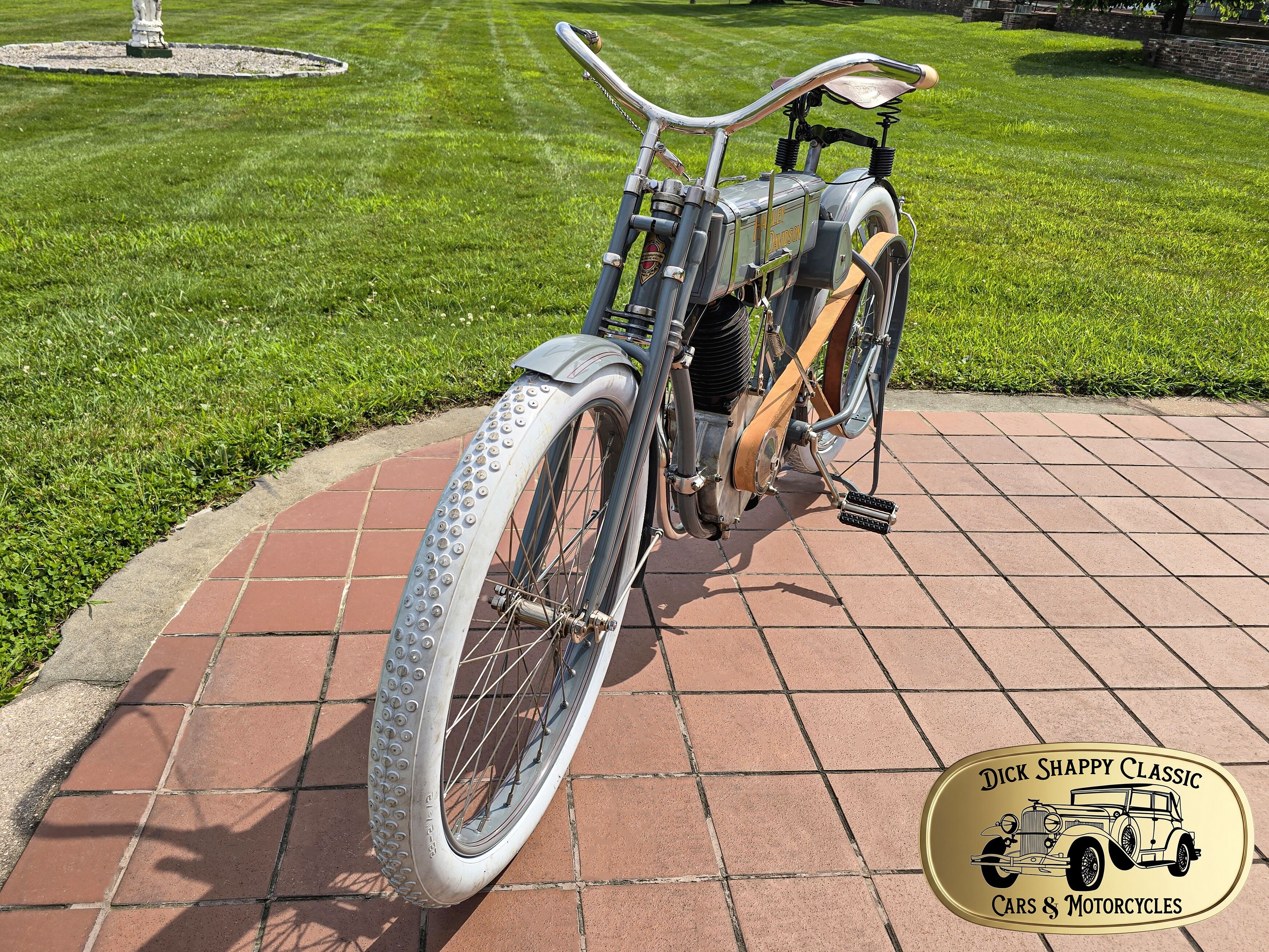
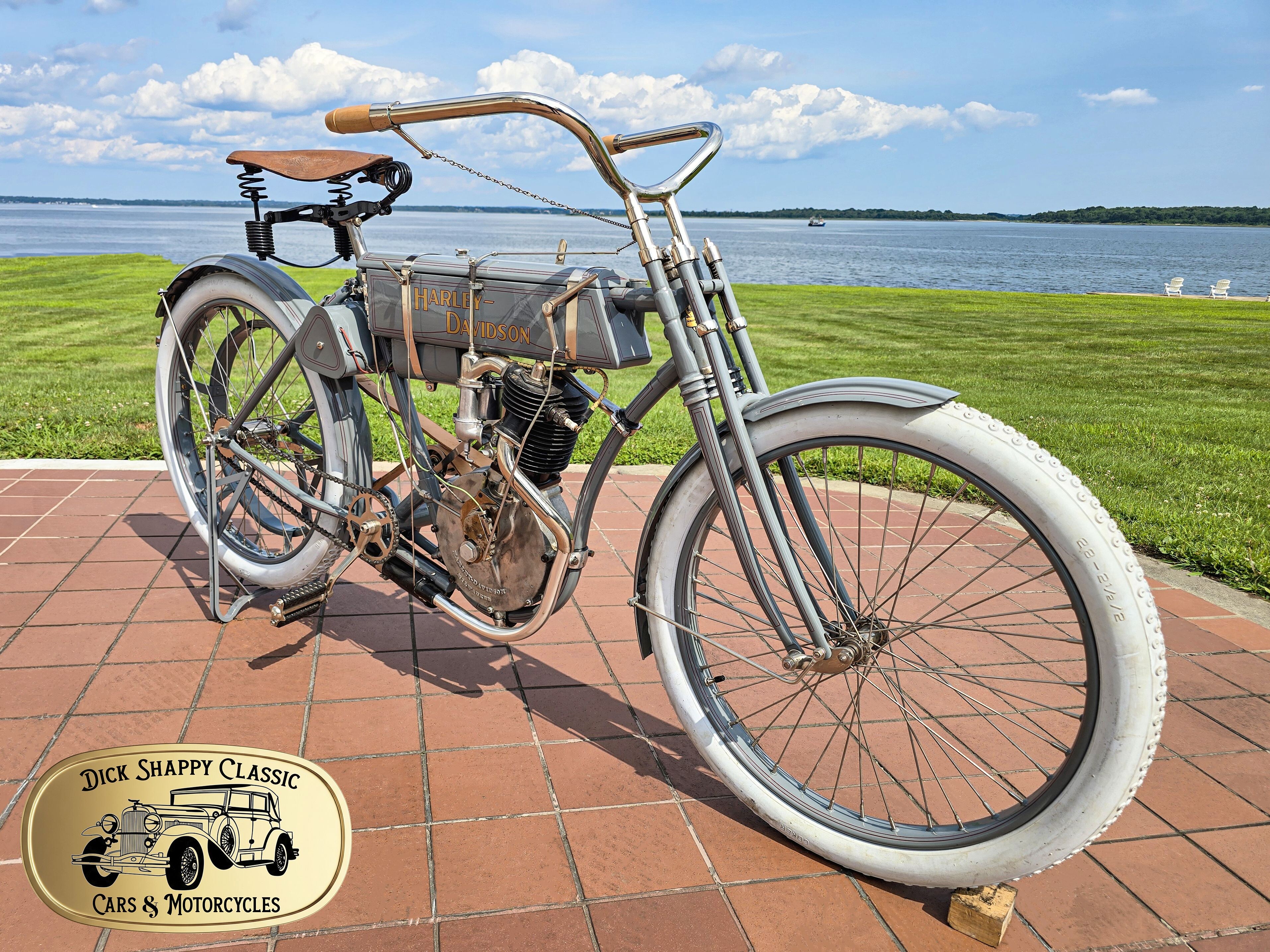
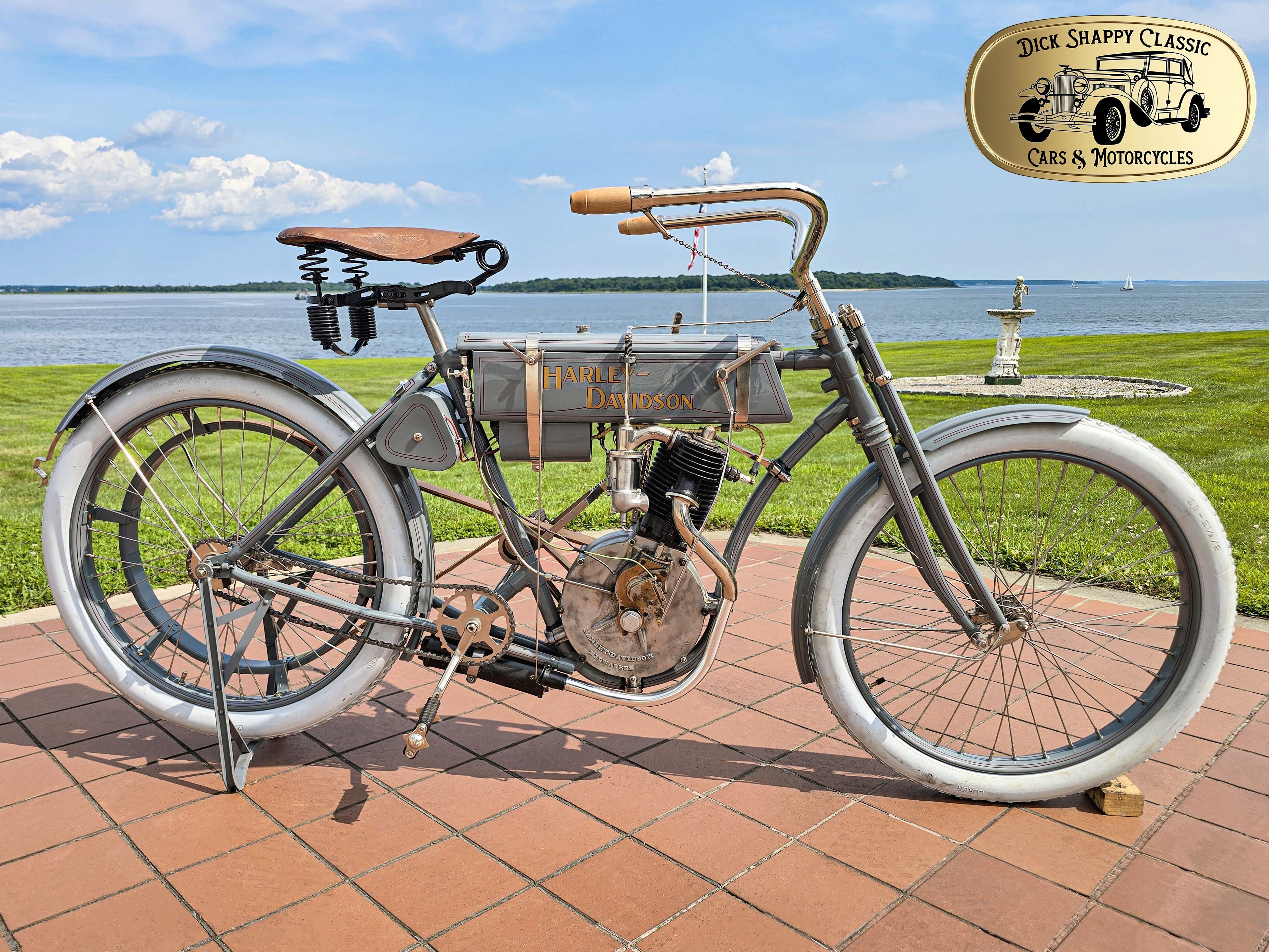
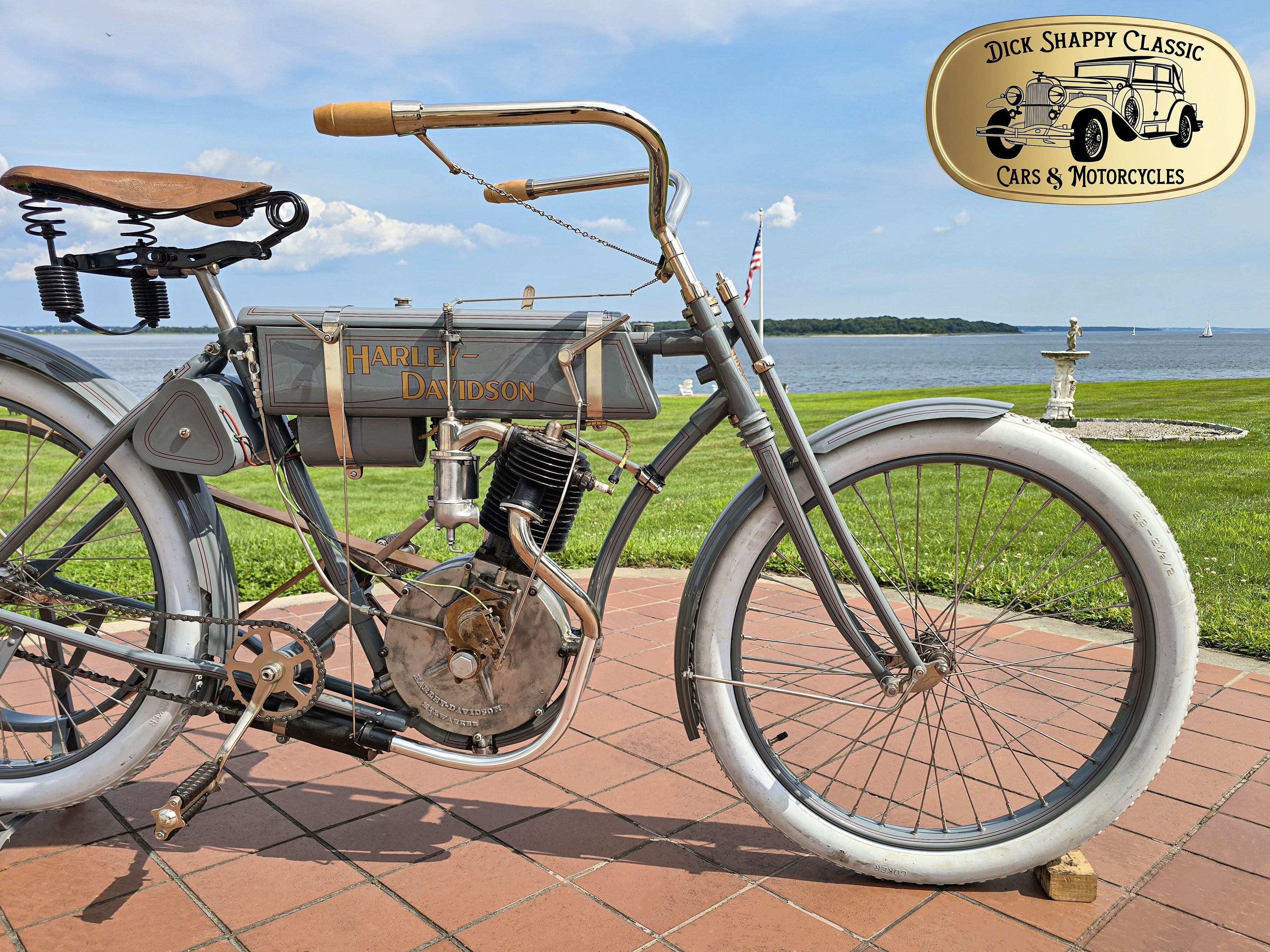
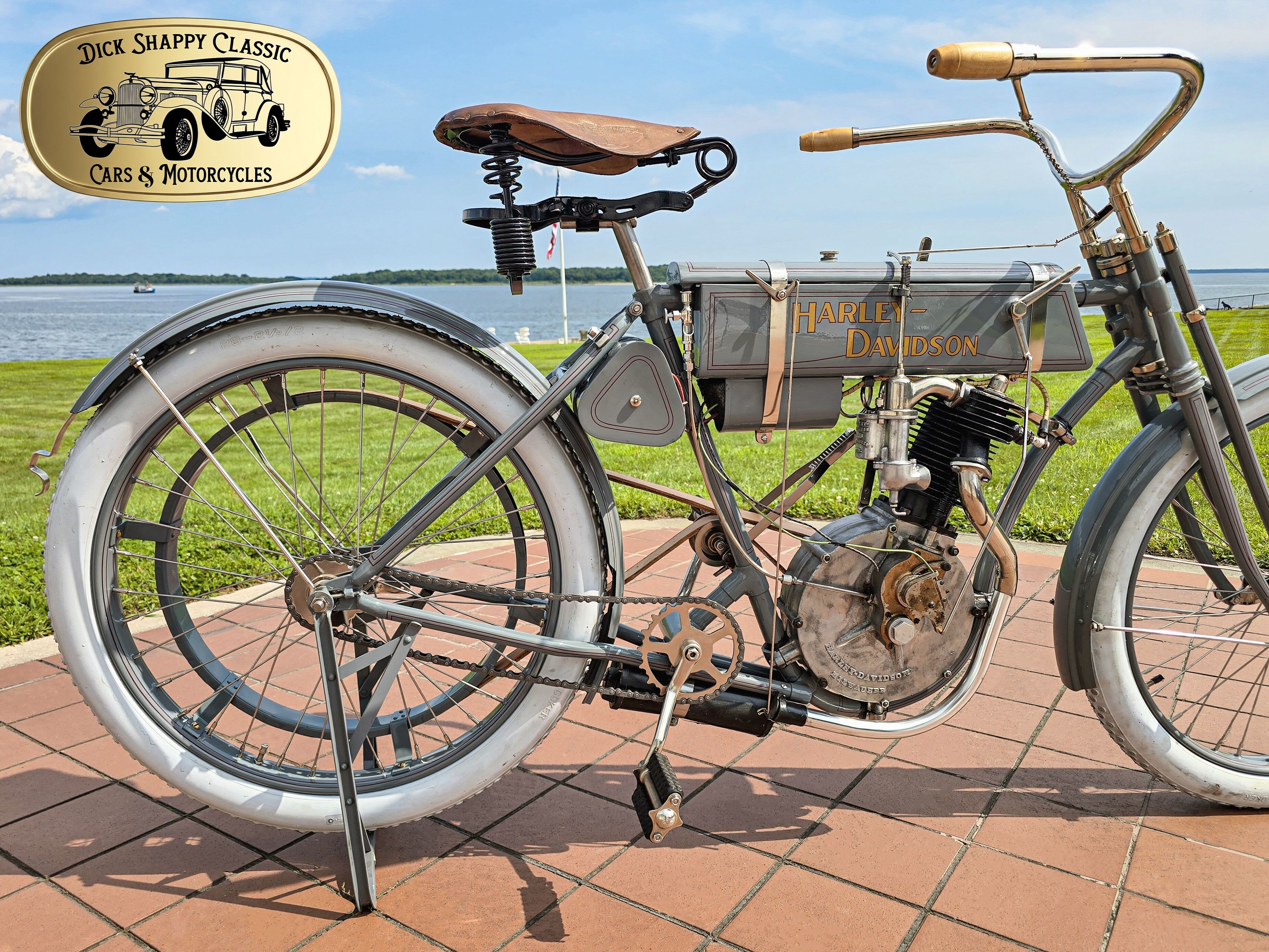
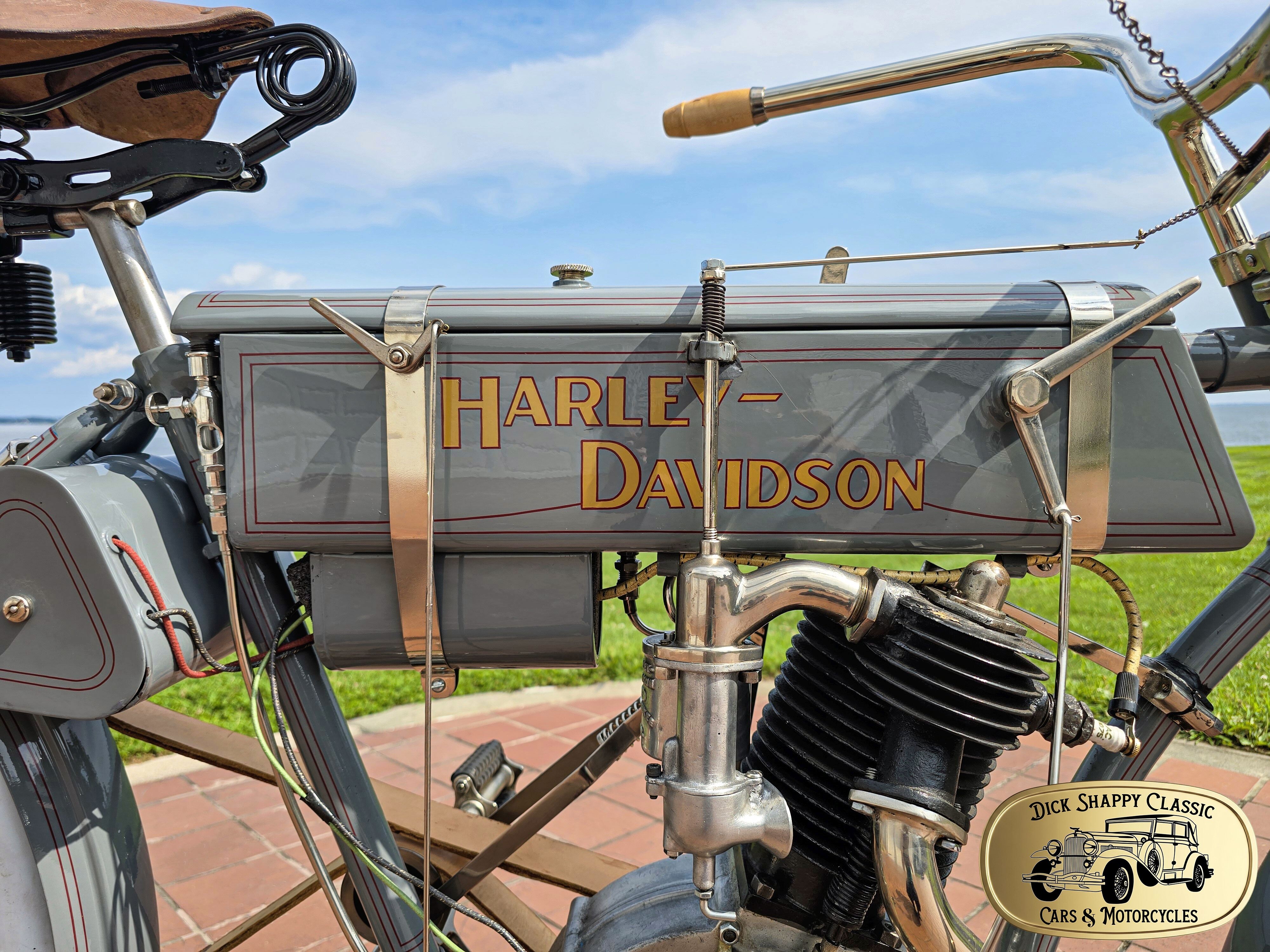
The Strap Tank was one of Harley-Davidson’s first models, built in the early years of the company’s existence,
and featured a distinctive design with the fuel and oil tanks held in place by nickel-plated steel straps to the frame.
These early, very rare bikes are highly prized by collectors for their historical significance as they established the
pattern for future Harley production and set a precedent for the brand’s rugged, dependable reputation. Very few were
built, with only about a dozen of the coveted vehicles surviving today.
Harley-Davidson was formerly incorporated in 1907, producing only 150 motorcycles out of their early Milwaukee
factory that year. This engine, number 1753, was discovered by Mike Wolfe of American Pickers. Wolfe has significantly
influenced the antique motorcycle industry by mainstreaming “barn-find” culture and elevating the market value and
historical appreciation of pre-1920 American motorcycles. Through American Pickers and high-profile
auctions, he popularized original patina over over-restoration, bridged corporate heritage for brands like Indian
Motorcycle, and inspired a new generation of collectors. The engine was the talk of a Chief Blackhawk Antique
Motorcycle Swap Meet in Davenport, Iowa, and quickly reached the ears of Dick Shappy, who had to have it.
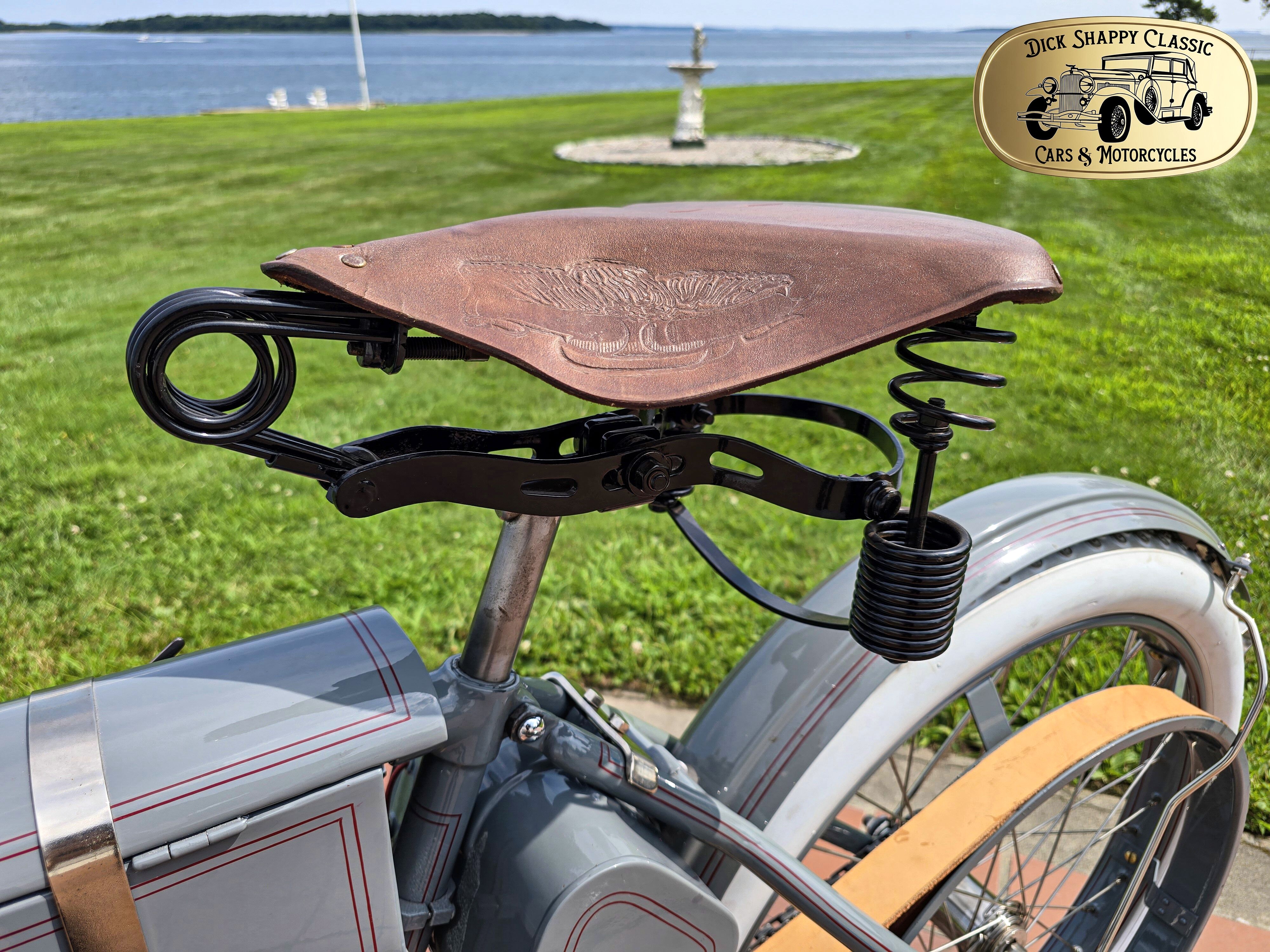
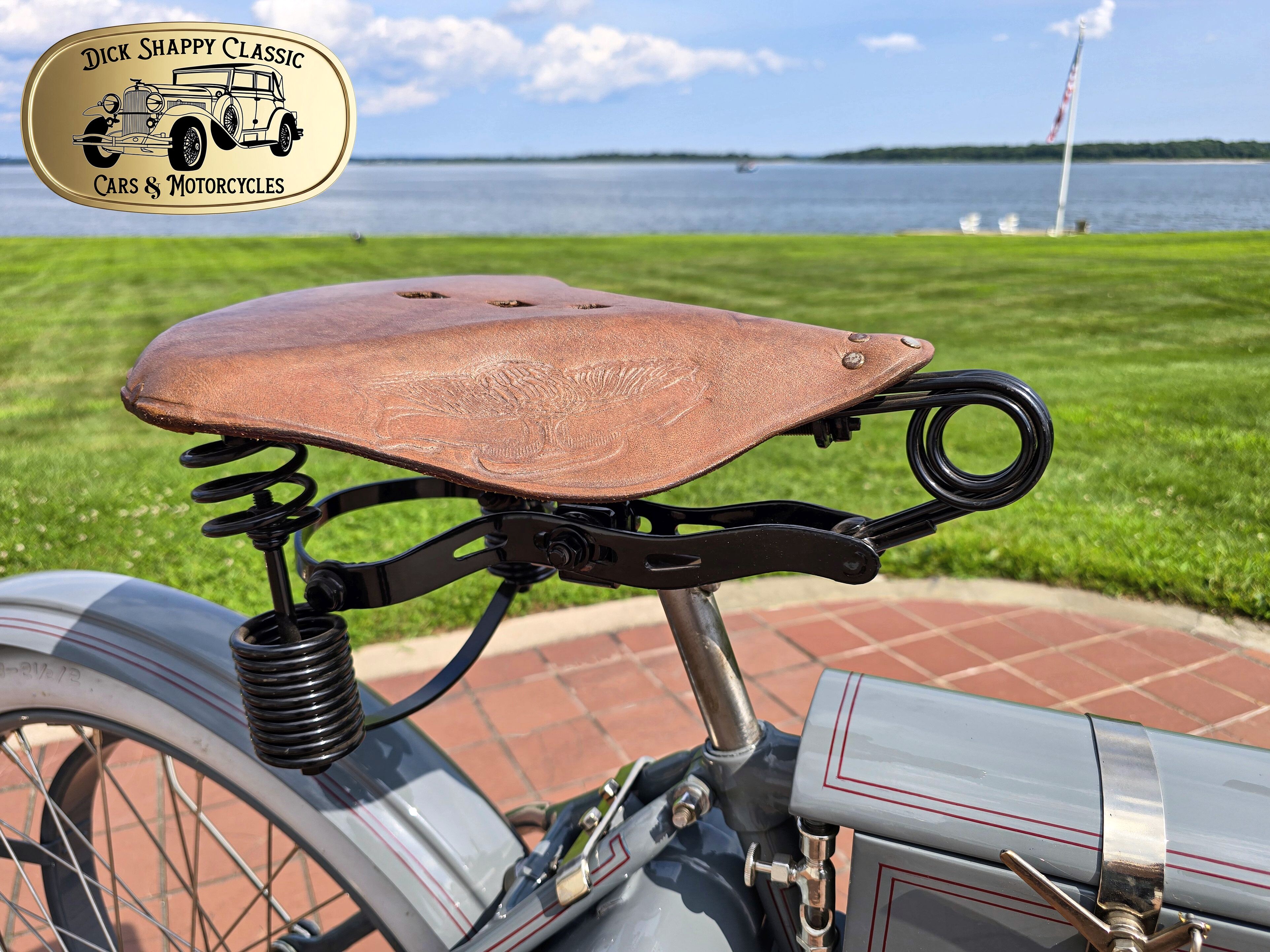
The genuine strap tank engine doesn’t just sit in any frame. The elements of this one were carefully crafted by the
Isams of Sturgis, South Dakota—two of the most respected figures in the American antique motorcycle industry.
Lonnie Isam, Sr. started his career as a Harley-Davidson mechanic in Washington, opened the Gulf Coast
Manufacturing Company in Texas to design and manufacture motorcycle parts, and designed drag bikes
that set fourteen world records and won national championships before turning his focus to antiques. He purchased
Stelters Harley-Davidson in Houston and began collecting and restoring, fabricating and selling the parts that were
missing on his restorations. This collection helped launch the National Motorcycle Museum in Sturgis, South
Dakota, along with his uncle, E.J. Cole, contributing around 40 motorcycles. He went on to operate Competition
Distributing in Sturgis, one of the only places to go for quality, accurate reproduction antique motorcycle
parts.
Working alongside him for much of his career was his son, Lonnie Isam, Jr., who founded the Motorcycle Cannonball
Run in 2010—a coast-to-coast endurance run for bikes built before 1929, inspiring many to change their views on
antique bikes. His son operated Jurassic Racing in Sturgis and was working on building this very motorcycle along
with two other projects when he passed in 2017 after a battle with cancer. His father, Lonnie Isam, Sr., took up the
project himself to finish what his son started, the ending of an era and one of only three strap tanks produced by Jr.,
but was too distraught by the passing of his son to continue the work. Their parts are the closest a reproduction can
get to an original, with many years of research and learning under their belts. Dick Shappy purchased the
three remaining projects, vowing to finish them in the same spirit, and assembled the bike at his restoration shop in
Rhode Island.
 1970 Harley-Davidson Belly Burner Dragster
 1962 Harley-Davidson Sportster XLCH Custom Engine Belly Burner Dragster
 1965 Harley-Davidson Sportster XLCH KHK Frame Custom Engine McClanahan Dragster
 1964 Harley-Davidson Sportster XLH "McClanahan" Dragster
 1912 Harley-Davidson Single
 1908 Harley-Davidson Model 4 Strap Tank Engine No. 2113
 1915 Harley-Davidson Model 11K Twin 3 Speed Engine #6676K
 1958 Harley-Davidson XLCH Sportster
 1908 Harley-Davidson Model 4 Strap Tank Engine No. 2039
 1950 Harley-Davidson WL45See similar Harley-Davidsons for sale