- Chassis No: 76511
- ENGINE: 365.8 cu. in. L-head Vertical Inline Four-Cylinder
- CARBURETOR: Float-Feed
- TRANSMISSION: Three-Speed Selective Sliding Gear
- SUSPENSION: Solid Front Axle with Semi-Elliptic Leaf Springs; Full Flating Rear Axle with Semi-Elliptic Leaf Springs
- BHP: 40/50 Rear-Wheel Mechanical
- WHEELBASE: 120 in.
- DOCUMENTATION: Missouri Title
“On the eve of WWI, Cadillac was a serious player in the high-end market dominated by Packard,
Peerless, and Pierce-Arrow, with handsome styling and advanced engineering, including the
revolutionary ‘electric self-start’ launched in 1912 and electrically operated lights,
courtesy of the innovative Delco electrical system. In 1913, Cadillac sales reached a new record
with 15,018 cars delivered, and like the rest of the Cadillac model line, this Model 30
Five-Passenger Phaeton was promoted as the ‘Standard of the World,’ with the launch of
that famous and enduring advertising campaign in the fall of 1912.
The entire 1913 Cadillac model line benefited from more graceful, sweeping bodylines, thanks in part
to a lengthened 120-inch wheelbase. Gone were the last remnants of the carriage era, replaced by
bodies with a full cowl, flowing fenders, and fully enclosed driver controls. Power was provided by
Cadillac’s robust vertical, inline L-head 365.8-cubic-inch four-cylinder engine, and
advancements for 1913 included a longer stroke, a chain-driven camshaft, enclosed valve stems, and a
simpler, more compact starter and generator.
This fully restored Five-Passenger Phaeton earned Best in Class and Best of Show awards at the
New England Region Cadillac-LaSalle show, held in Portsmouth, Rhode Island, in 2008.
It was also shown at
Amelia Island
in 2009 and … at Greenfield Village in Dearborn, Michigan …
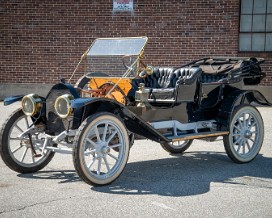
It features a very nice blue finish with black fenders and a black radiator shell, a beautifully
fitted black folding top, nickel-plated brass components, rear-mounted spare tires, and artillery
wheels with whitewall tires, as well as button-tufted black leather upholstery. The engine, with its
copper water jackets, is particularly striking. Offered in show and tour-ready condition, this 1913
Cadillac is a wonderful example of refined Brass Era luxury and engineering.”
—RM Sotheby’s
No expense was spared in this professional, body-off, show-quality restoration. It sports a
365-cubic-inch L-head vertical inline four-cylinder engine with a float-feed carburetor, and the oil
pump is tagged “Type AG Manzel Brothers Co. of Buffalo, NY.” The transmission is a
three-speed manual sliding gear. The brake horsepower reaches between 40 and 50 with rear-wheel
mechanical brakes, a solid front axle, and a full-floating rear axle, both with semi-elliptic leaf
springs. The wheelbase is 120 in., and the wheels have been carefully pinstriped. The radiator
temperature can be gauged from a Cadillac-branded Boyce MotoMeter on the hood. To complete the
advanced engineering, the dashboard sports a Polesco Keyless Eight-Day Clock, Warner Instrument
Company Auto-Meter Speedometer and Trip Keeper, Hans Gasoline Gauge, and a Delco Oil
Gauge.
CADILLAC
In 1902, Henry Ford left the Henry Ford Company with several of his key partners. With Henry M. Leland of Leland &
Faulconer Manufacturing Company, they began manufacturing automobiles with Leland’s
single-cylinder engine. They named this venture Cadillac Automobile Company after the French explorer who founded
Detroit in 1701, Antoine Laumet de La Mothe, sieur de Cadillac, and based the logo on his coat of arms. This made
Cadillac among the first automotive brands in the world, and they immediately began producing 10 HP horseless carriages
called Runabouts and Tonneaus that were almost identical to the Ford Model A. Because of their precision
manufacturing and reliability, Cadillac quickly accumulated orders and in 1905, merged with Leland to form the
Cadillac Motor Company. By 1906, they were the first volume manufacturer of a fully enclosed car and gained
international notice as the awards for interchangeability and reliability began to pile up.
It’s no wonder that General Motors took notice of America’s premier luxury car maker and purchased it
in 1909. Together, they founded the mass production of automobiles and many innovations, including the first full
electrical systems, Synchro-Mesh manual transmission, the first mass-produced automatic transmission, steel roofs,
dual-plane crankshafts, and shatter-resistant glass. Of the three engines they developed, the V8 set the standard. They
would go on to make more than large luxury vehicles, producing limousines, military vehicles, ambulances, and even
hearses. In the midst of the Great Depression, they introduced the iconic V-16 engine, and sales bounced back and then
some by 1940.
To this day, Cadillac automobiles, a pinnacle of GM’s 2.7 million vehicles sold in 2024, remain a global brand of
luxury.
Please refer to our
Projects page to see
photos of this restoration.
This car won "Best of Show" and took 1st place in its class at the New England Cadillac
LaSalle show held on June 15, 2008. See
awards.
.jpg "Photos by Tracey McDermott")
.jpg "1913 Cadillac Model 30 Touring Five-Passenger Phaeton - Photo 2")
.jpg "1913 Cadillac Model 30 Touring Five-Passenger Phaeton - Photo 3")
.jpg "1913 Cadillac Model 30 Touring Five-Passenger Phaeton - Photo 4")
.jpg "1913 Cadillac Model 30 Touring Five-Passenger Phaeton - Photo 5")
.jpg "1913 Cadillac Model 30 Touring Five-Passenger Phaeton - Photo 6")
.jpg "1913 Cadillac Model 30 Touring Five-Passenger Phaeton - Photo 7")
.jpg "1913 Cadillac Model 30 Touring Five-Passenger Phaeton - Photo 8")
.jpg "1913 Cadillac Model 30 Touring Five-Passenger Phaeton - Photo 9")
.jpg "1913 Cadillac Model 30 Touring Five-Passenger Phaeton - Photo 10")
.jpg "1913 Cadillac Model 30 Touring Five-Passenger Phaeton - Photo 11")
.jpg "1913 Cadillac Model 30 Touring Five-Passenger Phaeton - Photo 12")
.jpg "1913 Cadillac Model 30 Touring Five-Passenger Phaeton - Photo 13")
.jpg "1913 Cadillac Model 30 Touring Five-Passenger Phaeton - Photo 14")
.jpg "1913 Cadillac Model 30 Touring Five-Passenger Phaeton - Photo 15")
.jpg "1913 Cadillac Model 30 Touring Five-Passenger Phaeton - Photo 16")
.jpg "1913 Cadillac Model 30 Touring Five-Passenger Phaeton - Photo 17")
.jpg "1913 Cadillac Model 30 Touring Five-Passenger Phaeton - Photo 18")
.jpg "1913 Cadillac Model 30 Touring Five-Passenger Phaeton - Photo 19")
.jpg "1913 Cadillac Model 30 Touring Five-Passenger Phaeton - Photo 20")
.jpg "1913 Cadillac Model 30 Touring Five-Passenger Phaeton - Photo 21")
.jpg "1913 Cadillac Model 30 Touring Five-Passenger Phaeton - Photo 22")
.jpg "1913 Cadillac Model 30 Touring Five-Passenger Phaeton - Photo 23")
.jpg "1913 Cadillac Model 30 Touring Five-Passenger Phaeton - Photo 24")
.jpg "1913 Cadillac Model 30 Touring Five-Passenger Phaeton - Photo 25")
.jpg "1913 Cadillac Model 30 Touring Five-Passenger Phaeton - Photo 26")
.jpg "1913 Cadillac Model 30 Touring Five-Passenger Phaeton - Photo 27")
.jpg "1913 Cadillac Model 30 Touring Five-Passenger Phaeton - Photo 28")
.jpg "1913 Cadillac Model 30 Touring Five-Passenger Phaeton - Photo 29")
.jpg "1913 Cadillac Model 30 Touring Five-Passenger Phaeton - Photo 30")
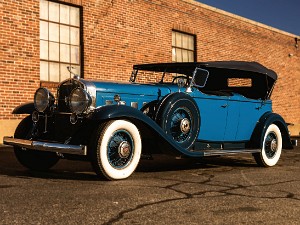 1931 Cadillac V-16 Dual Cowl Sport Phaeton Model 452A, Style 4260 by Fleetwood
 1932 Cadillac V-16 Imperial Cabriolet Madame X Body 5155-C Model 452B by Fleetwood
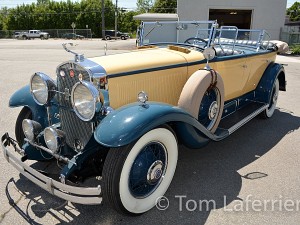 1930 Cadillac Dual Cowl Sport Phaeton
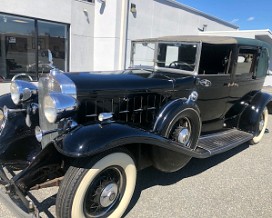 1932 Cadillac Town Car 355-B By Rollston
 1931 Cadillac V-16 Model 452 Custom Victoria Body by Lancefield
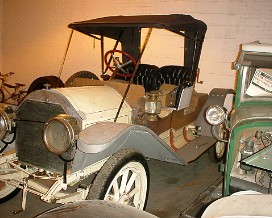 1911 Cadillac Model 30 Roadster
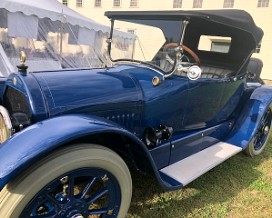 1918 Cadillac Roadster Type 57
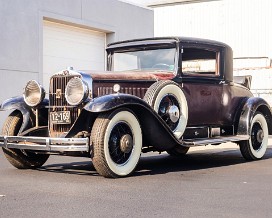 1930 Cadillac Model 353 Fisher Rumble Seat Coupe
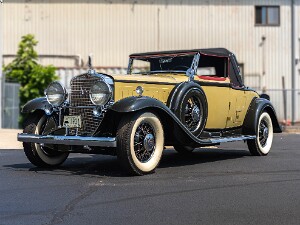 1930 Cadillac V-16 Model 4235 Convertible Coupe
 1911 Cadillac Model 30 Demi TonneauSee similar Cadillacs for sale