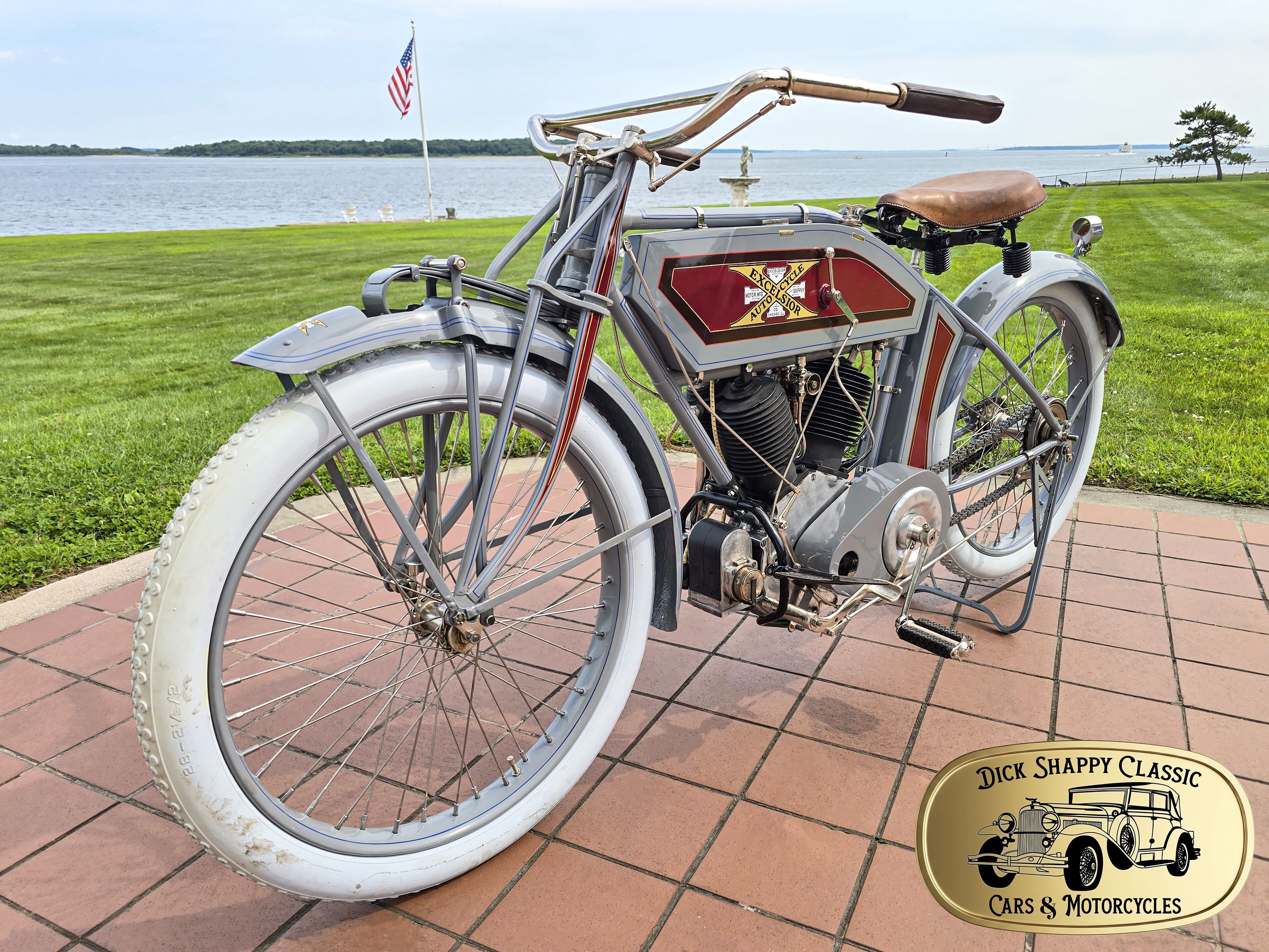
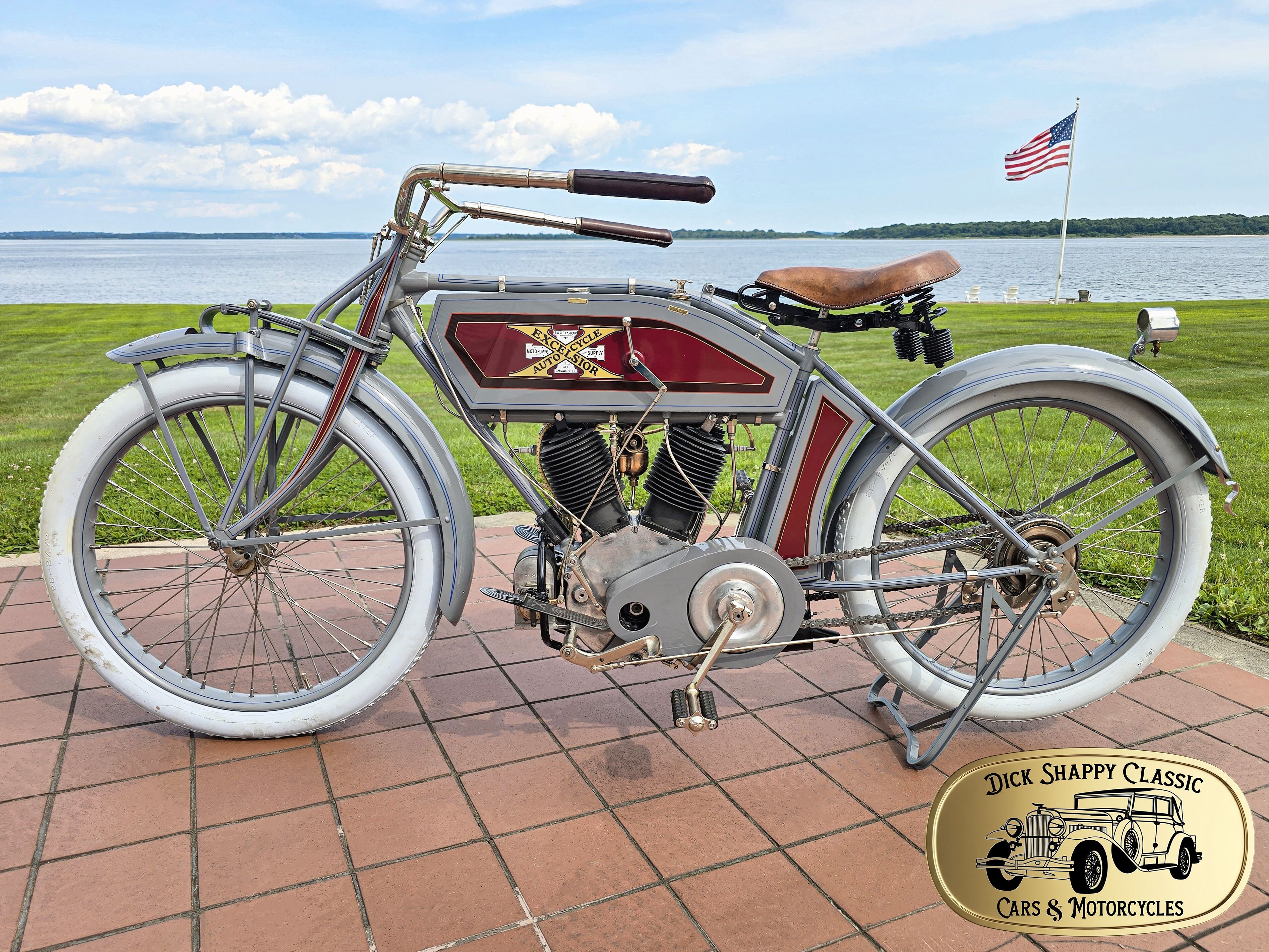
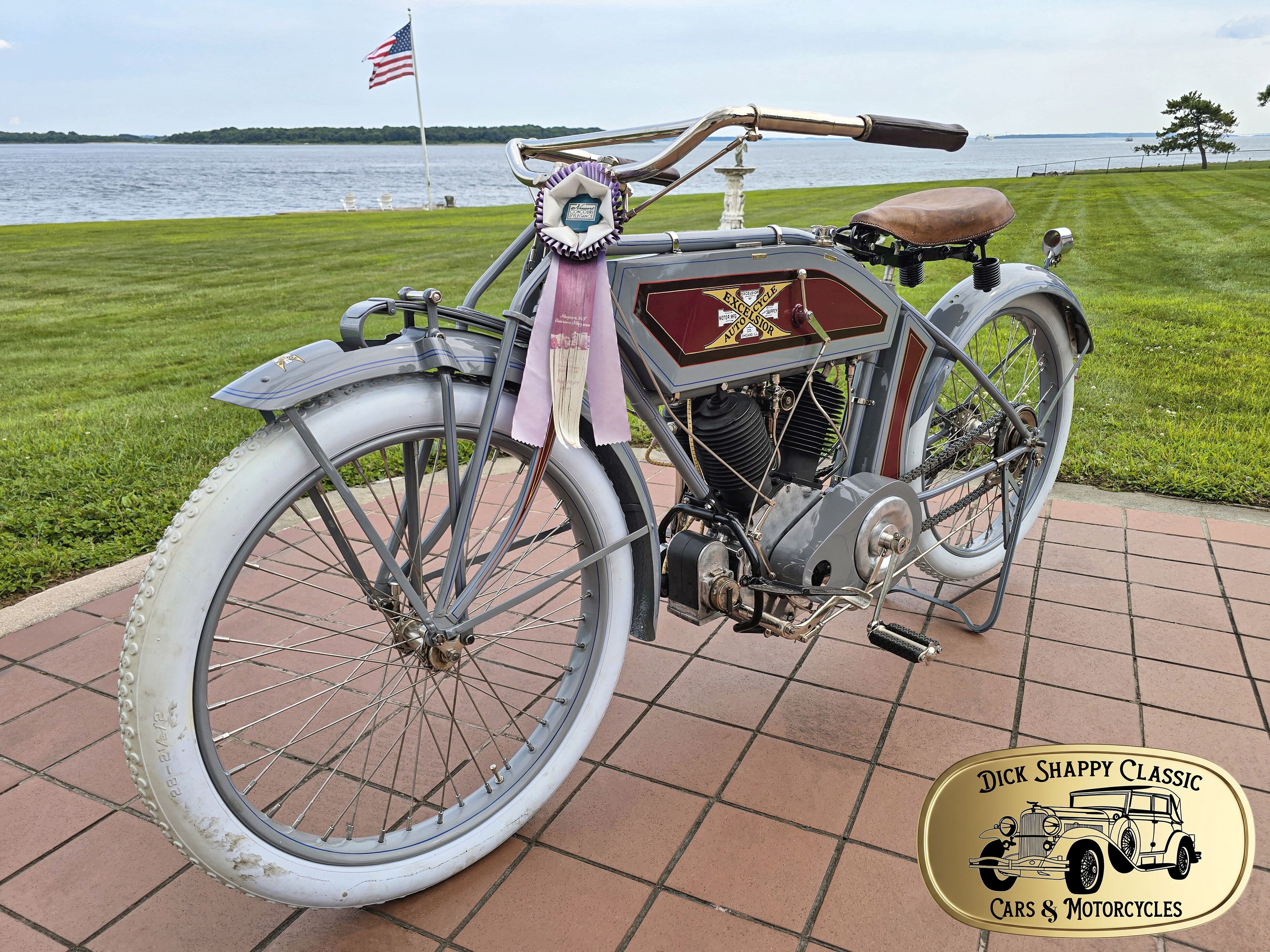
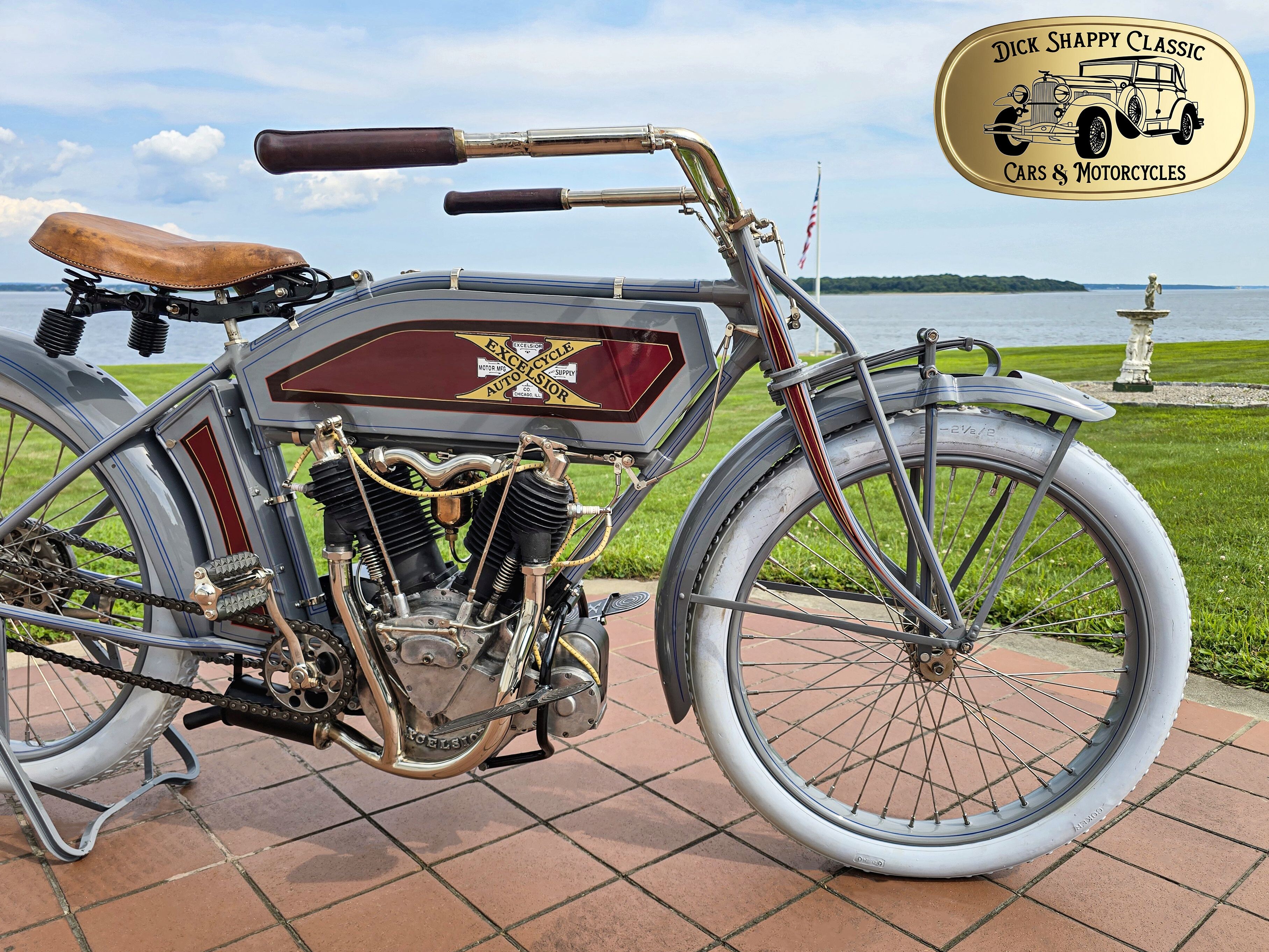
- YEAR: 1914
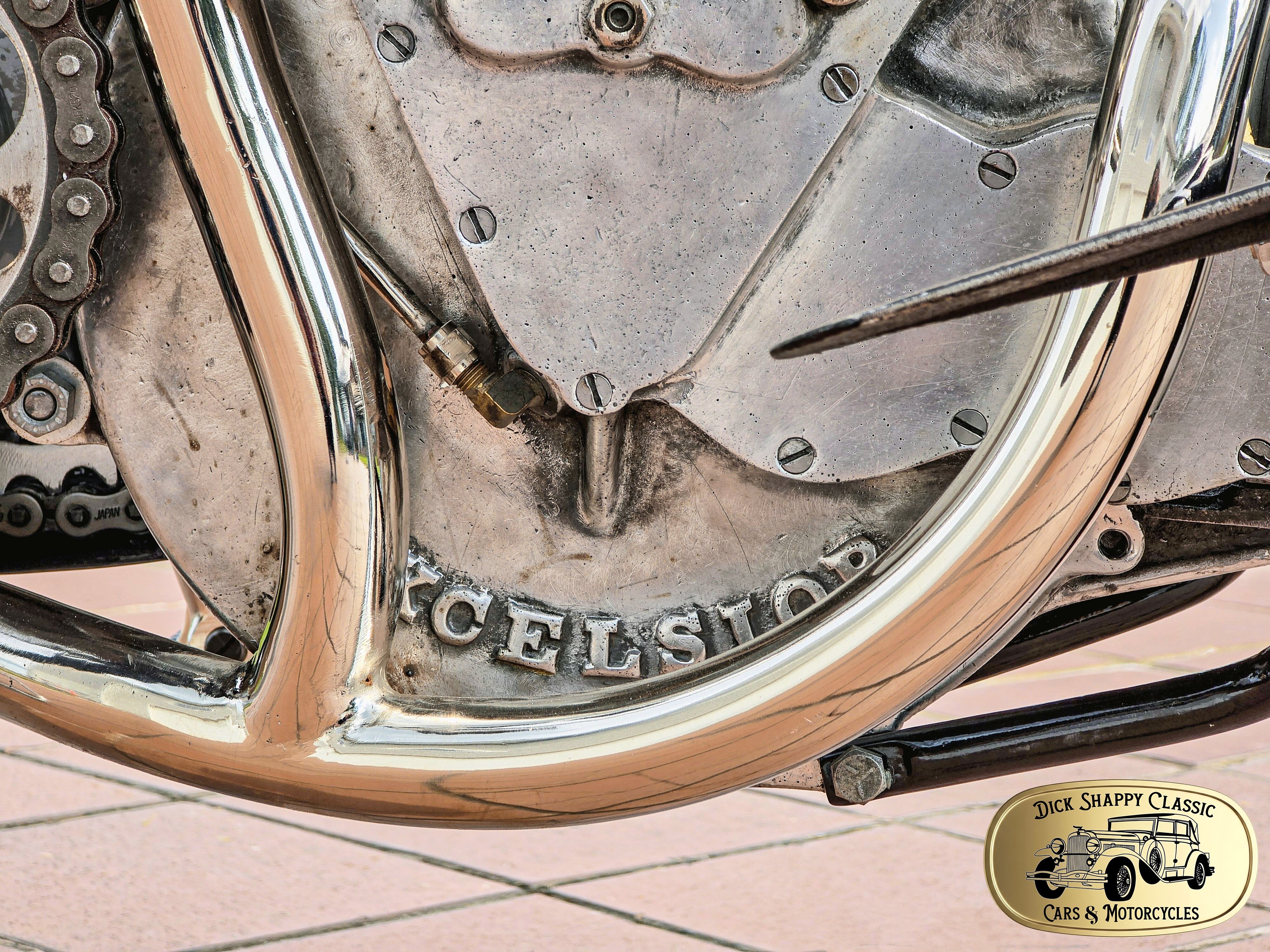
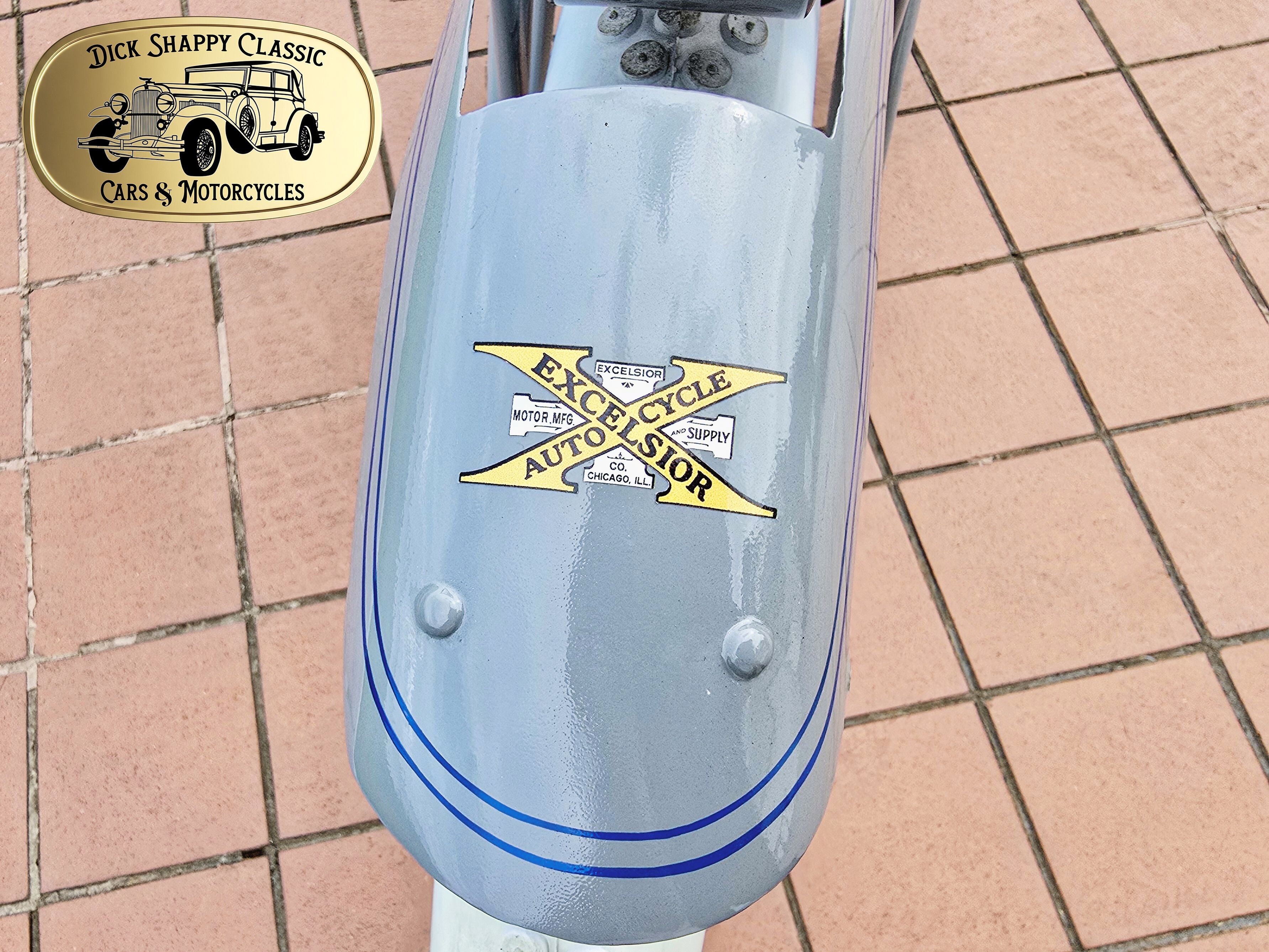
- MAKE: Excelsior Motor Manufacturing & Supply Company
- MODEL: 7-C
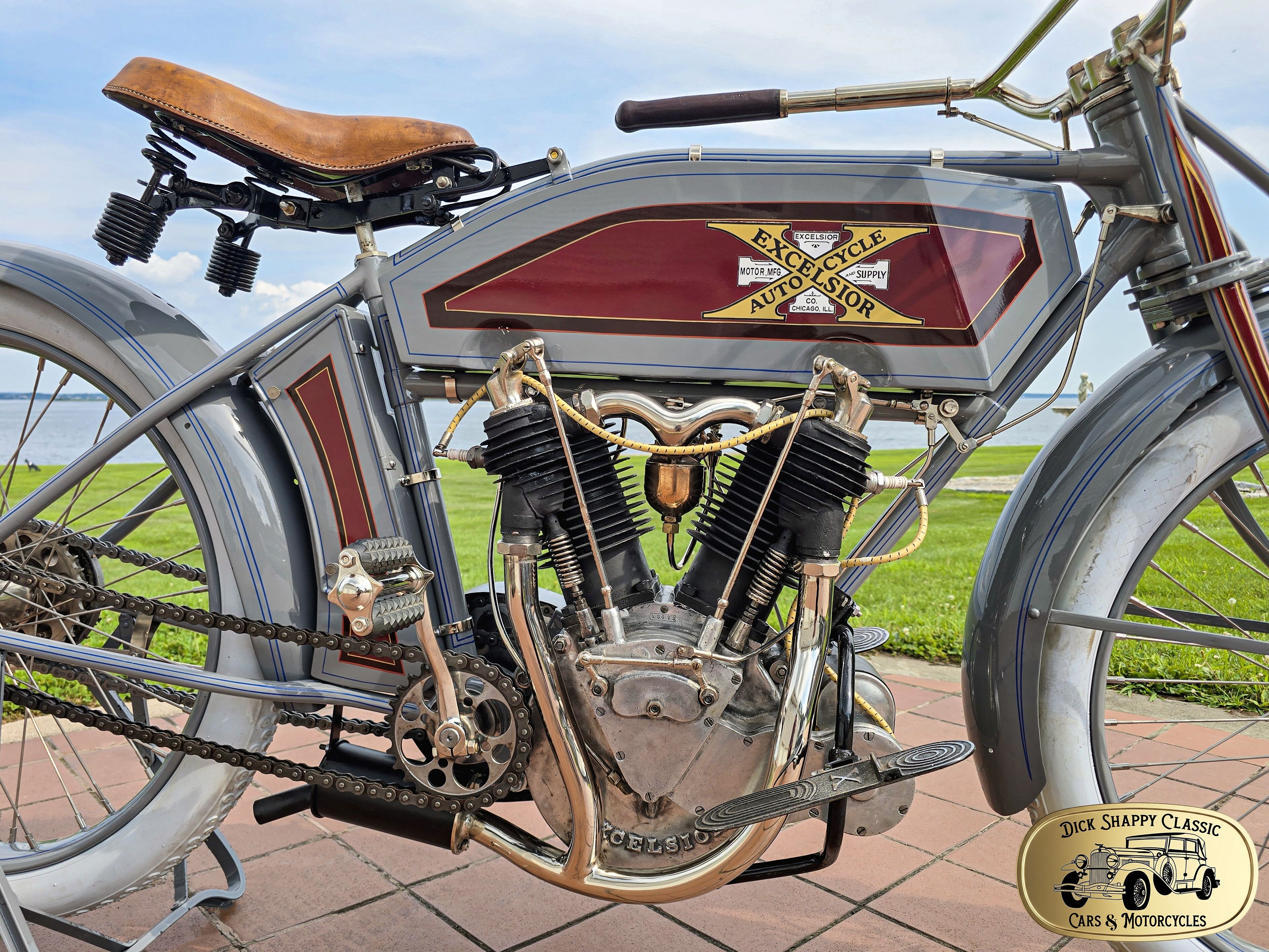
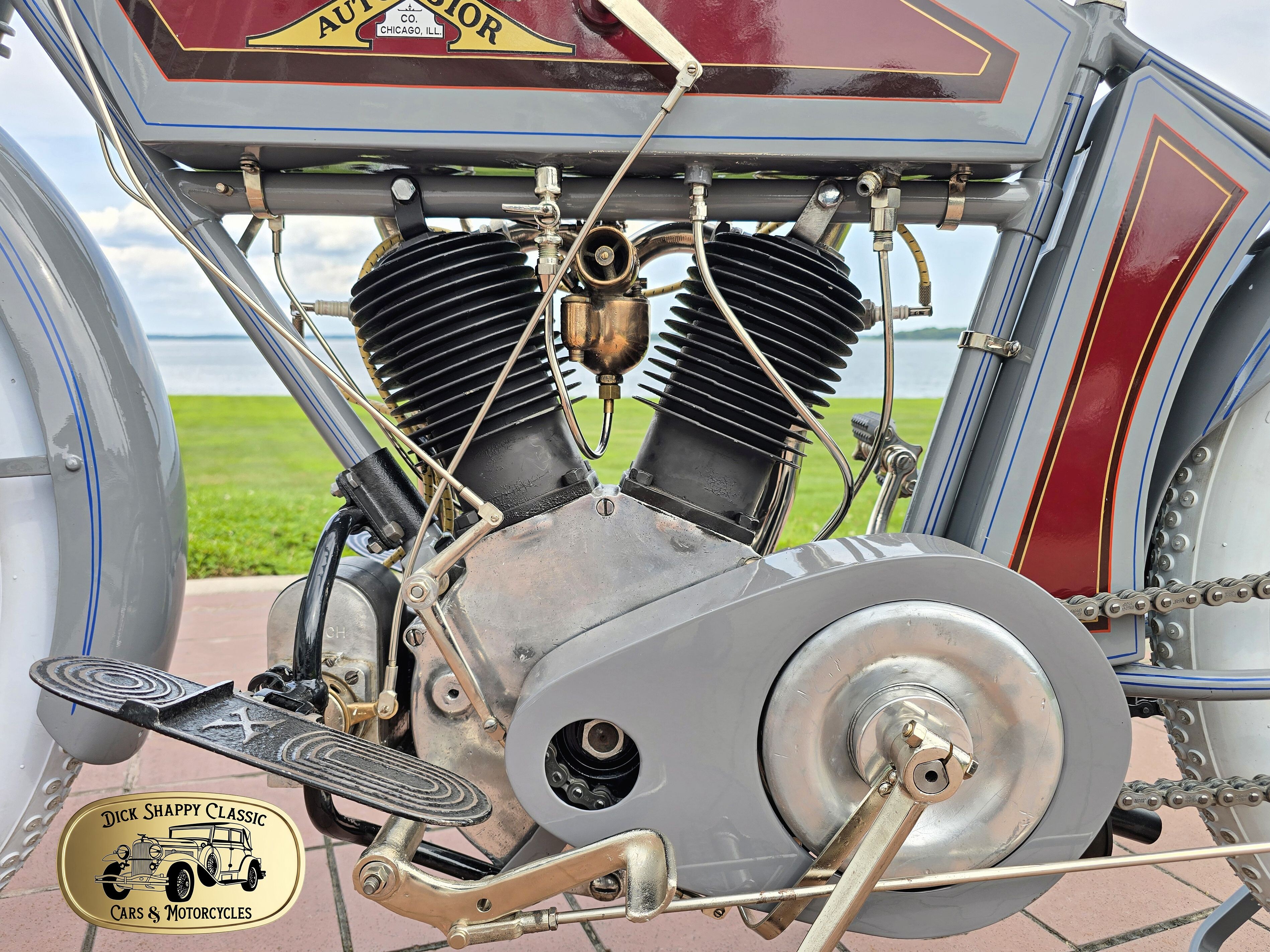
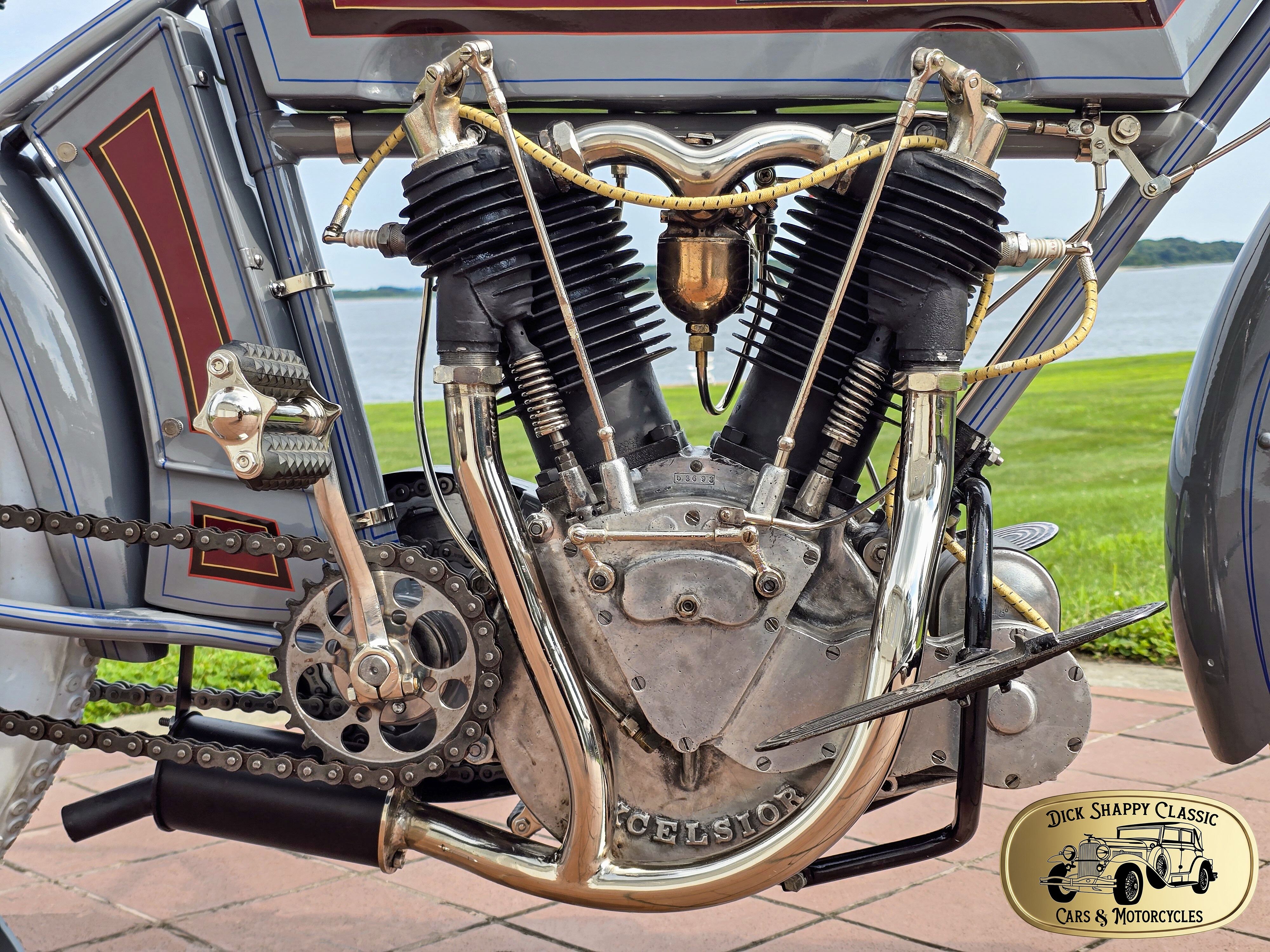
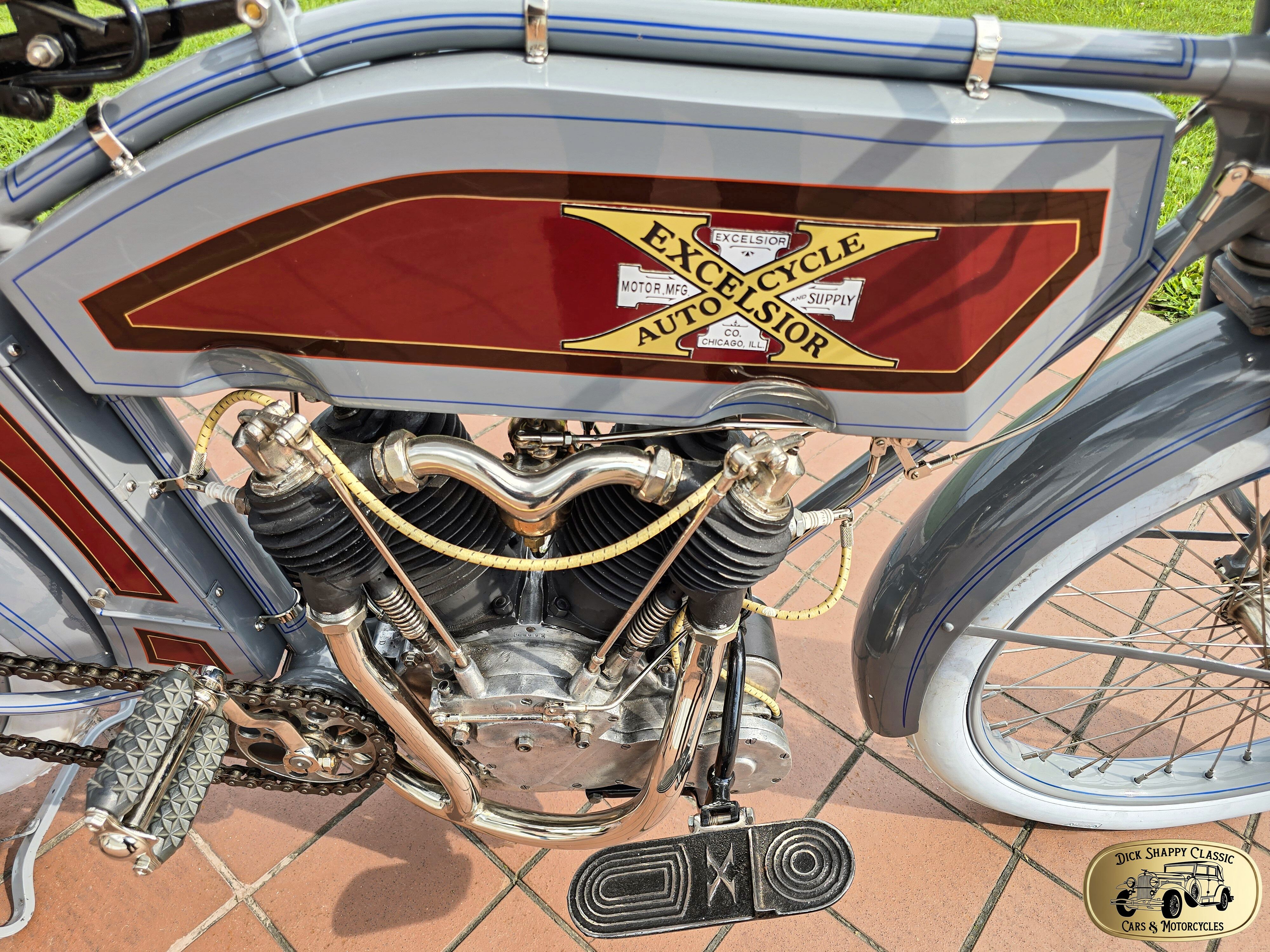
- ENGINE: 974cc, 61 cu. In. V-twin
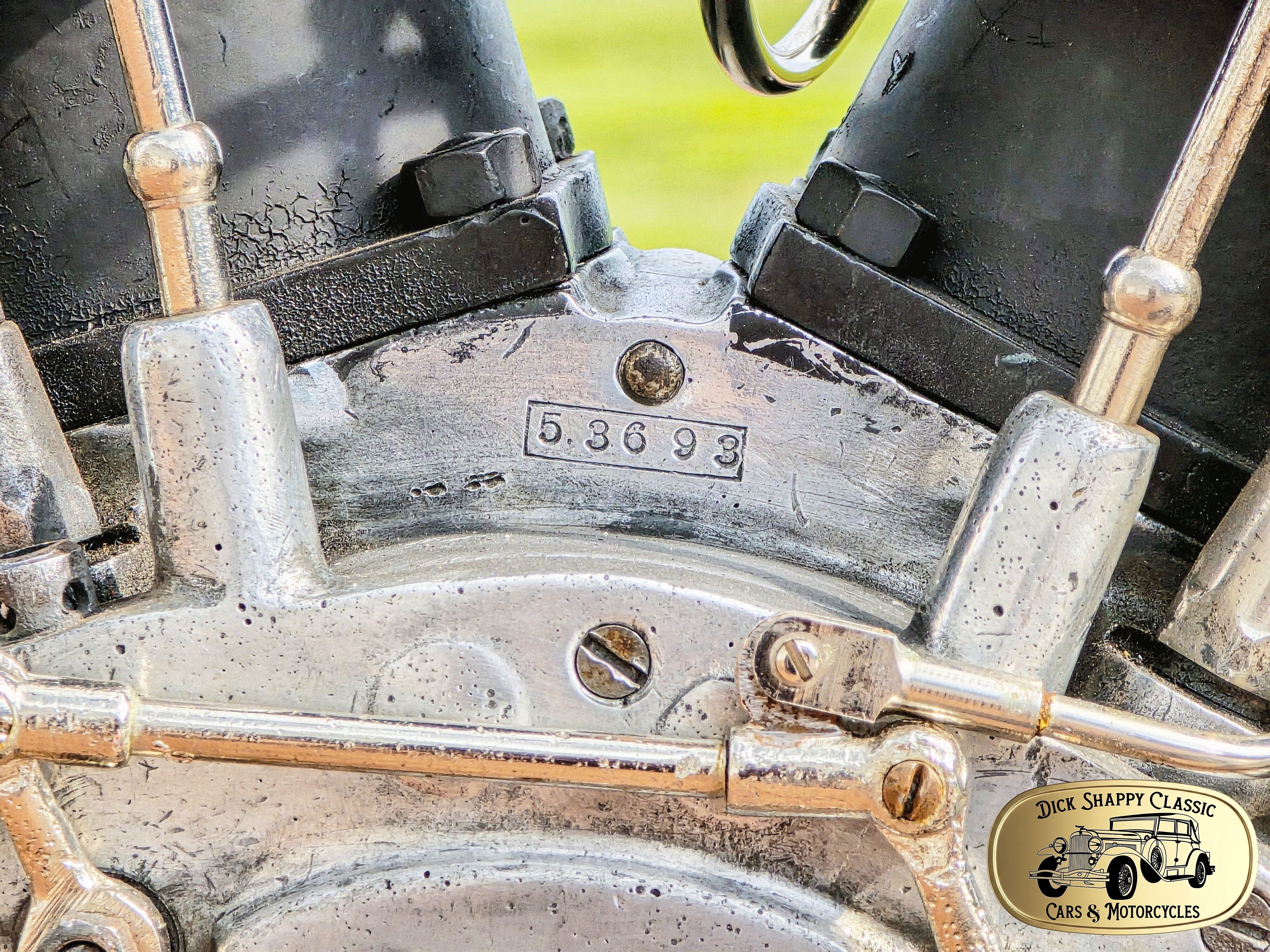
- ENGINE NO.: 53693
- BORE & STROKE: 84 mm x 88 mm
- HP: 7-10
- IGNITION: Bosch high-tension magneto
- CARBURETOR: Schebler Model H
- LUBRICATION: Positive force-feed pump on the timing chest with controlled drip from the oil tank
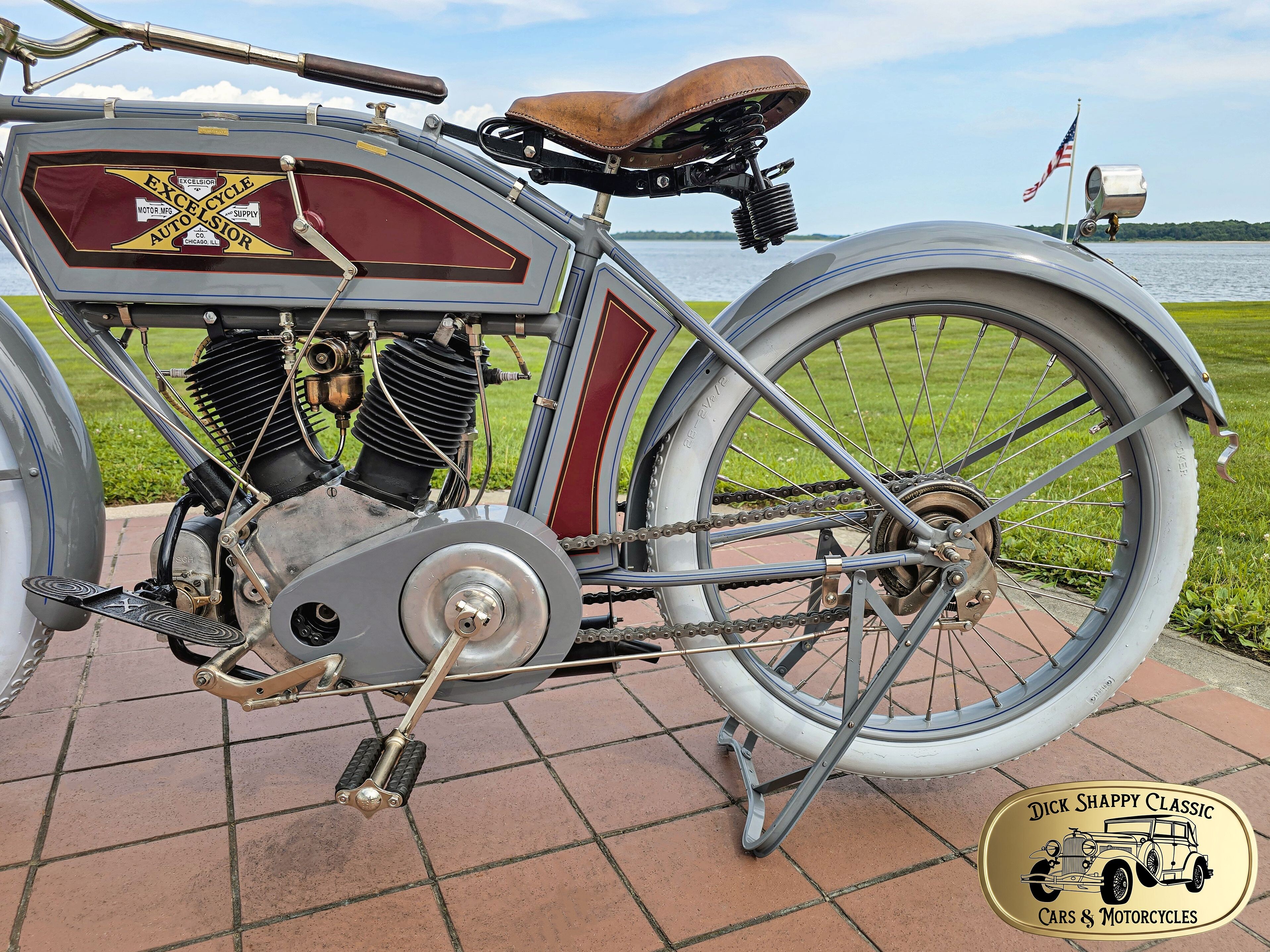
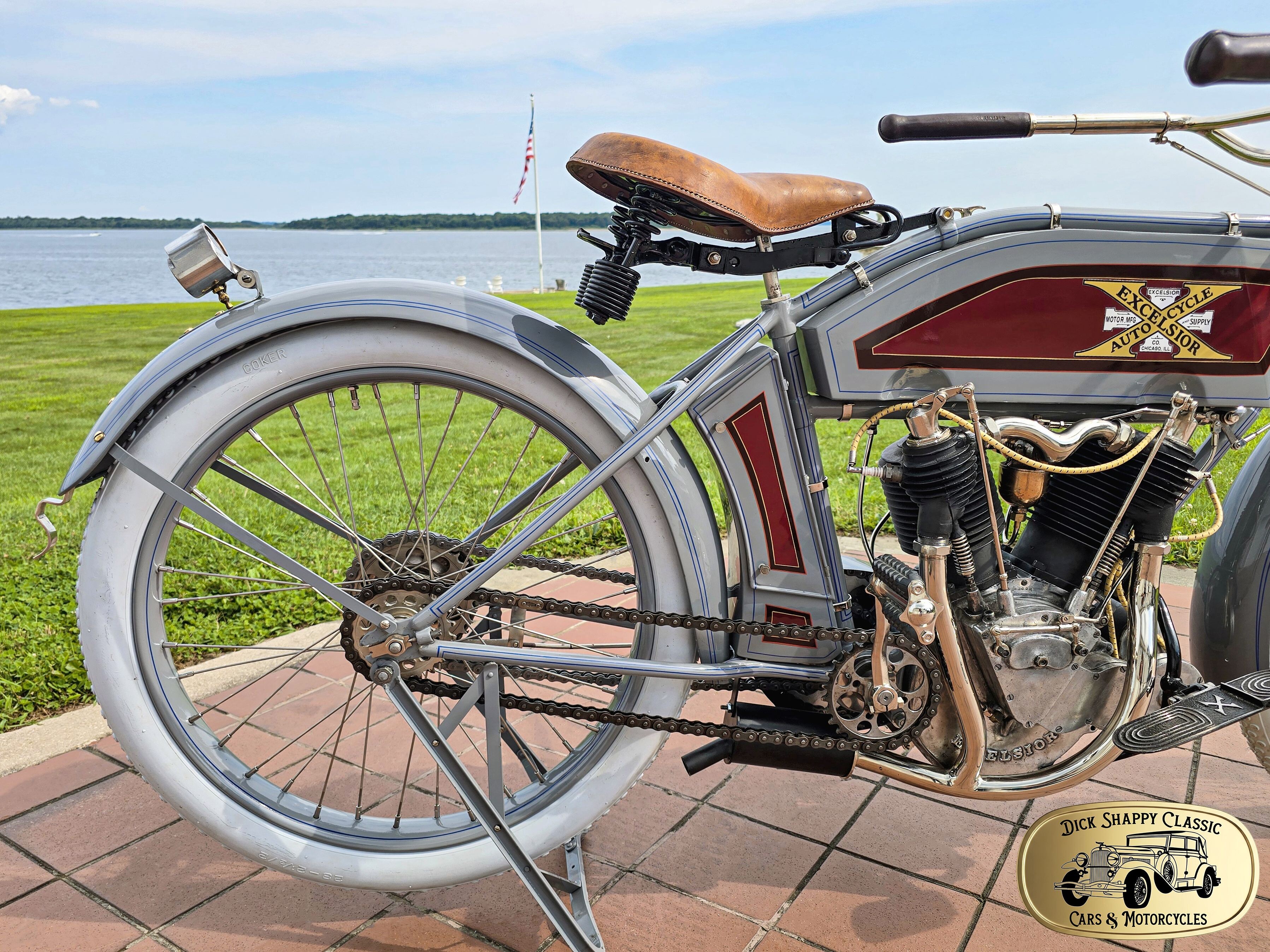
- DRIVE: All-chain
- TRANSMISSION: Single-speed gear
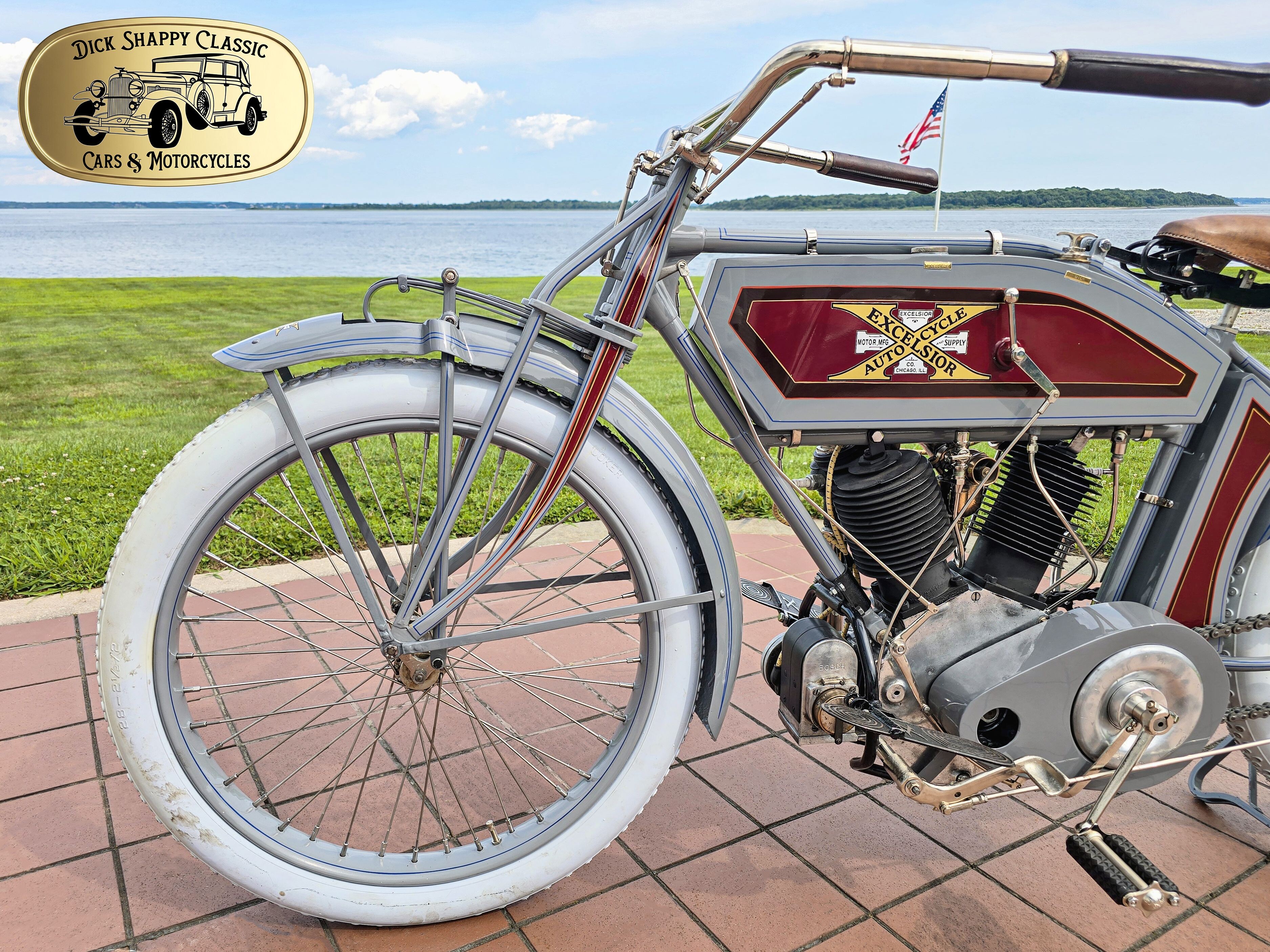
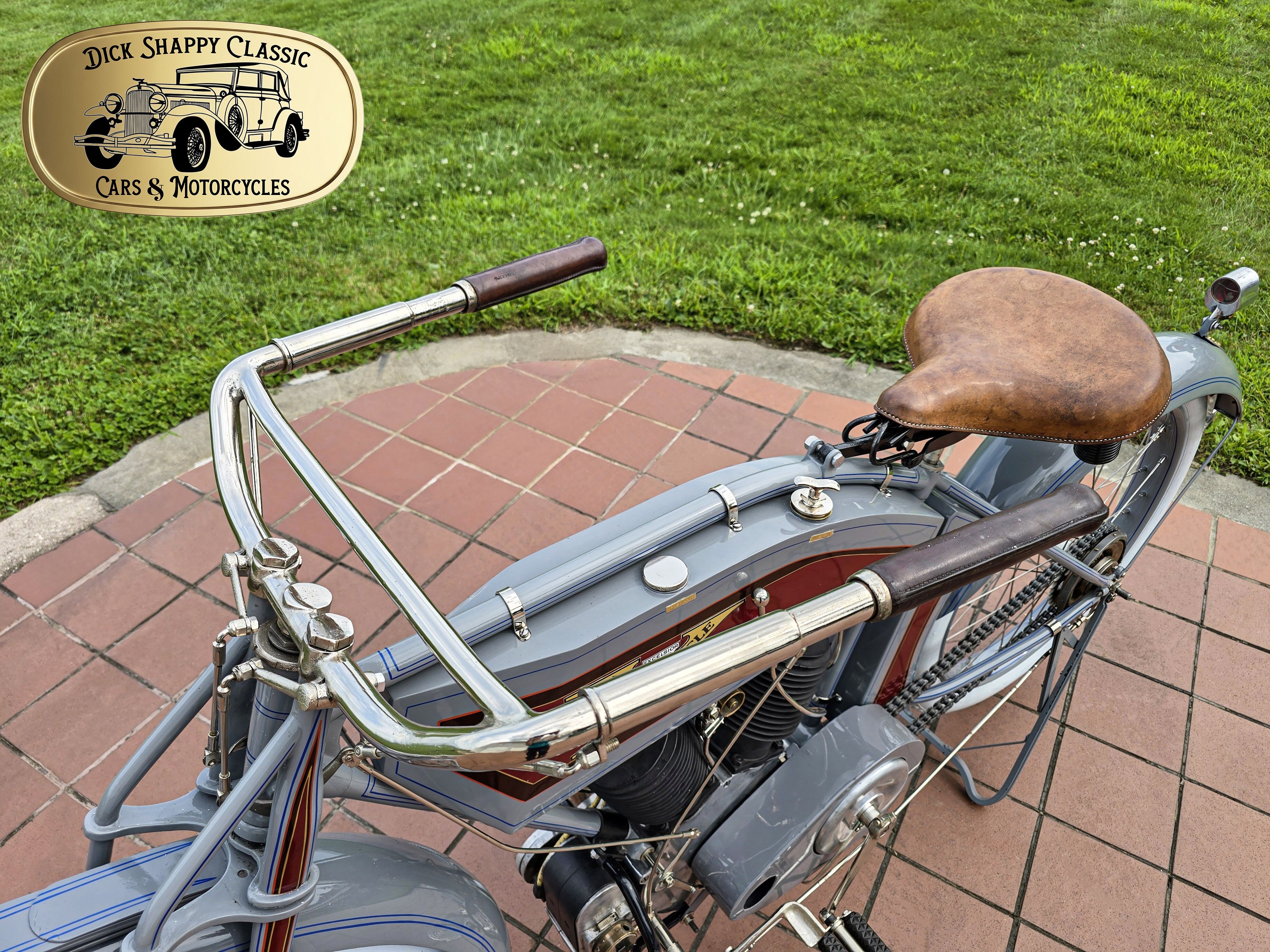
- CLUTCH: Operated by the left handlebar grip and a system of rods and pulleys
- BRAKES: Rear band/pedal-operated brake
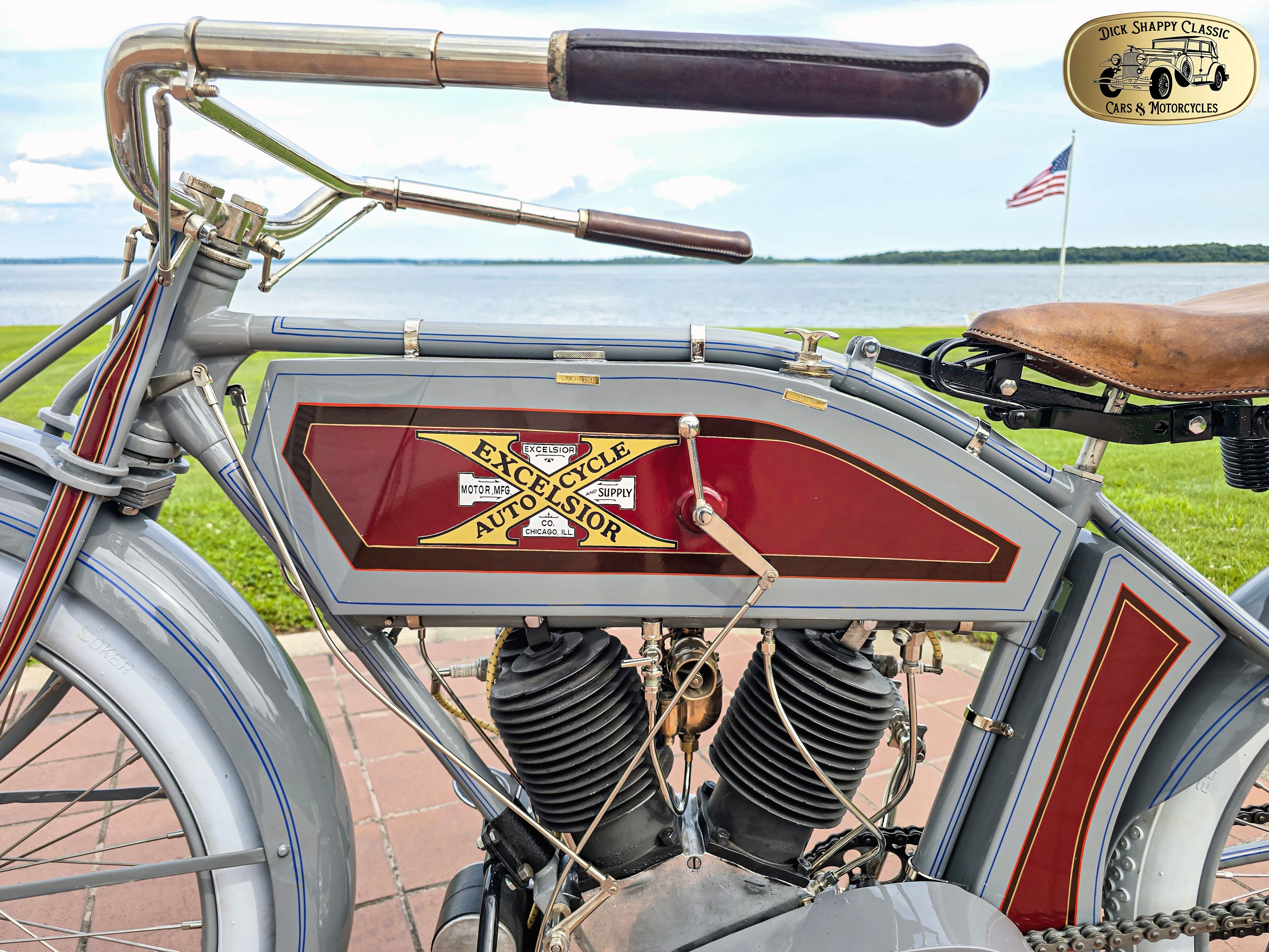
- CONTROLS: Right twist-grip controls throttle and compression release; spark advance regulated by a small
lever on the fuel tank
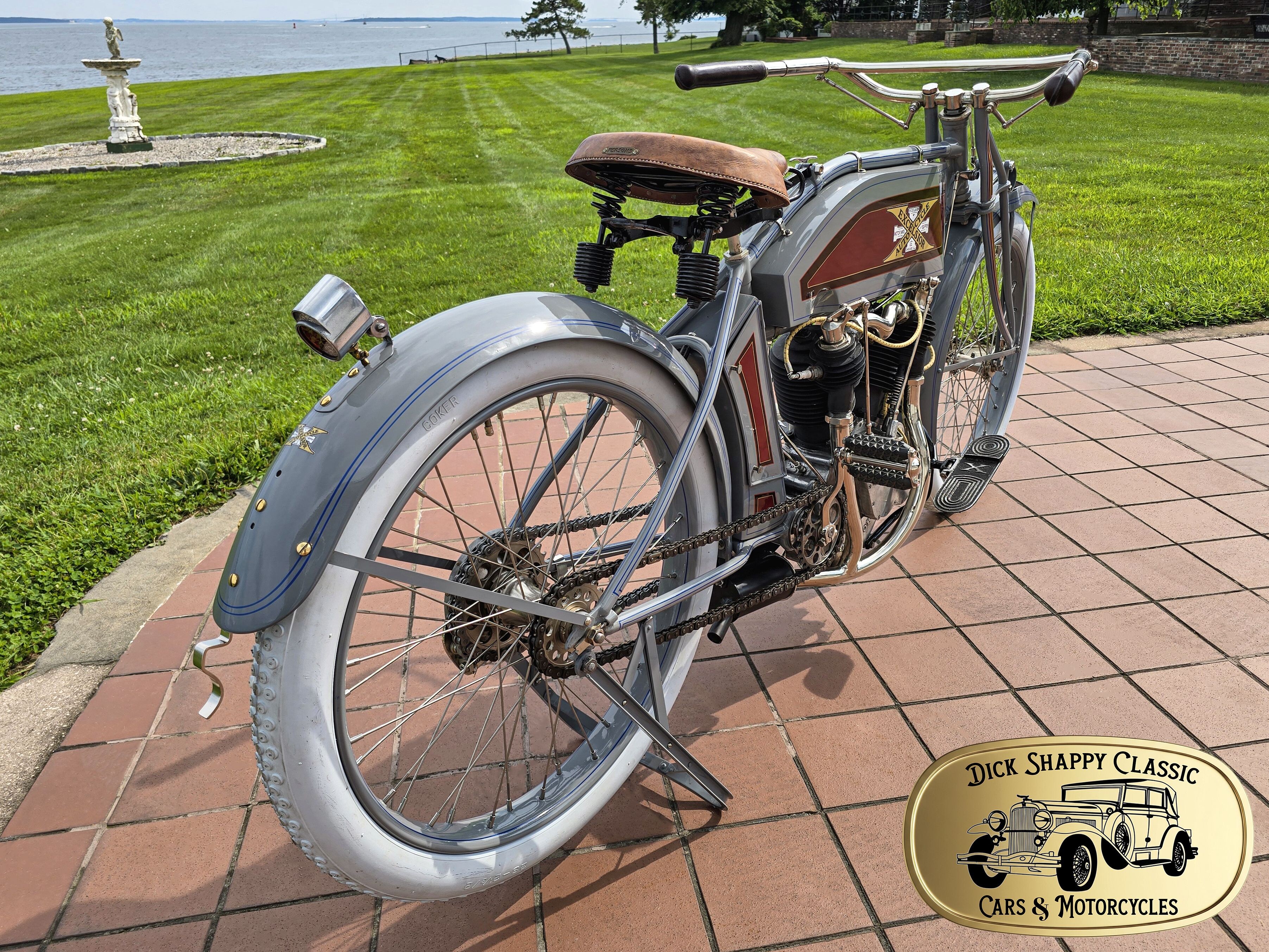
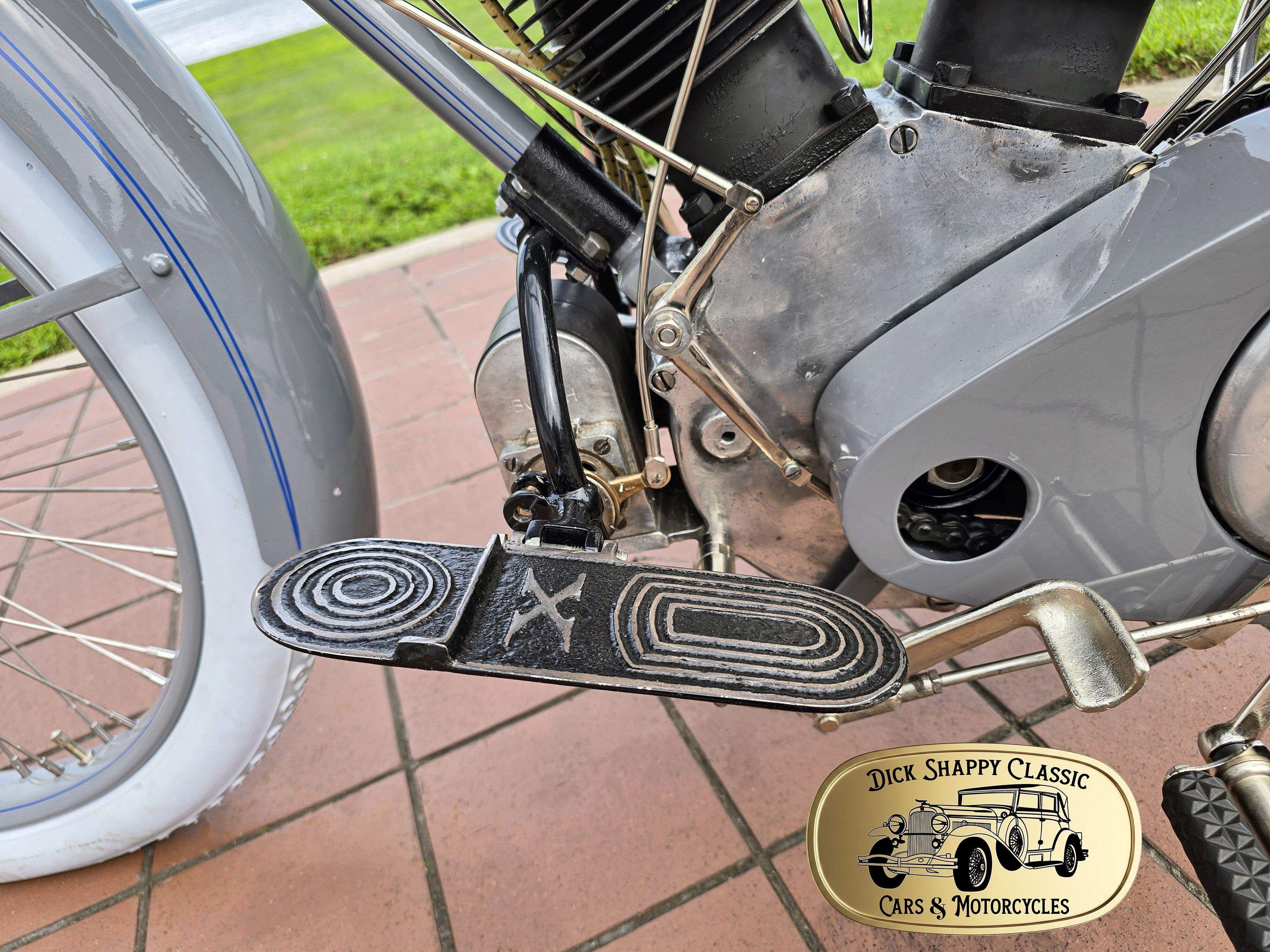
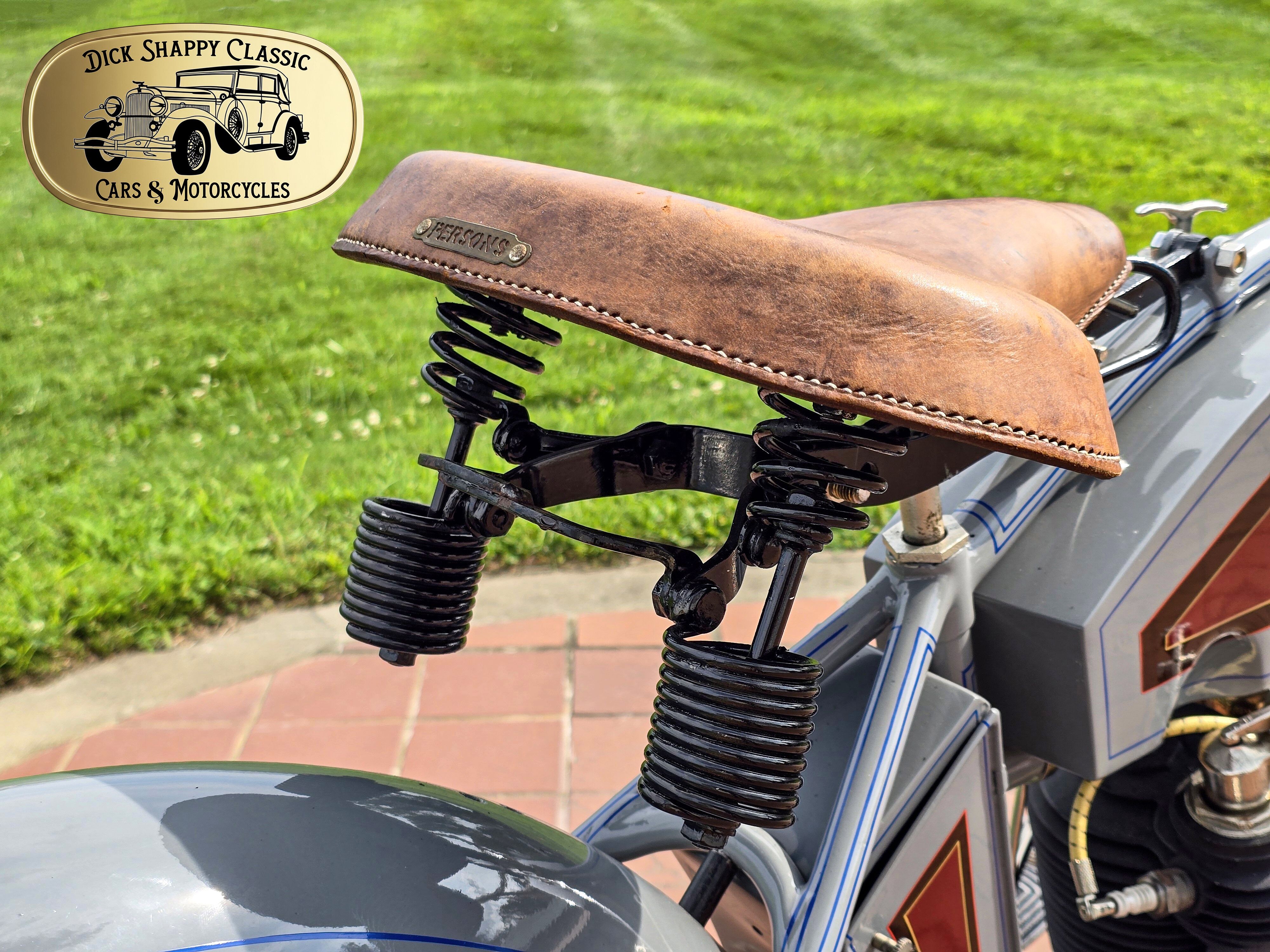
- FRAME FEATURES: Sprung seat post and newly introduced footboards/drop-forged footrests
- ORIGINAL PRICE: $225 when new
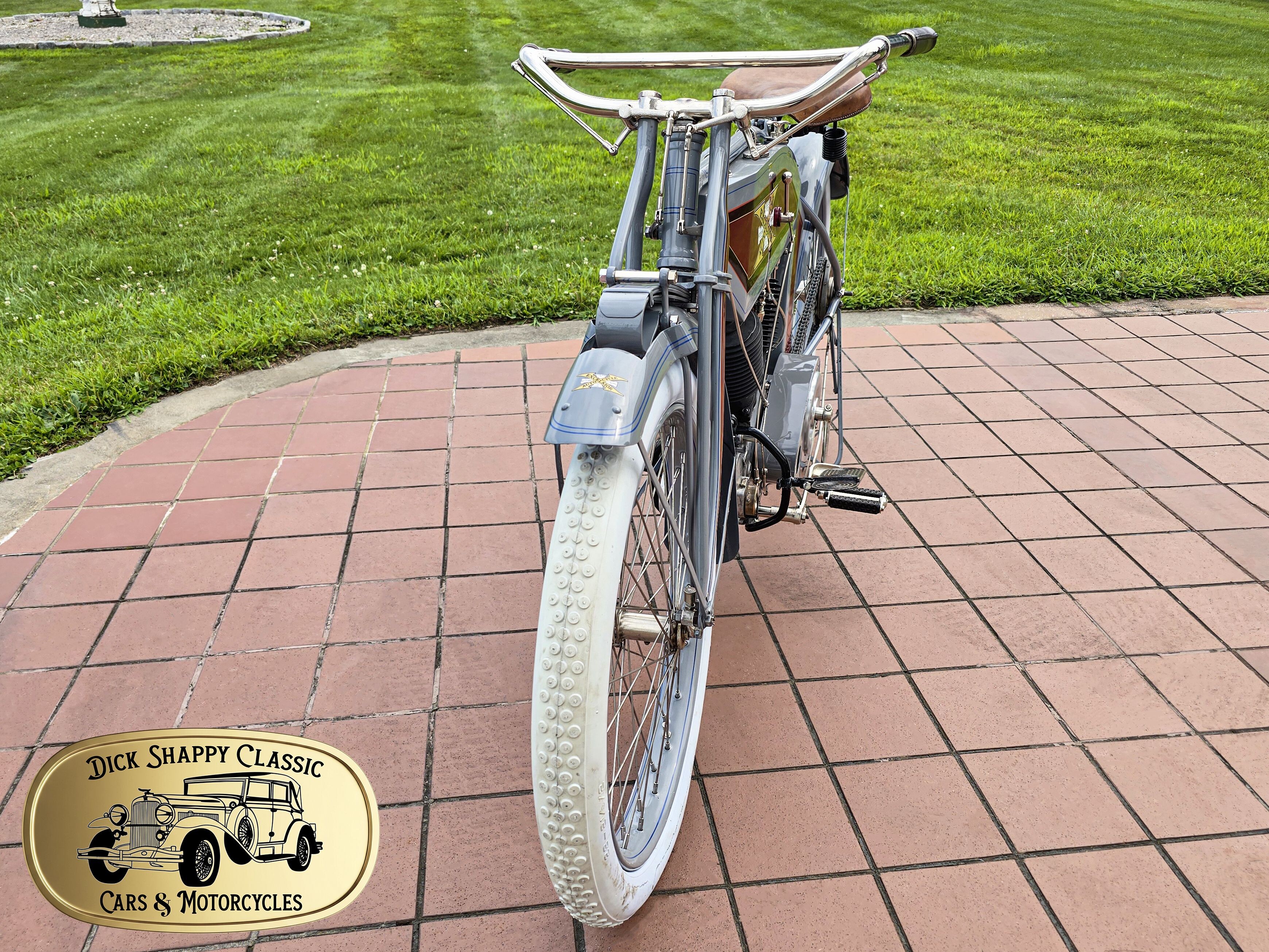
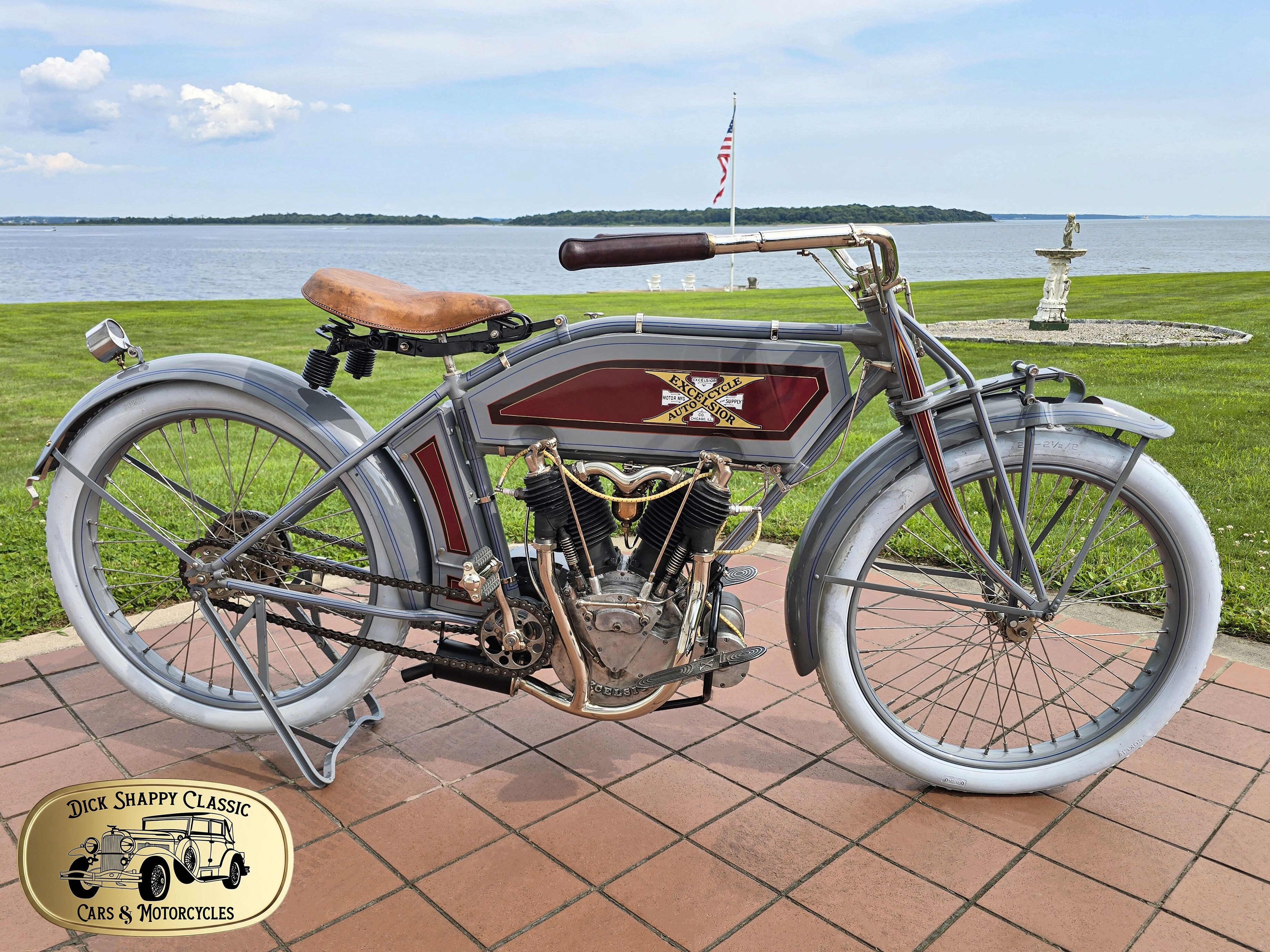
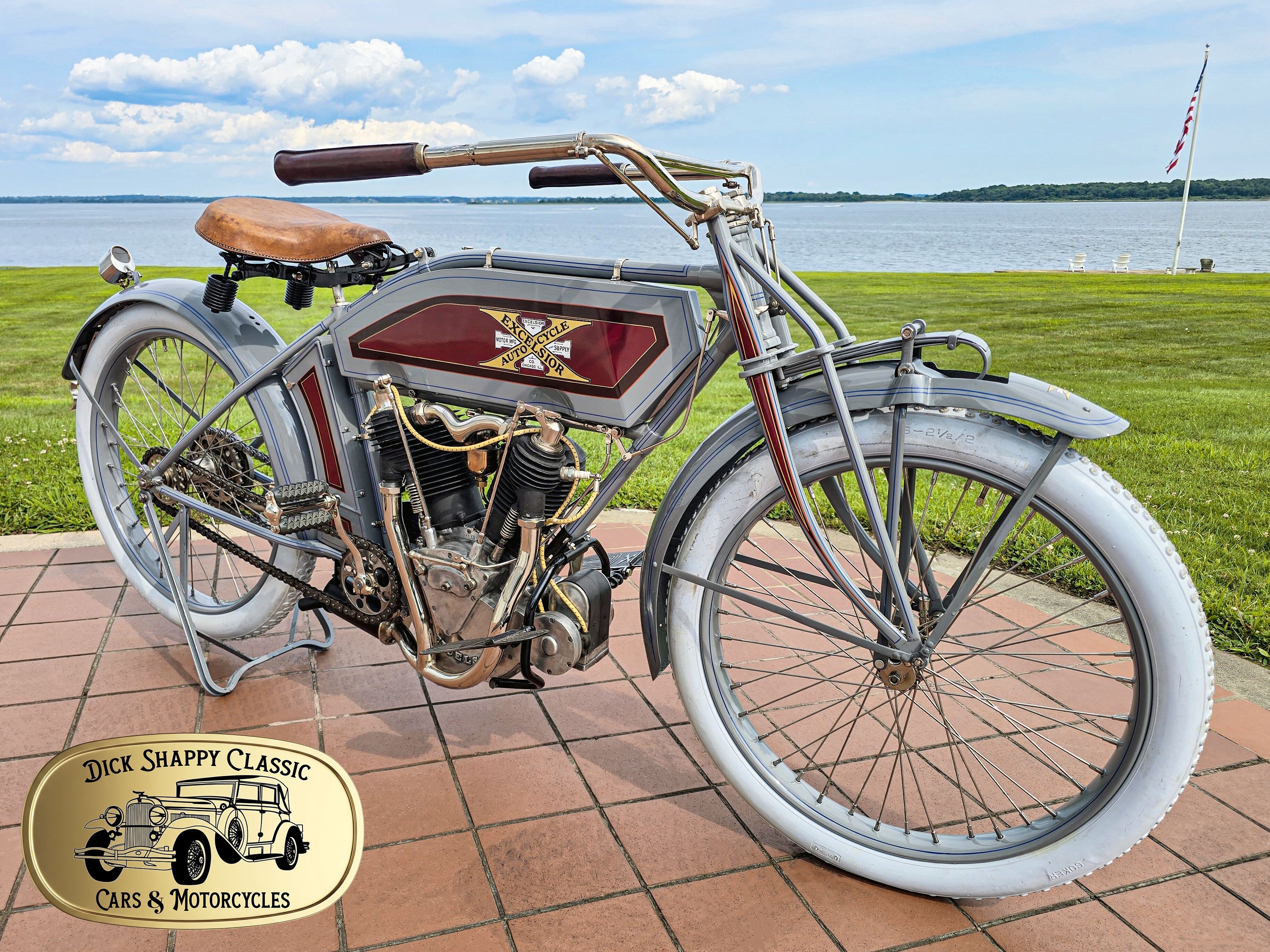
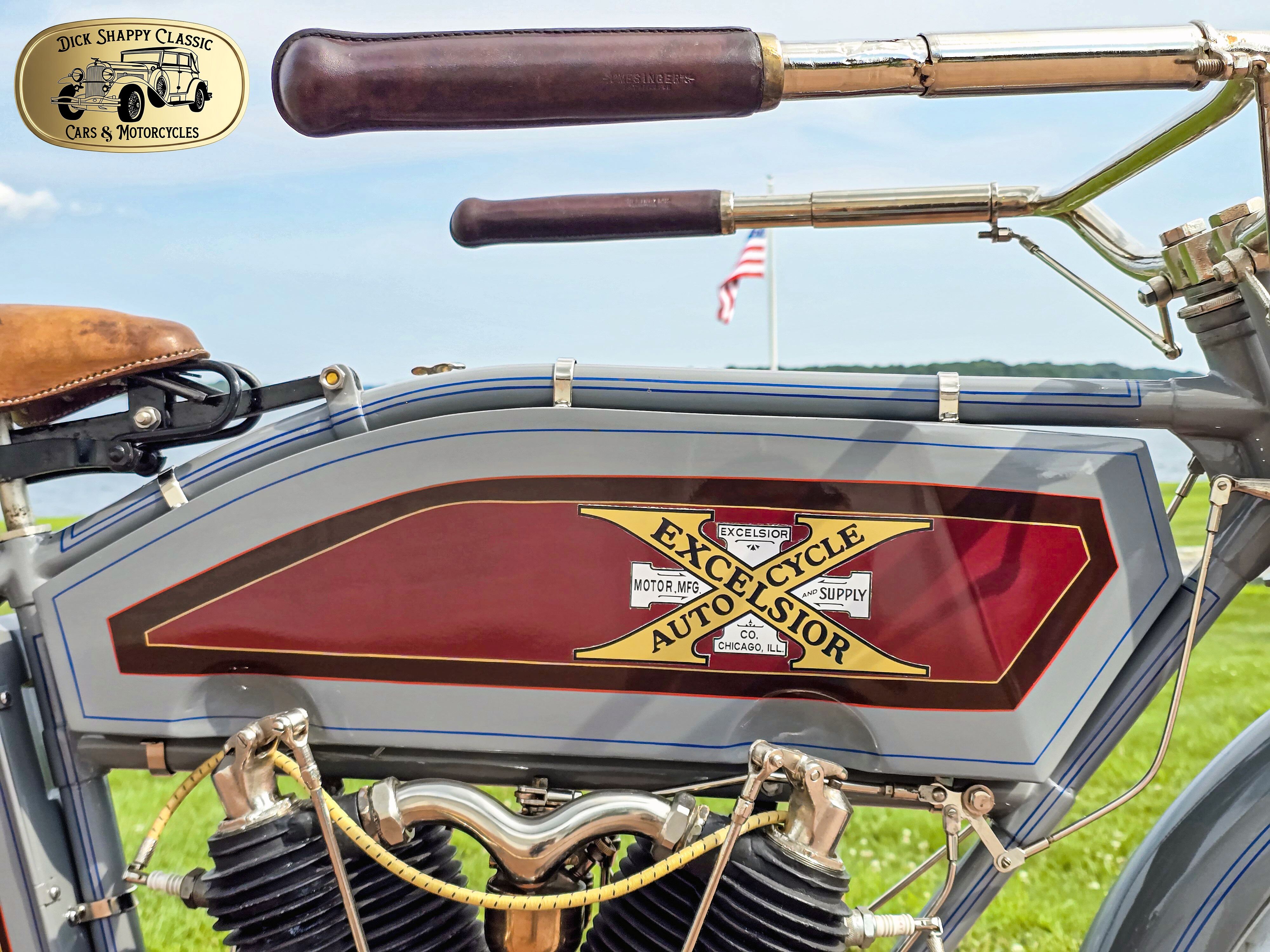
This motorcycle was uniquely defined by its innovative handlebar-controlled twistgrip clutch, which freed up the
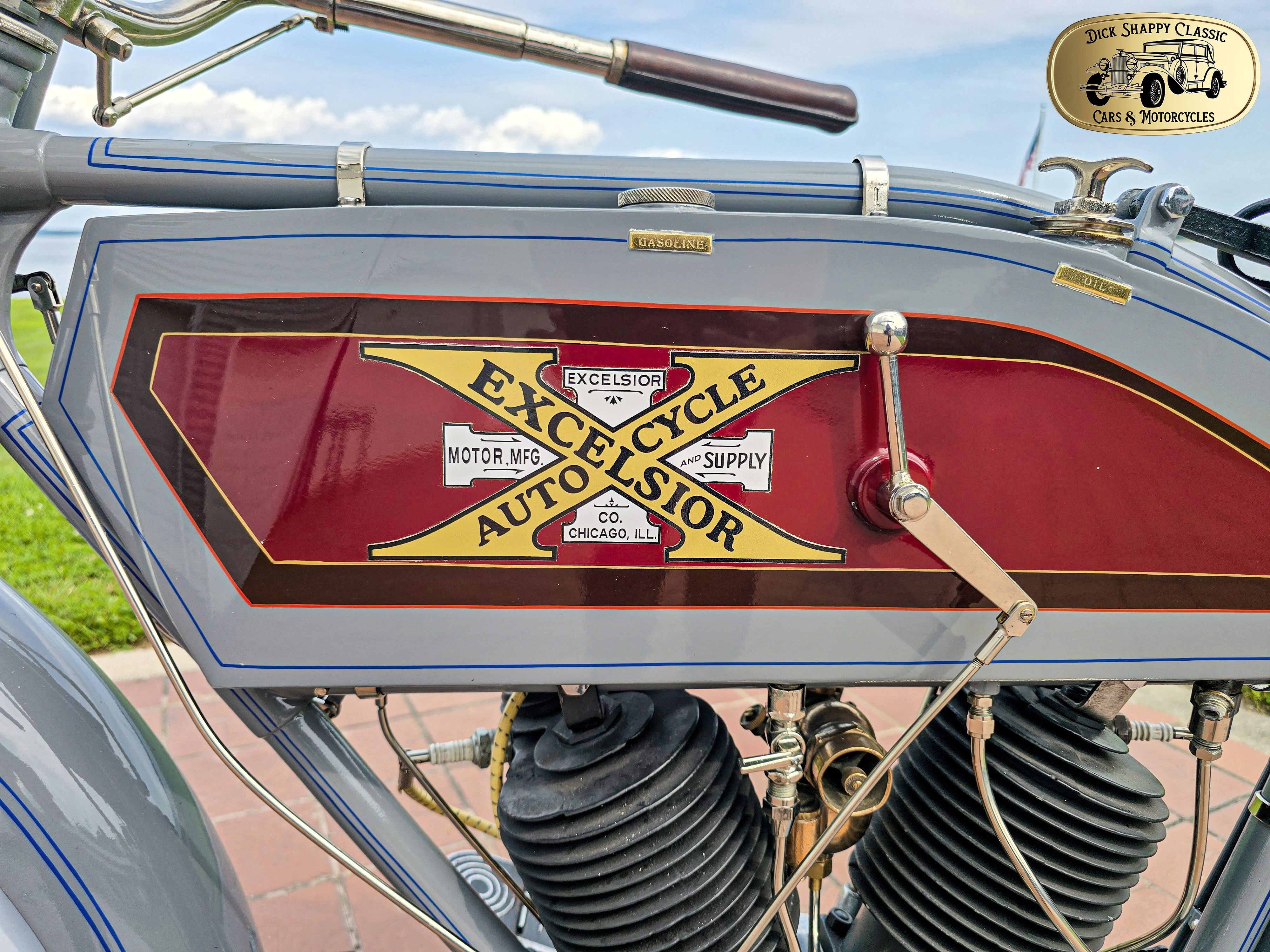
left handlebar control and allowed manual spark controls to be mounted on the side of its distinctive square,
“razor-edge” fuel tank. The operation of a twistgrip on the handlebar rather than the traditional lever was an advanced
and smooth design for the era. It featured a signature angular fuel and oil tank design alongside an integrated toolbox.
1914 marked the debut year for standard footboards and a foot-pedal-operated rear brake across the Excelsior
lineup. They offered staggering performance for the era, powered by a 974cc (61 cubic inch) V-twin F-head engine
producing 7-10 horsepower with chain drive, coupled with a Bosch high-tension magneto and Schebler carburetor. The 7-C
shared engineering DNA with the Excelsior machines that made history by breaking the 100 mph barrier in board-track
racing.
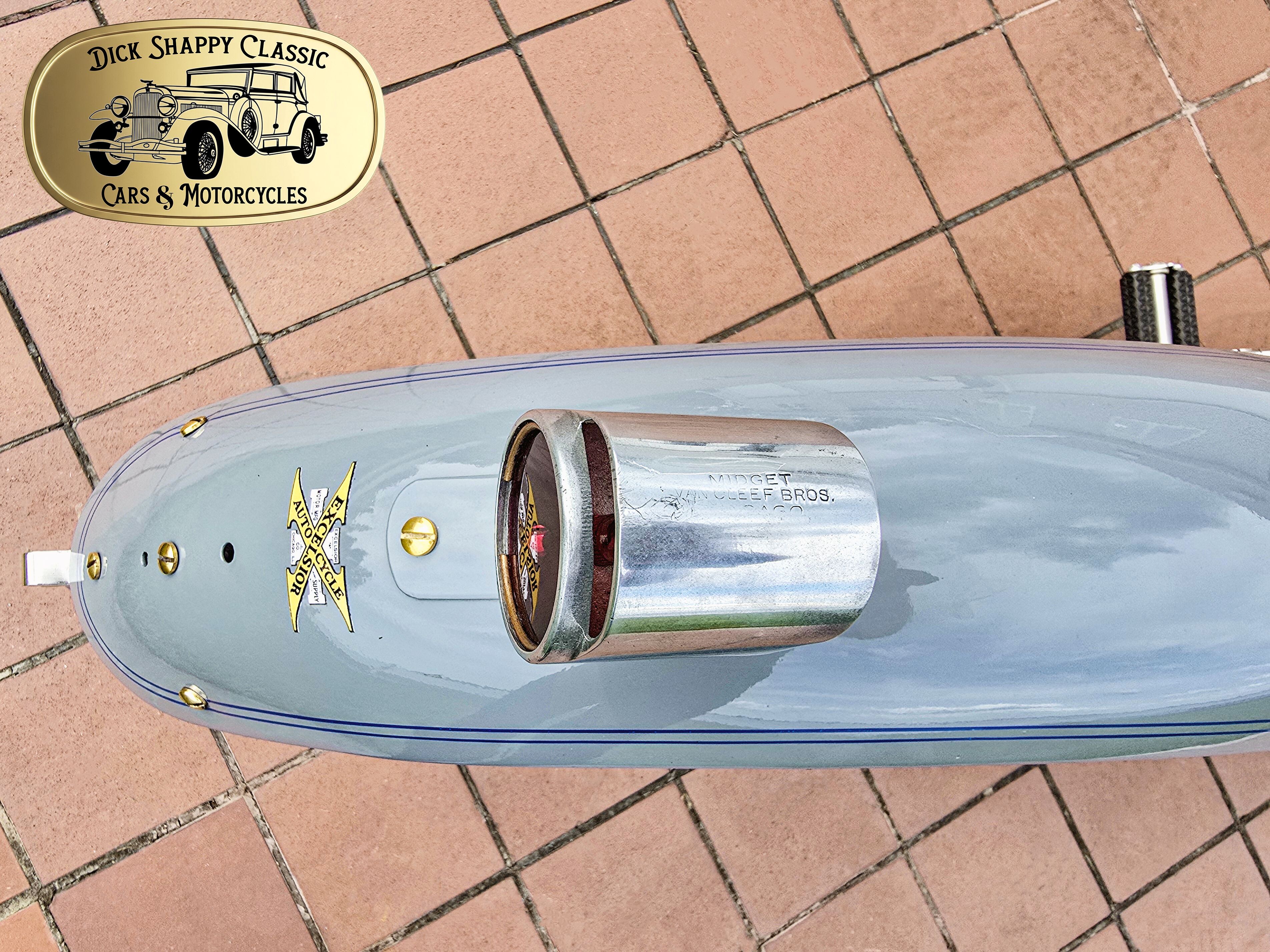
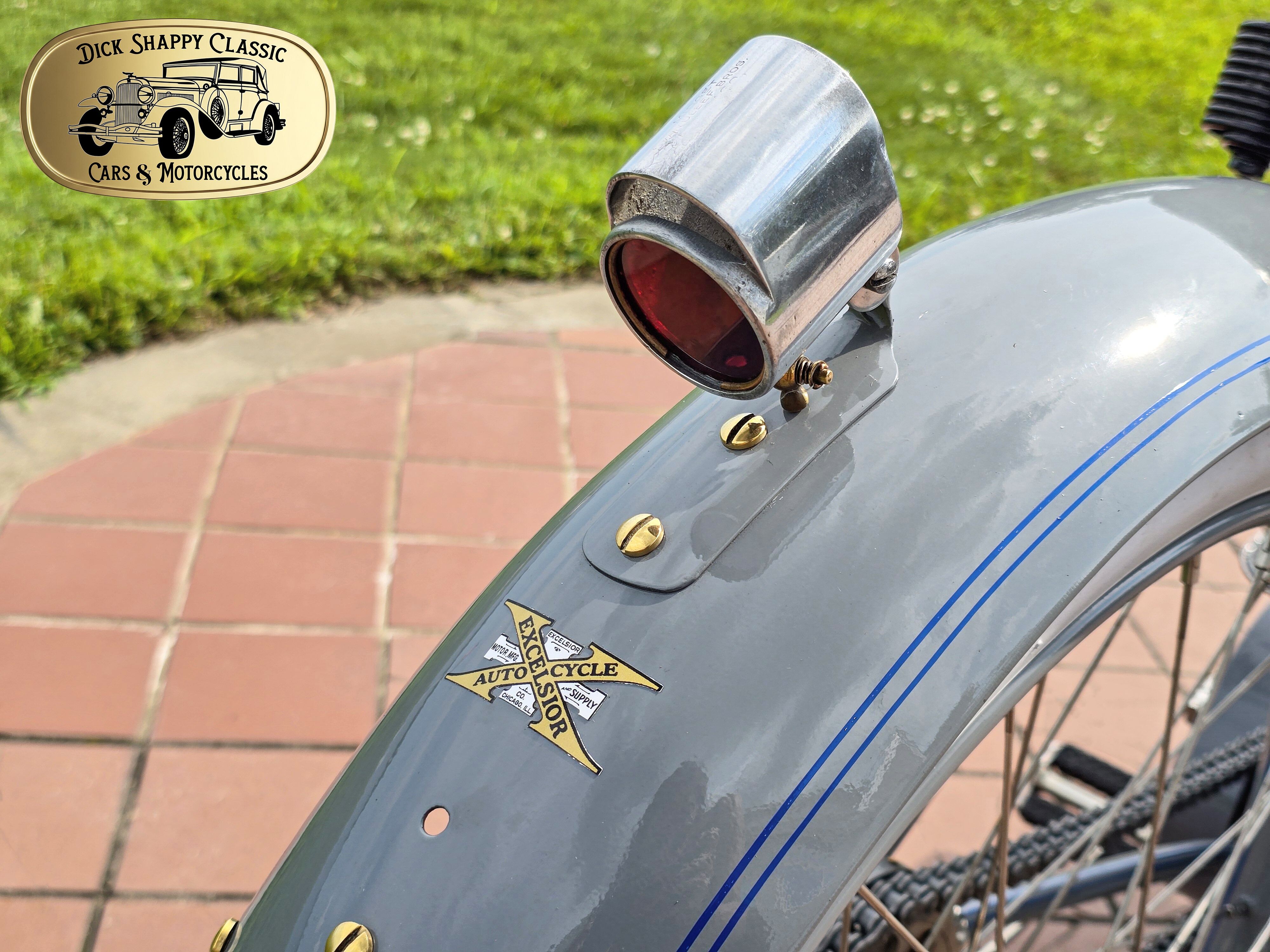
This motorcycle just underwent a meticulous restoration under the care of the Dick Shappy Collection. Owning a 1914
Excelsior 7-C today connects you to the pinnacle of pre-World War 1 American engineering, raw mechanical art, and
the golden age of early motorcycle racing. Surviving examples are exceptionally rare and often headline major
vintage sales, making it an instant centerpiece for any serious collection.
The Excelsior Motor Manufacturing & Supply Company
The Excelsior Supply Company was founded in 1876 by George T. Robie in Chicago to distribute sewing machine
and bicycle parts, but expanded into the Excelsior Motor and Manufacturing Company in 1907 with
Frederick Carlton Robie at the helm as president. Motorcycle production began in 1908, and by 1912, Ignaz Schwinn,
owner of Arnold, Schwinn & Co. of Schwinn Bicycles, purchased the company. His extensive engineering
facilities allowed for the development of engines modified for greater strength and speed. Together, they set a new
record as an Excelsior motorcycle was the first to be officially timed at a speed of 100 mph in 1912. Schwinn
acquired the Henderson Motorcycle Company in 1917, combining three impressive forces.
According to Mecum Auctions, “The Excelsior twins of the 1910s and ‘20s used the most highly developed F-head
design in the industry, and their special racing models proved the point decisively by taking many firsts, like the
first motorcycle to be officially timed during a race over 100 MPH in 1912 at Playa del Rey board track… Its
famous Big Valve racers were magnificently tuned machines that were capable of sustained high speeds and beating their
much larger rivals.”
Excelsior became one of the legendary “Big Three” American manufacturers (alongside Harley-Davidson and
Indian). Despite the success of Schwinn’s motorcycle production, after the stock market crashed in 1929,
motorcycle sales plummeted, and by 1931, with a full order book, Ignaz ordered production to cease. His words,
“Gentlemen, today we stop,” may have saved the company, as focusing on bicycles was a far more cost-effective
endeavor, leaving surviving relics a piece of American history.
 1928 Excelsior Super X Big Bertha Hill Climber
 1919 Excelsior Model 19 Big-Valve Twin
 1970 Harley-Davidson Belly Burner Dragster
 1907 Fabrique Nationale 4
 1912 Henderson 4
 1962 Harley-Davidson Sportster XLCH Custom Engine Belly Burner Dragster
 1911 Yale American Single
 1912 Pope Model H 2 Single
 1965 Harley-Davidson Sportster XLCH KHK Frame Custom Engine McClanahan Dragster
 1913 Henderson 4See similar Excelsiors for sale